

Sunday afternoon, and the market is thinning out. I am at the stall with the root vegetables, buying carrots that still have their tops, parsnips the size of small clubs, a celery root that looks like a moon rock. The butcher hands me a chicken, and I can already see the week ahead: tonight, roast bird with crackling skin and a tray of vegetables; tomorrow, the leftovers shredded into a soup; Wednesday, a salad with the last of the dark meat and some quick-pickled onions. This is not meal prep in the sad, plastic-container sense. This is cooking once with a plan, then letting the refrigerator do the rest.
At the market
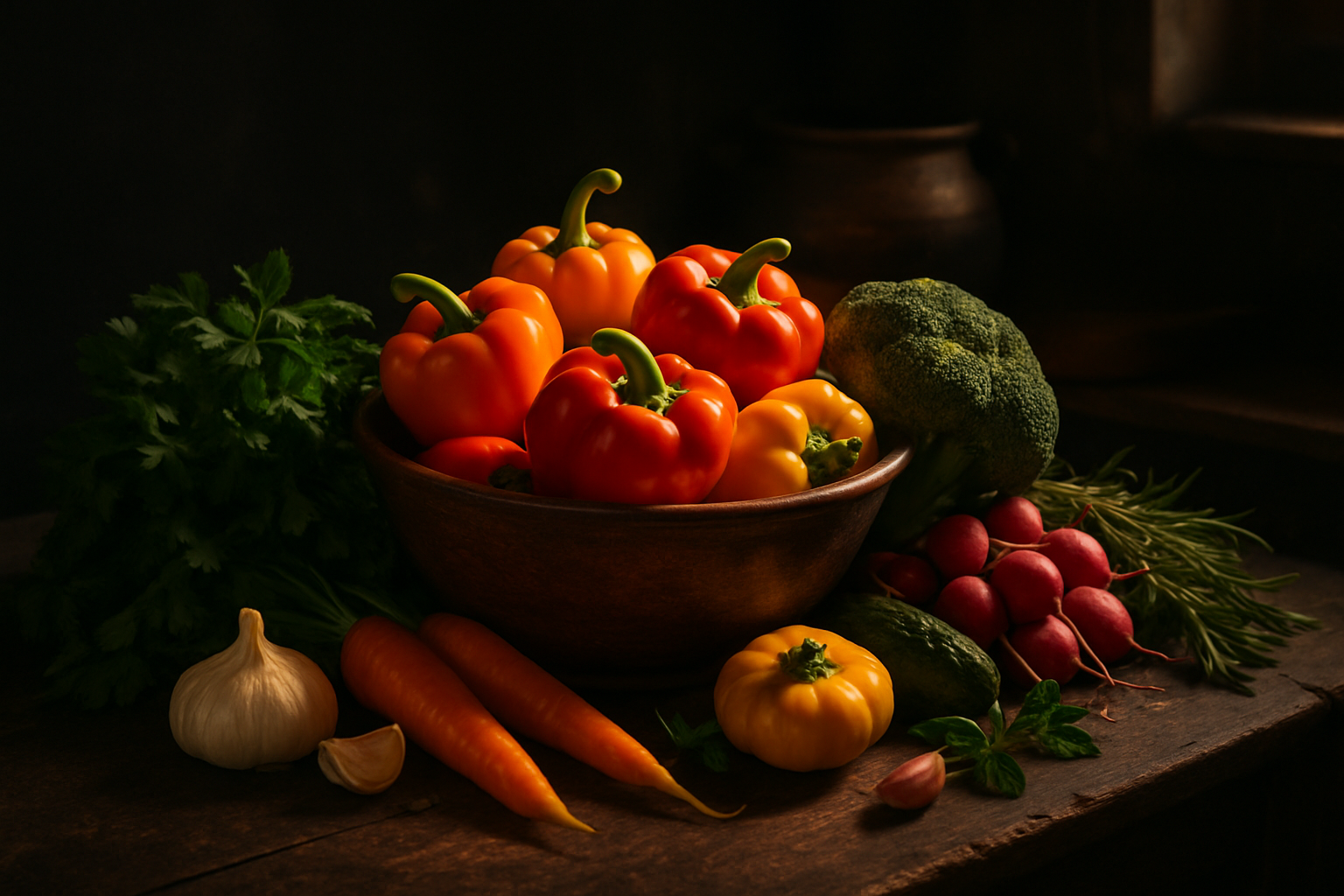
The key to cooking with leftovers starts before you ever turn on the oven. I walk through the market with a rough sketch of the week in my head, but I let the produce tell me what to buy. If the cauliflower is particularly good, I grab two—one for the roast, one for a midweek curry. A bunch of kale, sturdy enough to hold up in a soup, goes into the bag alongside a wedge of Parmesan rind that will simmer into a broth later. I look for things that can play multiple roles: a whole chicken instead of parts, because the carcass makes stock; a bag of dried beans that will cook on Sunday and appear in three different dishes. Shopping this way is not about being thrifty, though it is that. It is about respecting the ingredients enough to use every bit of them.
The dish
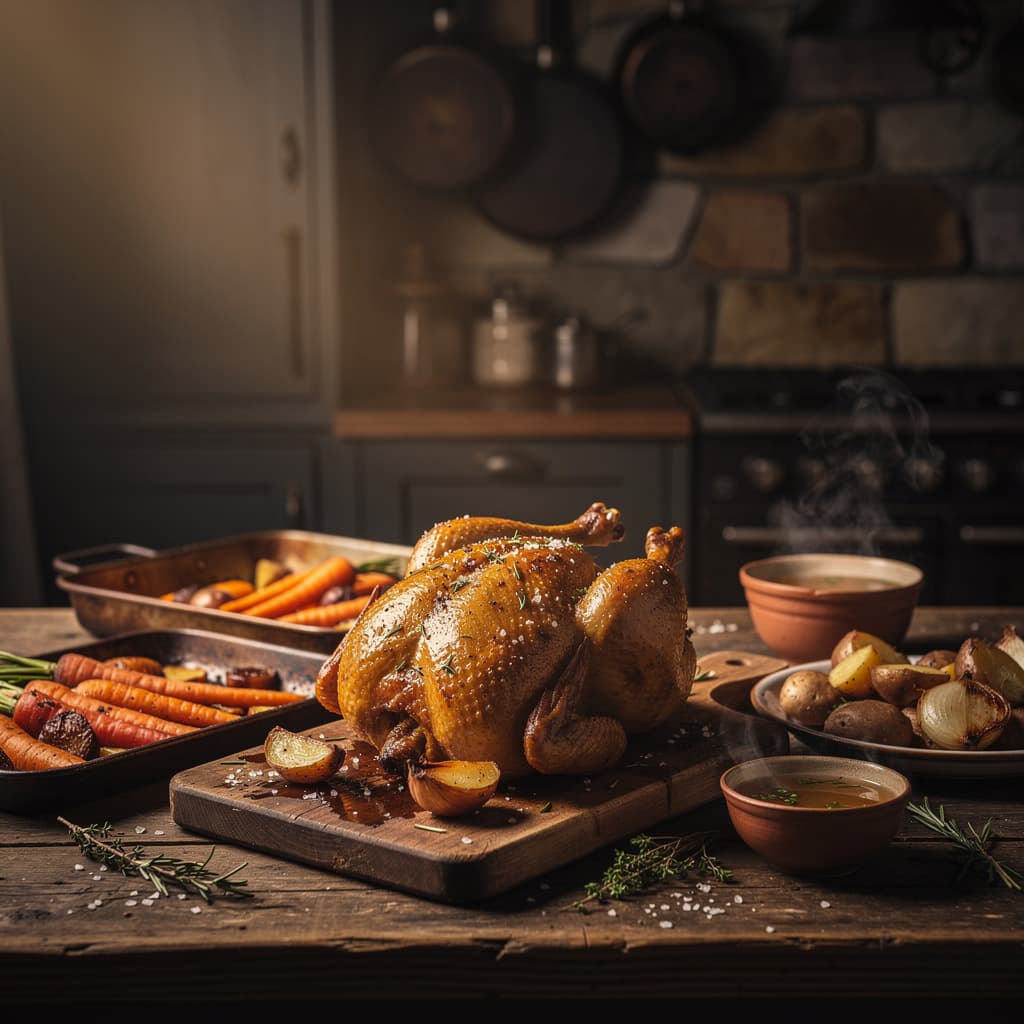
Back in the kitchen, I set the oven to 220 Celsius. The chicken gets a rub of olive oil, salt, and a handful of thyme from the windowsill. Into the roasting pan go the carrots, parsnips, and that celery root, all cut into chunks, tossed with a little more oil and a scattering of fennel seeds. The trick, always, is a hot tray and a single layer—crowd the vegetables and they steam instead of caramelizing. Forty-five minutes later, the skin is mahogany and the kitchen smells like a restaurant. I pull the bird out to rest, and the vegetables get another five minutes alone in the heat while I make a quick pan sauce from the drippings, a splash of white wine, and a spoonful of mustard. That is Sunday dinner, and it is also the foundation for the next three days.
The macro story
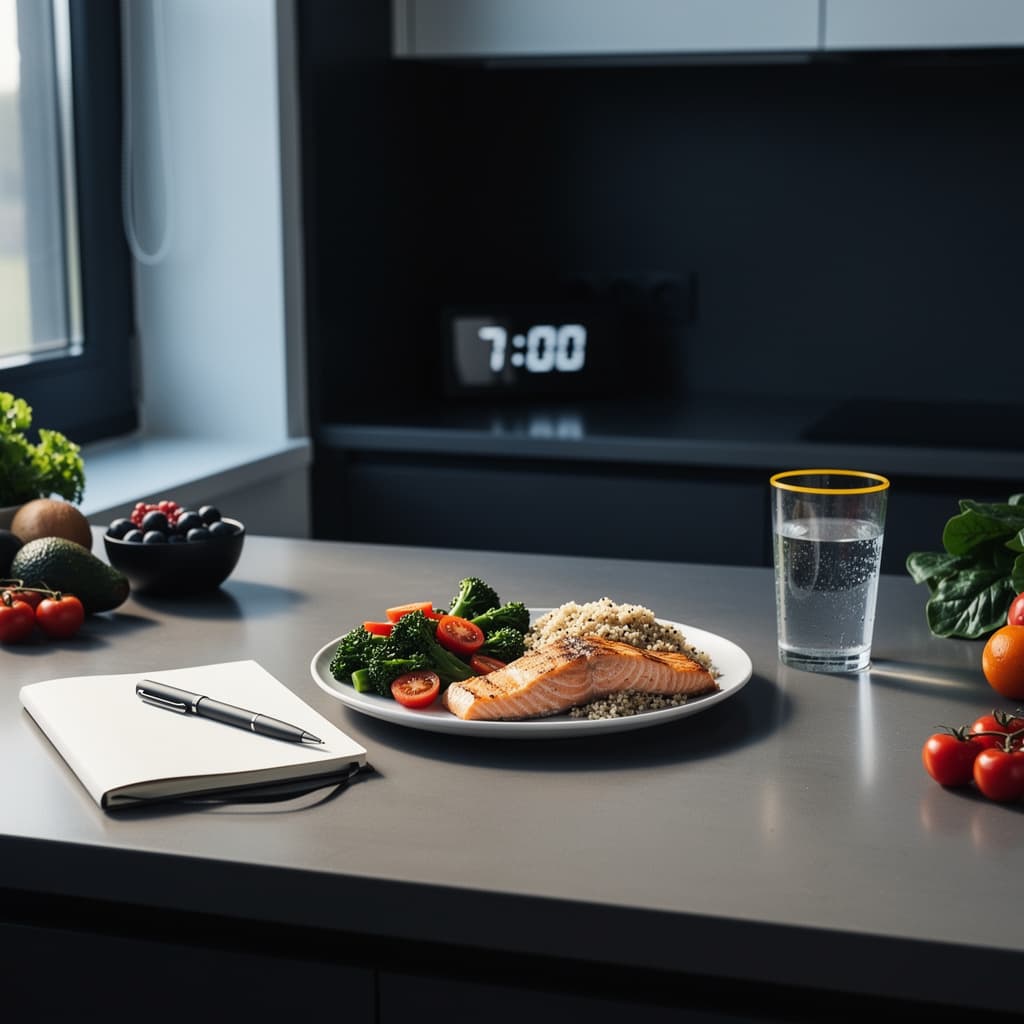
A roast chicken is a quiet powerhouse. A palm-sized portion of breast meat gives you about thirty grams of protein, the kind that repairs muscle and keeps you full until lunch tomorrow. The vegetables bring slow carbohydrates and fiber, the sort that feed your gut microbiome and steady your blood sugar. When I turn the leftovers into a soup with beans and kale, I am adding more fiber, more plant protein, and a broth made from bones that simmers until it is rich in collagen. Tuesday’s salad—shredded chicken, roasted beets, a handful of walnuts—gives you healthy fats and a dose of iron. None of this requires a calculator. It is just what happens when you build meals around whole ingredients and cook with a little foresight. The American Heart Association suggests limiting saturated fat, and this is one way I do it: I skim the fat from the chilled broth before reheating, and I choose lean cuts when I buy beef or pork, looking for words like “loin” or “round” on the label. I drain the fat from cooked ground meat, too, and replace higher-fat cheeses with part-skim mozzarella or reduced-fat feta when a dish calls for it. These are small moves that add up over a week of eating.
Try this weekend
Start with a roast—chicken, a pork loin, a tray of vegetables. On Monday, pull the leftover meat from the bones and set the carcass in a pot with water, a halved onion, a carrot, and a bay leaf. Let it simmer while you do other things. That night, reheat the vegetables with a fried egg on top. Tuesday, strain the stock and make a soup with the shredded meat, a can of white beans, and those sturdy greens you bought. Wednesday, toss the last of the chicken with cooked farro, roasted peppers, and a lemon-anchovy dressing. By Thursday, if anything remains, it becomes a frittata or a filling for a wrap. The only real rule is this: refrigerate leftovers within two hours—one hour if it is hotter than 32 Celsius outside—and keep them at or below 4 Celsius. When you reheat, make sure everything reaches 74 Celsius all the way through; a food thermometer is your friend here, and stirring once or twice in the microwave helps avoid cold spots. Most leftovers will keep for three to four days in the refrigerator, and if you will not get to them by then, freeze them. Trust your thermometer more than your eyes or nose—harmful bacteria do not always announce themselves with a smell or a fuzzy coat.
This is not a system. It is just a way of cooking that treats leftovers as ingredients, not obligations. And it leaves you with time in the evening to do something other than chop onions—read to your kids, take a walk, learn to play the harmonica. Whatever you like. As always, if you have specific health concerns or dietary needs, consult a physician or a registered dietitian for advice tailored to you.
References
- 25 Heart-Healthy Eating Tips — eatright.org
- Tips for Reheating Leftovers — eatright.org
- Cook Once, Eat Safely throughout the Week — eatright.org
- Leftover Safety — eatright.org