

At the Market
Saturday, the first figs of the season sat next to a wedge of aged Gouda. I bought both, plus a dozen eggs from the woman whose hens wander the olive grove. That's the start of a breakfast for someone who plans to move. Not a shake, not a bar with a label — food that asks you to pay attention.
I shop for breakfast like I shop for dinner, with the week's training in mind. Long run on Sunday? Eggs, sourdough, whatever greens look alive. Rest day? Yogurt and the last of the berries. The market decides, not the app.
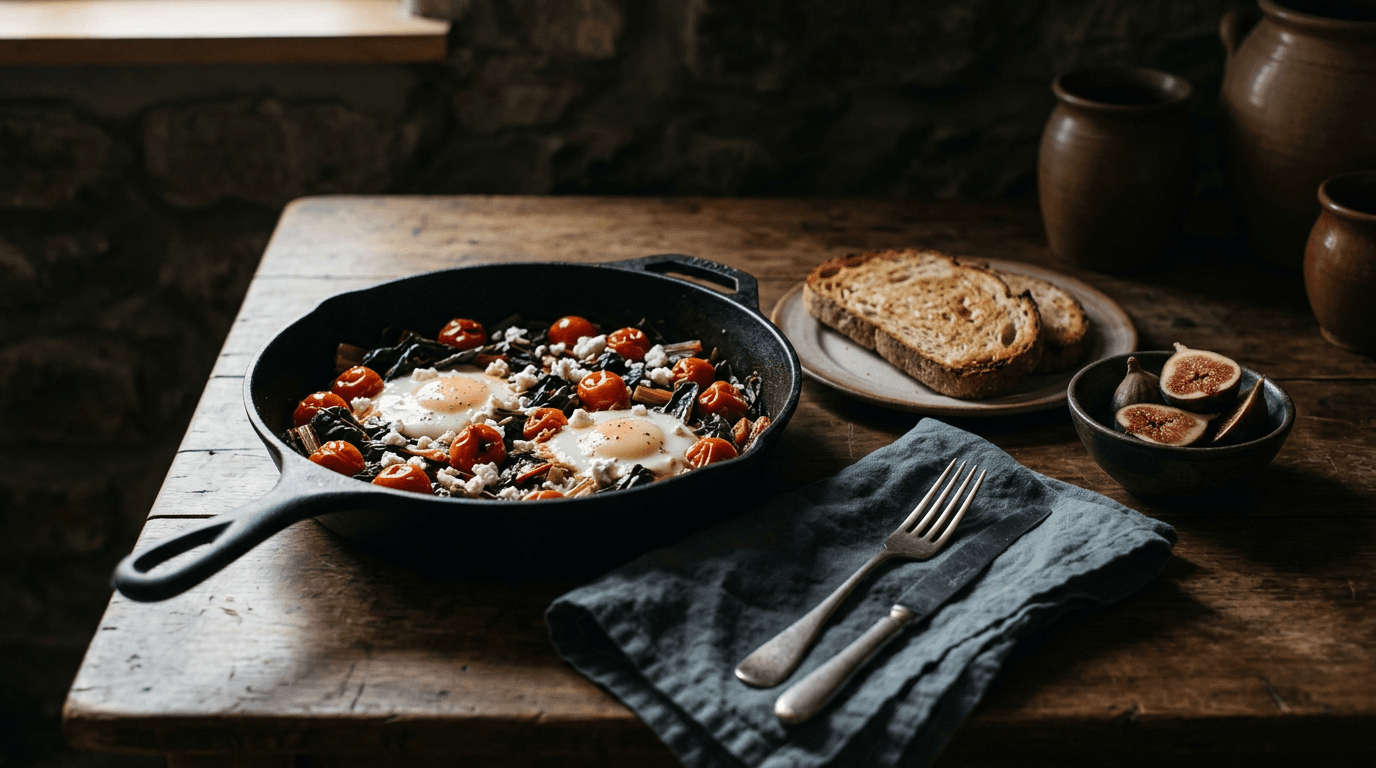
This morning: Swiss chard, cherry tomatoes, feta. The figs went in because they won't last, and tomorrow's breakfast will be better for it.
The Dish
We're making a skillet: chard and tomatoes wilted in olive oil, a few eggs cracked on top, feta crumbled over. Ten minutes, one pan. With toasted sourdough, it holds you till lunch.
For sweet mornings, I press leftover sweet potato into bars with dark chocolate, freeze them, and grab one on the way out. Precision Nutrition's recipe is a good start, but I swap date syrup for honey when that's what I have. The technique is forgiving — that's the point.
The Protein Story
Breakfast is where most of us get the protein math wrong. We eat light in the morning, heavy at night, but the body doesn't store protein like a pantry. The American Society for Nutrition notes that a higher-protein breakfast supports muscle health and helps regulate appetite. For active people, that means aiming for 25–30 grams at the start of the day.
But I'm not counting grams at the table. I'm thinking eggs, yogurt, smoked fish, beans — ingredients that bring protein along with flavor. Precision Nutrition's guide suggests active people need 1.2 to 2.2 grams per kilogram of body weight daily, spread across meals. The skillet with three eggs and feta gets you close to 25 grams, and it tastes like a real breakfast.
Try This Weekend
Make the skillet. Or the sweet potato bars. Both are forgiving, and both leave something for Monday. The bars freeze for a week, so a busy morning doesn't have to mean a sad one.
Start with what's at your market. Chard tired? Use spinach. Figs gone? Grapes will do. The recipe is a suggestion, not a rule — that's how good cooking works.
If you're training hard and wondering whether breakfast is doing its job, talk to a doctor or a registered dietitian who can look at your whole day. The Academy of Nutrition and Dietetics has breakfast ideas to get you started, but your needs are your own.
FAQ
Is 25–30 grams of protein at breakfast really necessary?
For active people, yes — it supports muscle repair and keeps you full. But that's a target, not a law. If you're smaller or less active, you might need less. Listen to your body and adjust.
Can I make the skillet ahead of time?
You can, but eggs are best fresh. If you're meal-prepping, cook the greens and feta ahead, then crack eggs in the morning. Or make the sweet potato bars — they're built for grab-and-go.
What if I don't eat eggs?
Swap in yogurt with nuts and fruit, or a bean and greens scramble with tofu. The goal is protein and flavor, not a specific ingredient. The market still decides.