

A push-up done in five seconds is one push-up. The same push-up across thirty seconds is ten. The body learns from time under attention, not repetitions. Breath is the same, except slower. You cannot rush a breath into meaning. You can only sit with it, for years if needed.
Principle
The breath is the first movement we learn and the last we forget.
Practice
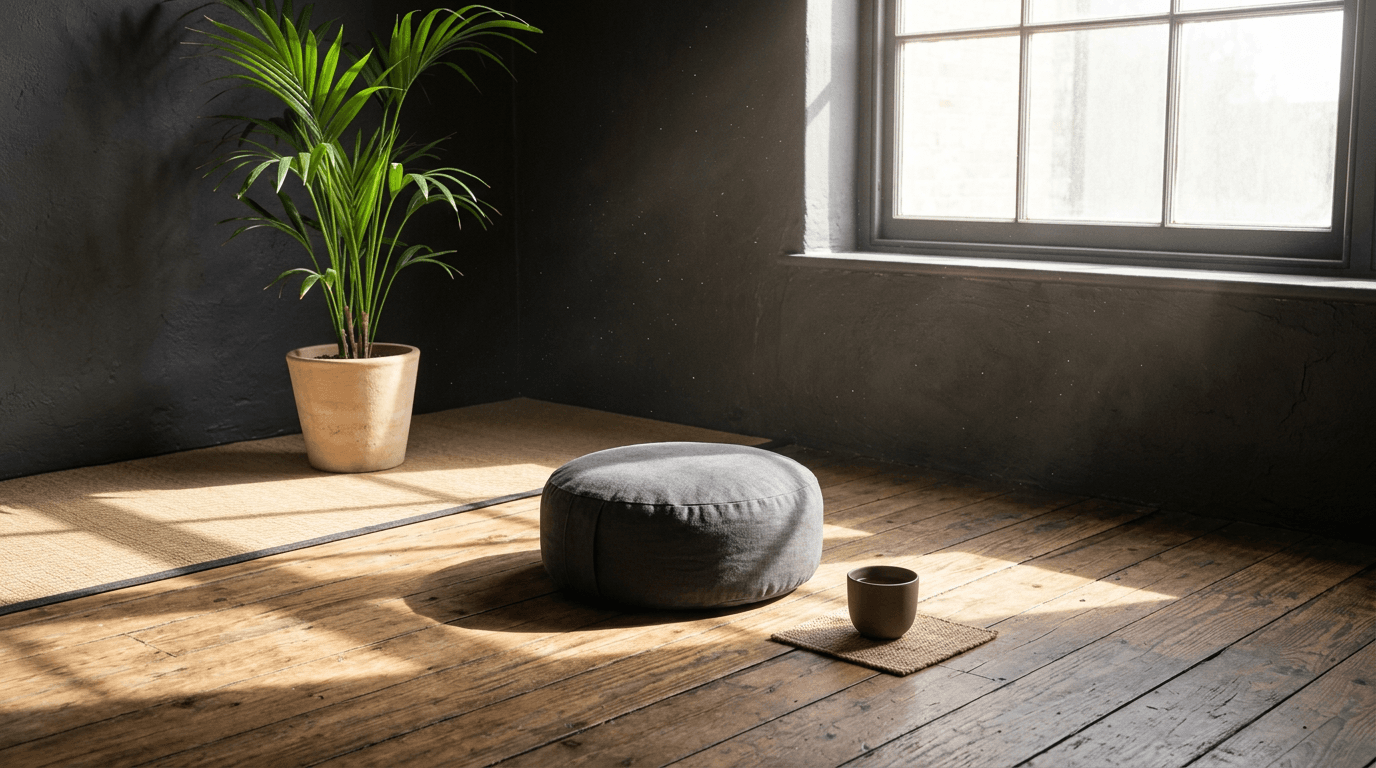
Sit on the floor, or on a chair if the floor asks too much. Close the eyes if that helps. Let the hands rest on the knees, palms open. Do not try to breathe deeply. Do not try to breathe slowly. Just notice the breath as it is, the way you would notice a friend who has been waiting quietly.
Feel the air enter at the nose, travel down, fill the belly. Feel it leave, the belly softening. That is one breath. Do this for three minutes. Then five. Then ten, if the day allows. The breath is not a task to complete. It is a place to return to, the way you return to a doorway you have passed a thousand times.
There is a form of this called qigong, translated as breath work or energy work, practiced standing or moving. A few minutes of gentle breathing, sometimes combined with movement, to relax the mind and mobilize the body's energy. You do not need the name. You need the sitting.
At the end of a bodyweight session, take three to five minutes for slow, deep breathing. The muscles have done their work. The breath settles what the movement stirred. This is not a cool-down. It is a return.
Reflection
Notice what arises when you sit with the breath. The mind will offer its usual inventory: the list of tasks, the memory of an argument, the plan for tomorrow. That is not failure. That is the mind doing what minds do. The practice is not to empty the mind. It is to notice when you have left the breath and to return, without judgment.
After a few weeks, you may notice something else. The breath becomes a reference point, a place you can check in with during the day. Are you holding the shoulders? Is the jaw tight? The breath will tell you, if you listen. It will show you what you are carrying before you know you are carrying it.
This is not a technique to master. It is a relationship to keep. The breath will not perform for you. It will not give you a number to track or a benchmark to beat. It will simply be there, patient, asking nothing. In a world that measures progress in reps and minutes, the breath refuses the clock. It opens on its own schedule, the way a hip does, the way trust does.
One question for the reader
What would it mean to treat the breath not as a tool but as a teacher? Not something to use for calm, but something to learn from. The breath has been with you since the first moment of life. It has never stopped, even when you forgot it. It has witnessed every effort, every rest, every quiet hour. It knows your pace better than you do.
When you rush a movement, the breath shortens. When you hold a pose, the breath steadies. When you are afraid, the breath hides. The breath does not lie. It is the body's honest report, filed continuously, whether you read it or not.
So the question is not how to breathe better. It is what your breath is telling you that you have not yet heard. Sit with it. Ask it. The answer will not come in a week. It may take a season, or several. That is fine. The breath has time. The question is whether you do.
FAQ
How long should I practice each day?
Start with three minutes. That is enough to notice the difference between rushing and resting. Build to ten if the day allows, but the length matters less than the return. The breath is a place to come back to, not a distance to cover.
What if I can't stop thinking while I breathe?
That is not failure. The mind is supposed to think. The practice is to notice when you have left the breath and to come back, without judgment. Each return is a rep. Over weeks, the returns get quicker.
Is this the same as meditation?
It is a form of it, but without the label. You are not trying to empty the mind. You are learning to listen to the body's honest report. The breath is the messenger. The sitting is the practice.
References
- The Health Benefits of Tai Chi — Harvard Health
- Body-weight Interval Training: Equipment Free and Highly Versatile — ACE Fitness
Before changing your exercise or breathing habits, consult a physician for personal medical concerns.