


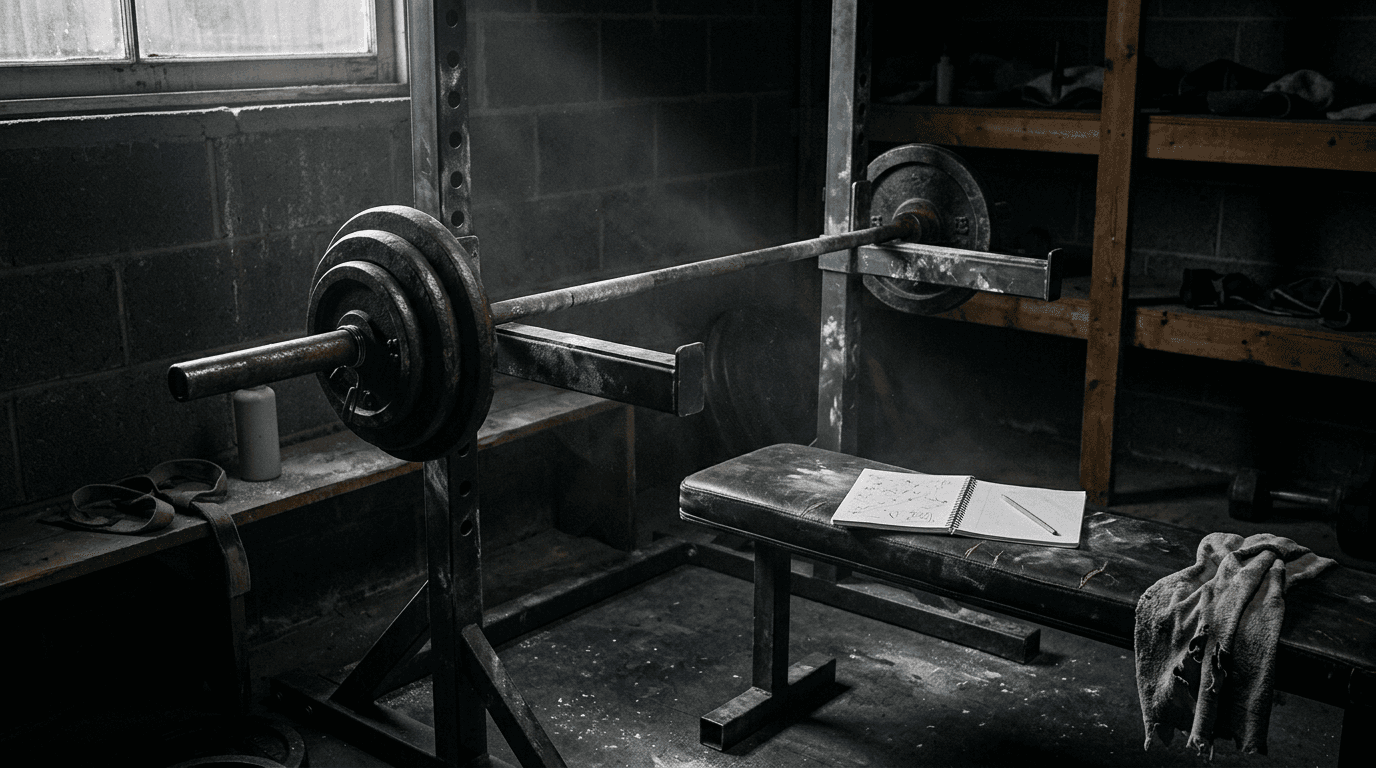
Most lifters chase the magic rep range instead of hard sets. Wrong target. The bar does not lie. Take a set close to failure and the number on the bar matters less than the work you put in.
Why it matters
You can grow on fives. You can grow on twenties. The research keeps landing in the same spot: when sets are taken near failure, muscle growth is similar across a wide spread of rep ranges. So stop hunting for the perfect number. Start logging hard sets and adding weight or reps. That is the whole game.
The how
Pick a range and run it. Here is the drill.
- Choose your range. For most lifts, live in the 5–15 rep zone. Compounds lower, isolations higher. Write it down.
- Take sets close to failure. Leave one rep in the tank on most sets. On your last set, push to technical failure. That is where the growth signal lives.
- Log every set. Weight, reps, how close to failure. No log, no progress. The bar does not lie, but your memory does.
- Add weight or reps weekly. Hit the top of your range on all sets, add five pounds next session. Can't? Add one rep per set. Small steps.
- Run it twelve weeks. No program-hopping. Boring is what works. Twelve weeks, then reassess.
Follow them in order. Do not skip the log.
Programming notes
Three to four working sets per exercise. Compound lifts: 5–8 reps. Isolation lifts: 10–15 reps. Two to three sessions per week per muscle group. That is 10–20 hard sets per muscle per week. Start at the low end if you are new. Add sets only when recovery allows.
Rest two to three minutes on compounds, sixty to ninety seconds on isolations. Keep a rep or two in reserve on early sets. Take the last set to technical failure. That gives you the hard work without frying your recovery.
If you hit the top of your range on all sets with good form, add five pounds next time. If you miss reps, hold the weight and add a rep next session. That is double progression. It is boring. It works.
Run this for twelve weeks before you change anything. Program-hoppers never get strong. The ones who log and progress do.
Common mistakes
- Chasing soreness. Soreness is feedback, not progress. Track the bar, not your aches.
- Stopping sets too early. If you finish a set and could do five more reps, you left growth on the table. Get closer to failure.
- Changing programs every month. Pick a plan and run it twelve weeks. No medal for program-hopping.
- Ego lifting. I blew out my knee at twenty-two chasing a squat PR with ugly form. No medal for ugly reps. Fix the shape first.
- Ignoring the log. If you don't write it down, it didn't happen. The bar does not lie, but your memory does.
FAQ
Can I really build muscle doing sets of twenty?
Yes, if the set is hard. Take a set of twenty close to failure and it recruits plenty of muscle. What kills growth is stopping at twenty when you had ten more in you. The number is not the signal — the effort is.
How do I know I'm close to failure without a coach?
Count your reps in reserve. If you finish a set and could grind out three or four more clean reps, you were not close. Aim to leave one rep in the tank on most sets, and take the last set to the point where form starts to break. That is your signal.
What if I miss reps two weeks in a row?
Hold the weight and add a rep per set next session instead of adding load. If you stall again, drop one set and rebuild. Do not change the program — that is the mistake. Fix the recovery, not the plan.