

"No screens before bed" is the rule everyone quotes and almost nobody keeps. The data is narrower than the slogan: the problem is not the screen itself but the light it emits and the alerting content it delivers. Remove those two, and the screen stops being the enemy.
The misconception
People treat "no screens before bed" as a single all-or-nothing rule. That framing fails. A toddler randomized to remove screen use in the hour before bed showed no expected sleep or attention benefits — the guideline is weaker than it sounds. Adults are different. Evening use of light-emitting devices increases alertness and decreases sleepiness before bedtime, measured by cognitive performance, self-reported scales, and waking EEG. The light also suppresses melatonin, the hormone that normally rises before sleep. So the issue is not the device as an object. It is brightness, timing, and what the content asks your brain to do. A passive video at low brightness is not a group chat at full brightness. The misconception is that all screen time before bed is equal. It is not.
What the data shows
Two separate mechanisms are at work. The first is light: LED screens before bed decrease self-reported sleepiness and melatonin in adolescents, with similar results in young adults. The second is arousal: bedtime screen use for leisure, diversion, distraction, and communication is common. In a large Norwegian sample, more than 90% of adolescents used screens before bed. Teens reporting more than four hours of daily screen time had a 3.6-fold increased risk of sleeping less than five hours. Multiple bedside devices raised the likelihood of sleeping under five hours from 2.2- to 2.8-fold, depending on the number. That is a dose-response pattern: more devices, more disruption. The careful reading is that the screen is not one variable. Brightness, duration, content, and proximity all matter. A phone charging across the room is not a phone in your hand. The data supports a targeted change, not a blanket ban.
One careful tip
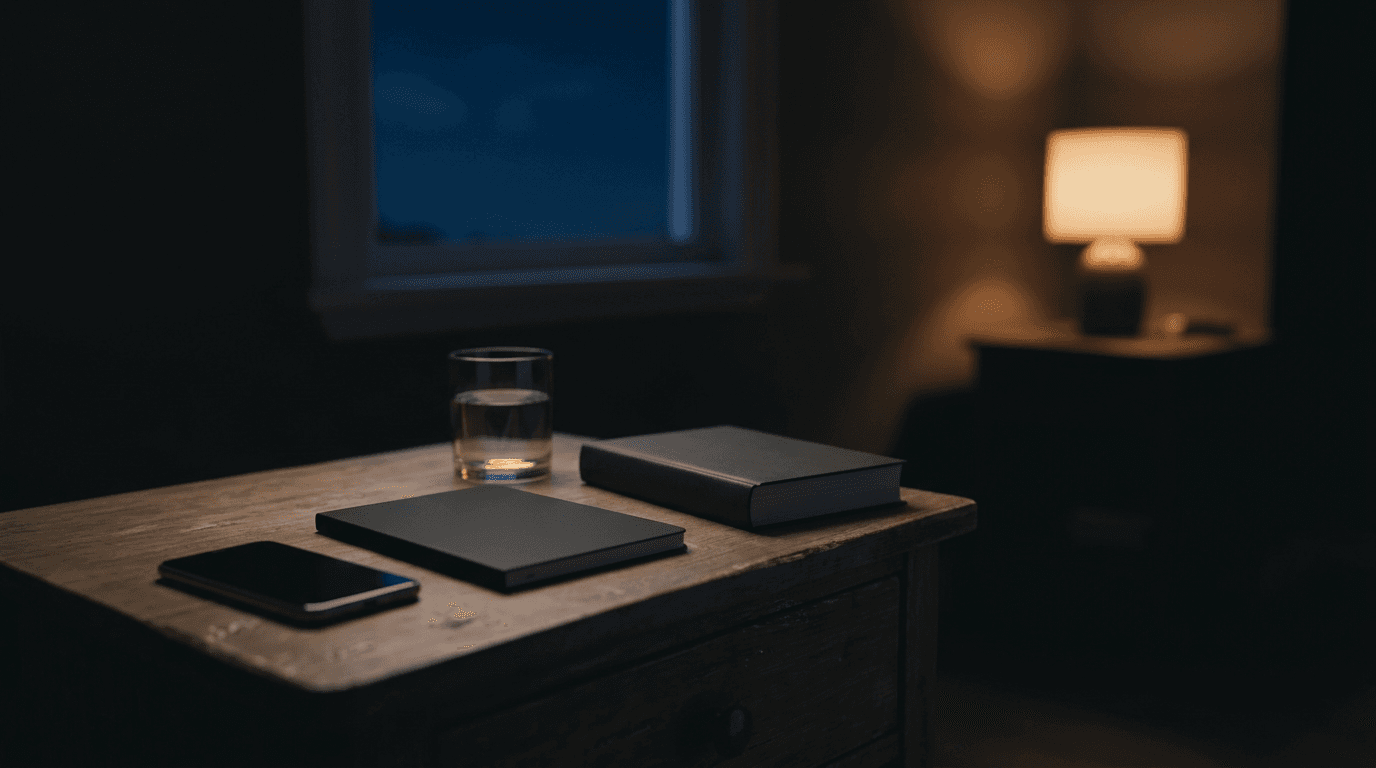
Fix the wake time first — that is the anchor. Then, for the screen: thirty minutes before bed, dim it to the lowest comfortable setting and stop any activity that asks you to respond, decide, or compare. No messaging, no comment sections, no shopping, no work email. Passive content at low brightness is allowed. The goal is not to eliminate the screen; it is to remove the two things that push sleep away. Keep the phone out of arm's reach if you can, but don't make that the whole plan. A phone across the room checked at full brightness is worse than a dim phone you put down. This tip does not apply to people using a screen for prescribed treatment, such as a light box for seasonal affective disorder, or shift workers following a clinical sleep plan. For everyone else, the thirty-minute dim-and-stop rule is small enough to keep.
When to see a clinician
This advice is for people whose sleep is mostly fine and who want a small improvement. It is not a treatment. If sleep onset takes more than thirty minutes most nights for several weeks, see a clinician. The same goes if you wake in the night and cannot return to sleep, if you snore heavily or stop breathing, if you feel unrefreshed despite enough hours in bed, or if daytime sleepiness affects your driving or work. Children and adolescents deserve their own assessment, because the toddler evidence is mixed and guidelines there rest on weak support. Pregnant people, older adults on multiple medications, and anyone with a diagnosed sleep disorder should follow individualized clinical guidance instead of a general tip. A clinician can separate a habit problem from a sleep disorder — and the fix is different. If you are unsure which one you have, ask. Do not guess from an article.
FAQ
Is reading on my phone in bed as bad as scrolling social media?
Not usually. Reading is passive; it doesn't ask you to respond, decide, or compare. The two culprits are bright light and alerting content. Dim the screen, keep the material calm, and reading in bed is a far smaller problem than a group chat at full brightness.
Does blue-light-blocking mode fix this on its own?
It helps a little, but it is not the whole fix. Lowering overall brightness and cutting interactive content do more. Think of night mode as one lever, not the switch. If you use it and still scroll at full brightness, you have changed almost nothing.
I fall asleep with the TV on. Does that count?
It counts, but differently. A TV across the room at low volume is less alerting than a phone in your hand, yet the light still reaches your eyes and can suppress melatonin. If you need background noise, try audio only with the screen off.
References
- Toddler Screen Use Before Bed and Its Effect on Sleep and Attention: A Randomized Clinical Trial — pmc.ncbi.nlm.nih.gov
- Bedtime screen use in middle-aged and older adults growing during pandemic — pmc.ncbi.nlm.nih.gov
- Toddler Screen Use Before Bed and Its Effect on Sleep and Attention: A Randomized Clinical Trial — pubmed.ncbi.nlm.nih.gov
- Youth screen media habits and sleep: sleep-friendly screen-behavior recommendations for clinicians, educators, and parents — pmc.ncbi.nlm.nih.gov
- The relationship between screen time before bedtime and behaviors of preschoolers with autism spectrum disorder and the mediating effects of sleep — pubmed.ncbi.nlm.nih.gov
For personal medical concerns, consult a physician.