


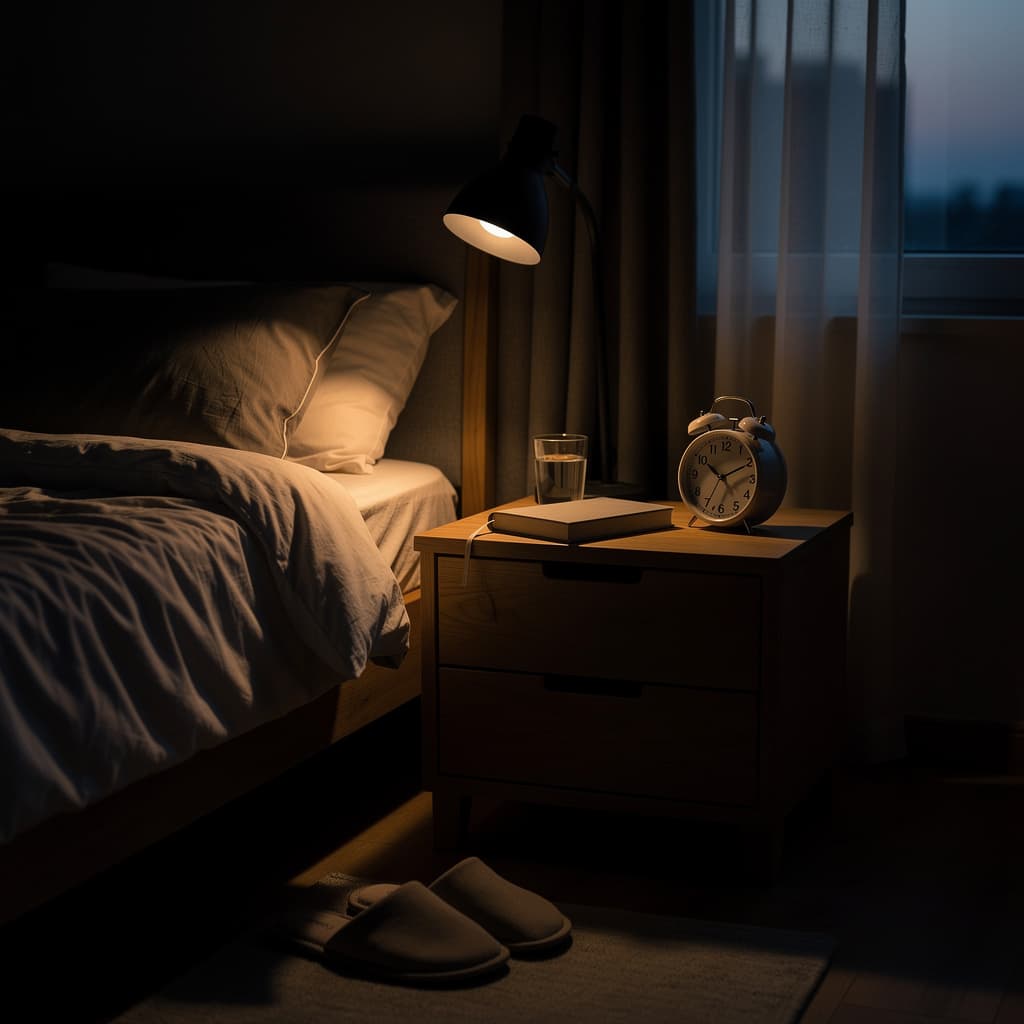
A common belief is that older adults need less sleep or should try harder to achieve it. The data is more specific: sleep architecture changes with age, but the drive for sleep remains, and the most reliable lever is not bedtime but wake time. Anchoring the morning rise, even after a restless night, strengthens the circadian signal that governs sleep onset and depth. Non-pharmacological interventions, particularly those targeting regularity, show consistent, modest benefits in meta-analyses.
The misconception
Many older adults assume that poor sleep is an inevitable part of aging, or that going to bed earlier will compensate for frequent night awakenings. Others believe that a sleep medication is the only effective route. These views oversimplify a complex picture. While sleep does become lighter and more fragmented with age, the underlying need for restorative sleep persists. The problem is often not a lack of sleepiness, but a mismatch between the body’s internal clock and the sleep schedule being imposed.
What the data shows
Evidence from randomized controlled trials and umbrella reviews indicates that non-pharmacological interventions can improve sleep in older adults. A 2025 umbrella review mapped the evidence for several approaches, finding that joint therapy—a form of behavioral intervention—improved overall sleep quality with an effect size of 1.18, though the certainty of evidence varied across interventions. More broadly, cognitive behavioral therapy for insomnia (CBT-I) and brief behavioral treatments have demonstrated efficacy in reducing sleep onset latency and wake after sleep onset in older populations, with benefits sustained over time.
Pharmacological options exist but carry caveats. A clinical practice guideline on sleep disorders in the elderly notes that low-dose melatonin (0.5–6 mg) may improve initial sleep quality, and ramelteon, a melatonin receptor agonist, reduces sleep onset latency and total sleep time in older adults with insomnia, with tolerability up to one year. However, the same guideline emphasizes that these agents are not first-line for all cases and that non-drug approaches should be prioritized. Another AASM guideline on chronic insomnia confirms that treatments such as eszopiclone can be effective in older adults, but only after careful diagnosis and when behavioral strategies have been insufficient.
Across these sources, the theme is that regularity—particularly a fixed wake time—is a foundational element. The circadian system in older adults may be more vulnerable to irregular schedules, and anchoring the morning light exposure and activity start time helps consolidate sleep at night.
One careful tip
The tip is to set a fixed out-of-bed time, seven days a week, and rise at that time regardless of how the night went. This is not about forcing oneself to sleep less; it is about building a strong circadian signal. When the brain learns that morning light and movement happen at the same clock hour every day, the sleep–wake cycle becomes more predictable. Over a few weeks, sleep onset often shifts earlier and night awakenings may shorten because the homeostatic sleep drive is better aligned.
This tip is most appropriate for community-dwelling older adults without major cognitive impairment or untreated sleep disorders. It is not a standalone treatment for insomnia disorder, sleep apnea, or restless legs syndrome. In those cases, it may be a supportive piece of a broader clinical plan, but not a replacement.
Implementation matters. Keep the bedroom dark and quiet, and avoid clock-watching. If sleep does not come, get up briefly and do something quiet in dim light, then return to bed. The wake time, however, stays fixed. Naps, if taken, should be before 3 p.m. and under thirty minutes. This steady routine is more powerful than chasing an earlier bedtime, which often backfires by increasing time in bed awake and weakening sleep efficiency.
When to see a clinician
If sleep onset takes more than thirty minutes most nights for at least three nights per week over a month, or if loud snoring, gasping, or leg discomfort disrupt sleep, a clinical evaluation is warranted. Older adults are at higher risk for sleep apnea, periodic limb movement disorder, and medication-related sleep disruption. A healthcare professional can assess whether a sleep study, medication adjustment, or structured behavioral program is needed. The careful approach is to treat the wake-time anchor as a healthy habit, not a cure for underlying pathology. Readers should consult a physician for personal medical concerns.
References
- Non-pharmacological interventions for sleep in older adults: an umbrella review and evidence map of randomized controlled trials — PMC
- Clinical Practice Guideline on Management of Sleep Disorders in ... — PMC
- Clinical Guideline for the Evaluation and Management of Chronic ... — PMC
- Evidence-Based Recommendations for the Assessment and Management of Sleep Disorders in Older Persons — PMC
- An American Academy of Sleep Medicine Clinical Practice Guideline — PMC