


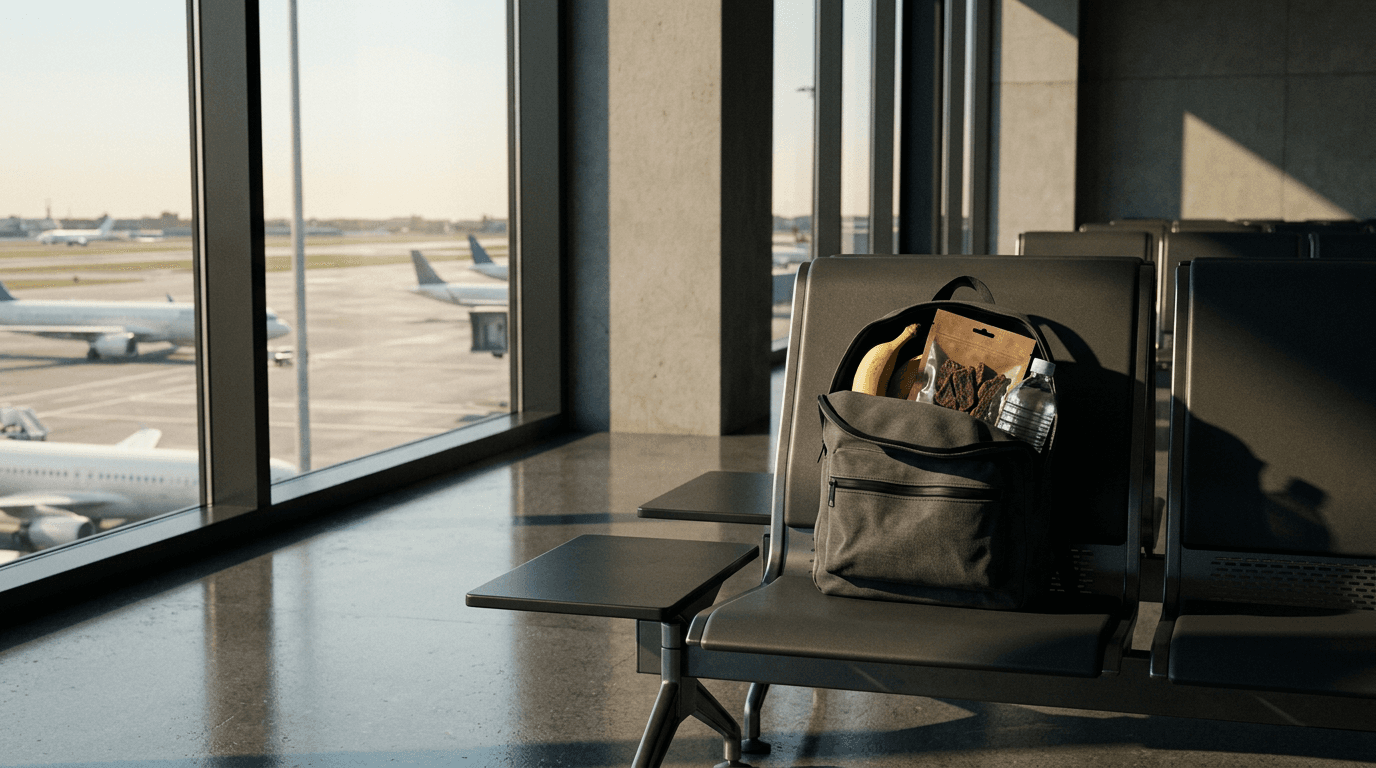
You've heard it before: travel days are a nutrition black hole, and you need a special plan to survive them. The evidence is more relaxed than the headlines. Systematic reviews—the kind that compile data from multiple studies—carry more weight than any single anecdote about a missed meal at an airport. The USDA's Nutrition Evidence Systematic Review team exists precisely because single studies are not enough to build public health advice. Travel nutrition is no different. You don't need a magic protocol; you need ranges, not points.
What the evidence says
Start with protein. A dose-response meta-analysis of prospective cohorts tied higher total protein intake to lower all-cause mortality, but the effect size was modest and the range mattered more than the timing. For active adults, aim for 1.4–2.0 g per kg of bodyweight per day. On a travel day, that might mean a 30 g protein snack at the gate and a 40 g dinner after landing. Distribution helps at the margins—roughly four meals of 0.4 g/kg outperform two huge ones—but total daily intake still wins. Carbs are the second lever. The sports nutrition literature, including the special issue from Current Developments in Nutrition, emphasizes that performance hinges on fueling around activity, not on rigid meal times. If you're walking through terminals and sitting in seats, your carb needs are lower than a training day. Keep a banana or a pack of crackers handy for the moments when hunger hits, but don't force a full meal if you're not hungry. Convenient, not magical.
Practical takeaway
Pack a travel-day nutrition kit. One protein source that doesn't need refrigeration—jerky, shelf-stable pouches of tuna, a protein bar with at least 20 g of protein. One carb source that won't crush in a bag—an apple, a bag of pretzels, a small container of oatmeal. One electrolyte packet if you're flying in heat or crossing time zones. That's it. You don't need a cooler full of meal prep. When you land, prioritize a real meal within two hours, but don't panic if the timing slips. The evidence says total daily intake still wins. If you miss a meal, don't double up on the next one; just eat normally. Your body is more resilient than the travel-day anxiety suggests.
Caveats
This advice assumes you're a generally healthy adult. If you have diabetes, kidney disease, or a history of disordered eating, the math changes. Protein ranges that work for most people might not fit your medical needs. Food availability also matters: a systematic review on food deserts shows that access to nutritious options is not equal, and travel can amplify that gap. If you're in a place where the only option is a gas station, choose the highest-protein, lowest-sugar item you can find, and move on. And if you're traveling for more than a few days, your routine will shift; that's normal. The goal is not perfection. The goal is to get the total intake in a range that supports your training and health. For personalized advice, consult a physician or a registered dietitian who knows your history before making major changes to your travel nutrition plan.
FAQ
What if I can't find a protein source at the airport?
Don't stress. Grab a Greek yogurt or a protein bar from any convenience store; if those aren't available, a bag of nuts or a cheese stick works. The point is to get some protein in, not to hit a perfect number. Your total daily intake will still be fine if you make up for it at your next real meal.
Is it okay to skip a meal on a travel day?
Yes, if you're not hungry. Forcing food when your body doesn't want it can lead to discomfort and mess with your appetite. Just make sure you're getting enough protein and carbs over the whole day—if you skip a meal, don't double up on the next one. Eat normally and trust your hunger signals.
How do I handle time zone changes with my eating schedule?
Shift your meals gradually to the new time zone, but don't obsess over the clock. Your body adapts within a few days. Focus on staying hydrated and getting a real meal when you land. If you're crossing multiple zones, an electrolyte packet can help with jet lag fatigue.