

The 60-second version
You have one minute before the shower. Stand next to the bed. Bodyweight squats, 20 seconds on, 10 seconds off, twice. That is it. Heart rate rises, blood moves, the fog from a poor night’s sleep thins. Zero equipment, zero recovery cost. You are not building muscle here; you are buying alertness. A single minute of intentional movement can nudge your system without stealing time from the rest of the morning. If the day ahead is packed, this is your unit.
The 5-minute version
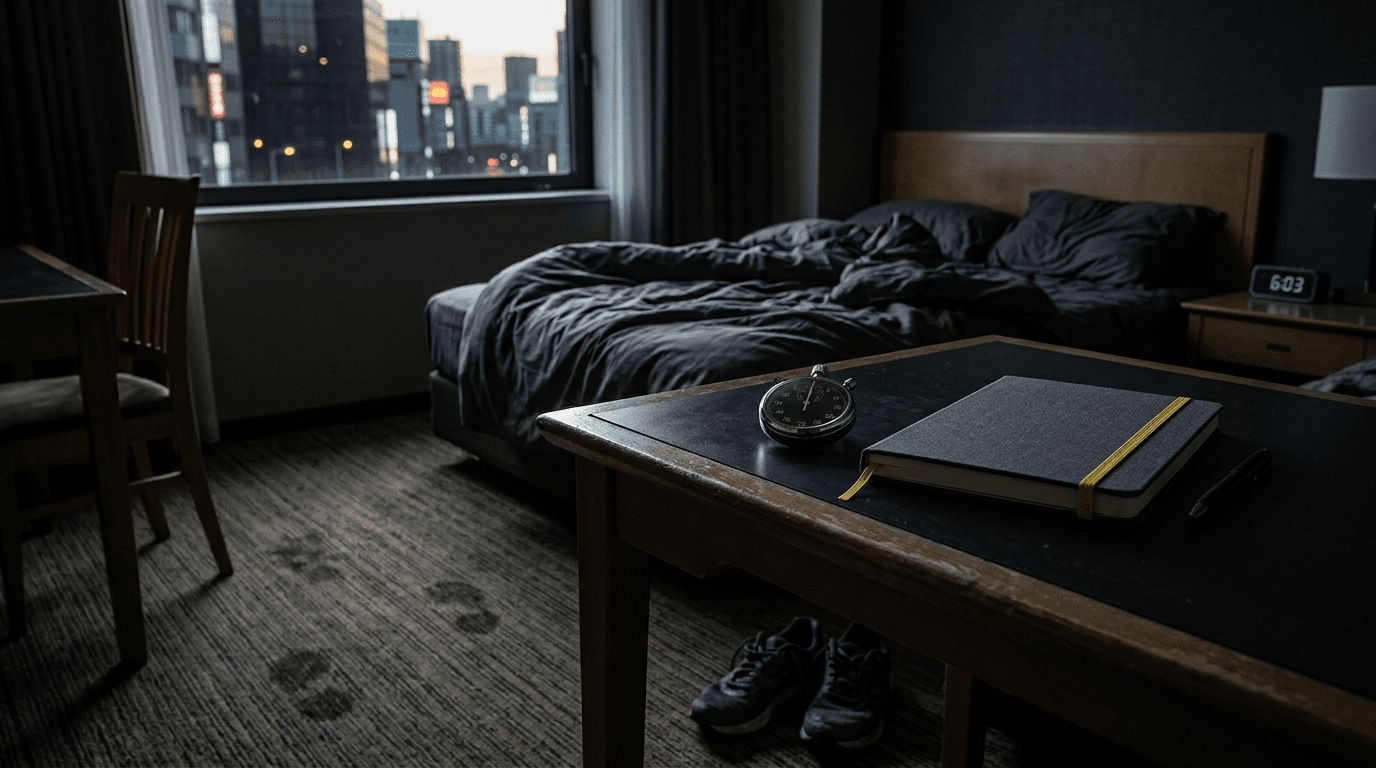
Five minutes opens the hotel-room circuit. Squats, push-ups against the desk, reverse lunges, a plank on the carpet. Run it as intervals: 30 seconds of work, 15 seconds of transition. Two rounds. You will finish slightly breathless. Short bursts of higher-intensity effort appear to trigger endorphin release, which can shift mood even when the workout feels brief. That matters on a travel day when stress runs high and control feels low. The time cost is minimal—five minutes plus a quick rinse—but the mental reset often outlasts the physical effort. Returns diminish past this for pure energy; the extra minutes buy endurance, not a proportionally better morning.
The deep version (15–30 minutes)
If you have a real window—a canceled breakfast, a late start—use it for a staircase or pavement interval session. Find a set of stairs and run repeats: 20 seconds hard up, walk down, repeat six to eight times. Or step outside and do 30-second striders on the sidewalk with 60-second walking recoveries. This is a genuine cardiovascular stimulus, the kind that nudges fitness forward. Research suggests that even 15 minutes of higher-intensity exercise can help prevent depression, and the endorphin boost may make the effort feel more pleasant than expected. But be honest about the cost. A 15-minute session plus a shower and cool-down steals 25 minutes from your morning. On a tight travel schedule, that might mean skipping breakfast prep or arriving rushed. The deep version is not a moral obligation; it is a trade-off. Pick it only when the gap is real.
Pick one
You do not owe yourself the bigger version. The 60-second squat buys presence. The five-minute circuit buys a mood shift. The staircase session buys fitness. Choose the one that fits the actual gap in your morning, not the one that sounds most impressive. Deciding to move at all today is enough.
FAQ
Can I combine these if I have multiple small gaps?
Yes, but treat them as separate deposits. A 60-second squat in the morning and a 5-minute circuit before dinner add up to more movement, but don’t try to cram them into one rushed block—that defeats the point. The key is matching each burst to the real window you have, not forcing a longer session.
What if my hotel room is tiny and I can’t do lunges?
Modify. Swap reverse lunges for stationary split squats or step-ups on a sturdy chair. The circuit’s value isn’t in the specific moves; it’s in elevating your heart rate with whatever space allows. Even marching in place with high knees works if you push the pace.
How do I stay consistent when every travel day feels chaotic?
Anchor the decision to a trigger, not a schedule. Tell yourself: “When I wake up, I’ll do 60 seconds before checking my phone.” That tiny commitment removes the mental negotiation. On chaotic days, the 60-second version is your fallback—it’s so short it’s hard to skip, and it keeps the habit alive.