


Most lifters train their core backwards. They chase the crunch, the twist, the burn. Wrong target. The core's real job is to stop movement, not start it. Under a heavy squat, your trunk must be a brick wall. If it buckles, the bar wins. Train for stiffness, not sensation.
Why it matters
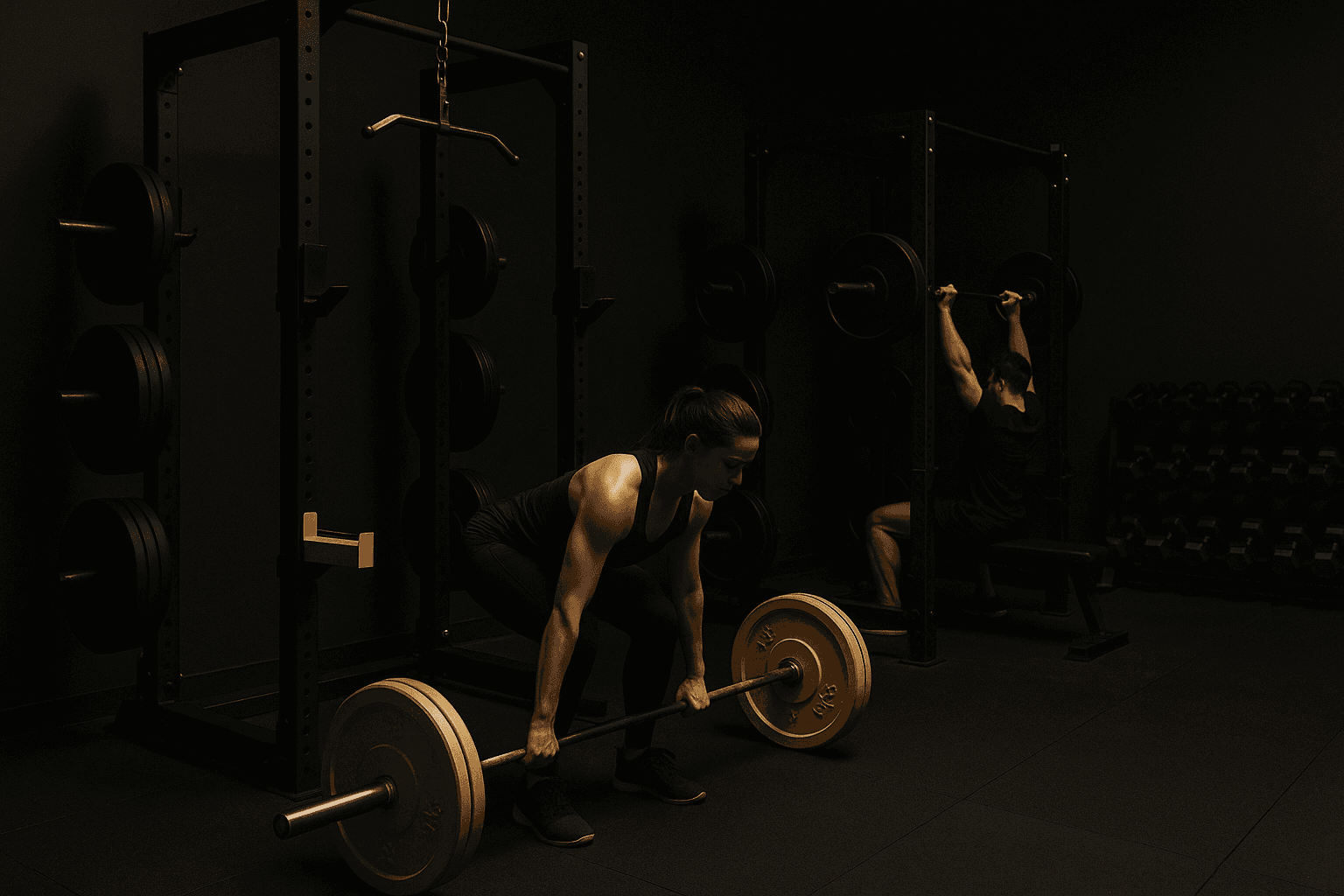
A strong, stable core is the platform every big lift stands on. When you deadlift, your spine wants to round. A braced core fights that. Research shows the lumbar spine tolerates more load in a neutral position than a flexed one. Avoid extreme rounding, and you stay safer under the bar. Multi-joint free-weight exercises like squats and deads already hammer the deep stabilizers—transverse abdominis, multifidus. But a dedicated core program fills the gaps and builds a trunk that transfers force from hips to shoulders without leaking energy.
The how
- Dead bug with a brace. Lie on your back, arms straight up, knees at 90 degrees. Press your low back into the floor. No gap. Extend one leg and the opposite arm. Hold for a two-count. Return. That's one rep. Do 3x8 each side. The goal is zero spine movement. If your back arches, shorten the range.
- Loaded carry. Grab a heavy dumbbell in one hand. Stand tall. Walk 40 yards without leaning. Switch hands, walk back. That's one set. Do 3 sets. This teaches your lateral core to fight rotation under load. No waddling. No tilting. Just a rigid trunk.
- Pallof press with rotation hold. Set a cable or band at chest height. Stand sideways to the anchor. Press the handle straight out and hold for 15 seconds. Fight the pull. Then slowly rotate your hips away from the anchor while keeping your arms extended. Return. Do 3x5 each side. This builds anti-rotation strength that directly transfers to a stable squat and deadlift.
Programming notes
Slot these movements at the end of your main session, three times a week. Two heavy days, one lighter day. On heavy days, push the load on carries and Pallof presses. On the light day, add a rep or two to dead bugs instead. Three working sets per movement is plenty. More is not better—intent is. Brace like you're about to get punched. Rest 60-90 seconds between sets. Track the weight or time, not the burn.
Common mistakes
- Breathing wrong. Holding your breath during the whole rep is a rookie move. Inhale before the effort, brace, then exhale on the return. Keep the brace through the exhale.
- Going too fast. Speed hides weakness. Slow down. Own every inch. A two-second hold at the hardest point reveals the real gaps.
- Adding too many movements. Three exercises cover anti-extension, anti-lateral flexion, and anti-rotation. That's the whole pie. More fluff sets won't build a stronger trunk—they just waste time.
- Ignoring your main lifts. If you're skipping squats and deadlifts to do extra core work, you've missed the point. The big lifts are your primary core builders. The accessory work is the icing, not the cake.
References
- Foundations of Fitness Programming — NSCA
- Implementing Core Training Concepts into Strength Training for Sport — NSCA
- The Comprehensive Core Training Guide — Stronger by Science