


What it is
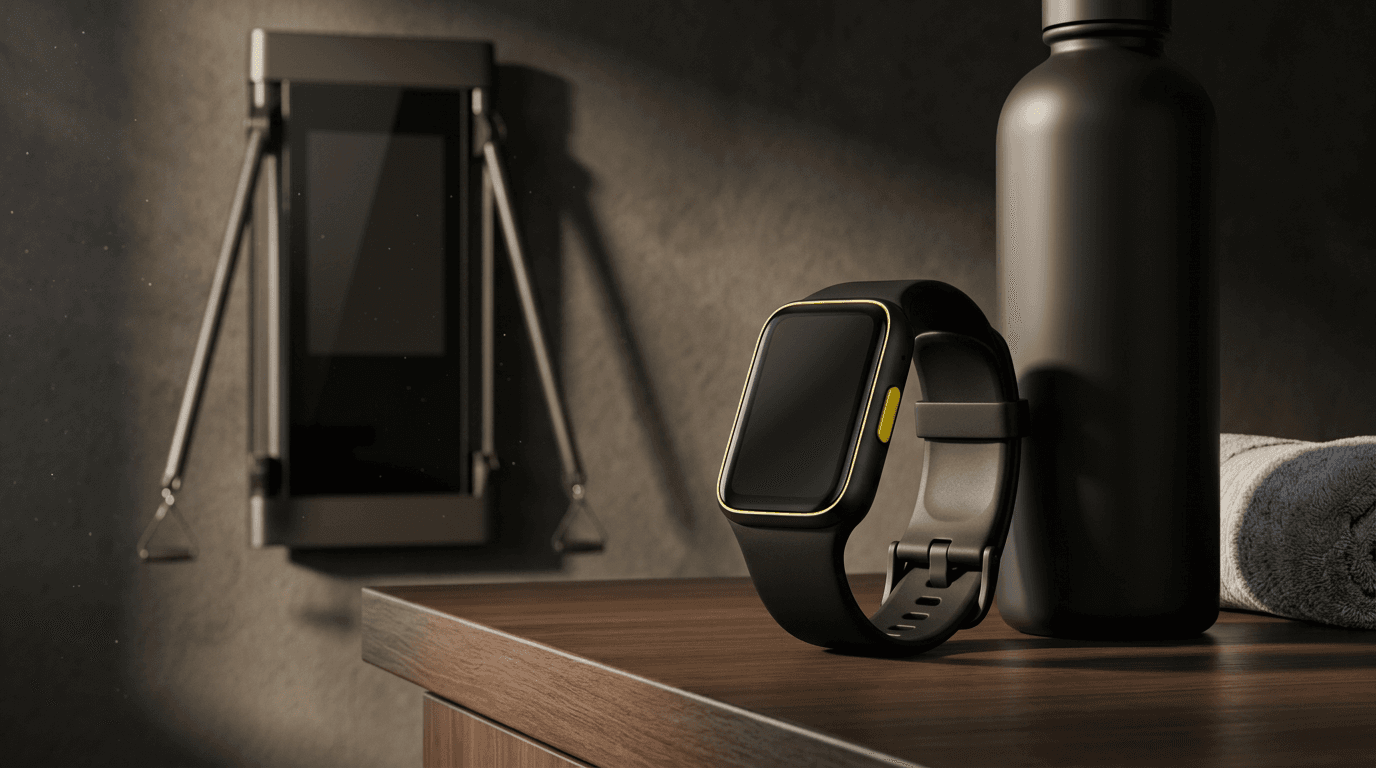
Connected gym equipment is the category that includes smart mirrors, streaming rowers, and app-driven strength trainers. The common thread is a screen, an internet connection, and a monthly fee. Tonal bundles adjustable arms and a touchscreen; Peloton sells bikes and treadmills with classes; Hydrow and FightCamp do the same for rowing and boxing. Even traditional gyms have copied the format, adding personalized screens to studio equipment. The hardware varies, but the business model does not: sell the machine, then sell access to the reason you turn it on. The machine without the subscription is often a very heavy paperweight with nice cables.
How it works (in plain language)
Inside a Tonal, an electromagnetic motor creates resistance instead of a stack of iron plates. The software tells the motor how much to pull, and sensors count your reps and estimate your power. A camera or wearable may check your form. The screen streams a coach who calls out tempo and rest. Data flows back to the app, which adjusts future workouts. It is a feedback loop: you move, the machine measures, the algorithm prescribes, you move again. The weak links are the same as anywhere else. Tracking accuracy depends on calibration and your range of motion. Interface reliability depends on your Wi-Fi. Feedback clarity depends on whether the coach is any good. None of that is magic; it is a control system with a personality.
Why it matters for movement / health
The useful part is adherence. A machine that tells you what to do next removes a decision, and decisions are where home workouts die. If the screen gets you to train three times a week instead of once, the subscription earned its keep. The resistance is also genuinely adjustable, which helps progressive overload without a wall of dumbbells. But the health benefit comes from the movement, not the metrics. A connected gym does not make you fitter than a barbell; it makes the barbell more likely to be used. That is a behavioral intervention wearing a hardware costume. If you already train consistently, the marginal value drops fast. If you need a coach in the room, it may hold you.
Open caveats
First, the subscription. A machine that requires a monthly fee to function is a lease on enthusiasm. If you cancel, you may lose the programming that made it useful. Second, privacy. A camera that watches your form can also watch your room, and workout data is health data. Read what leaves the device. Third, repair and lock-in. These are integrated systems; a failed screen can brick a working motor. Fourth, the accuracy claims. Rep counting and power estimates are relative numbers, not clinical readings. If a score disagrees with how you feel, trust the body. Buy the resistance; rent the rest only if you will show up.
FAQ
Is a connected gym worth it if I already lift consistently?
Probably not. The value is in the programming and the nudge, not the resistance. If you already show up, you are paying a monthly fee for a coach you do not need. Put that money into a barbell and a rack.
Can I use the machine without the subscription?
Sometimes, but check the fine print. Many units lock the useful modes — digital resistance, programming, metrics — behind the paywall. What remains is often a heavy cable station with limited range. Read the terms before you buy, not after.
Do the rep counts and power scores actually mean anything?
They are relative numbers, useful for tracking your own trend over time. They are not clinical measurements. If a score disagrees with how you feel, trust your body. The metric is a tool, not a verdict.