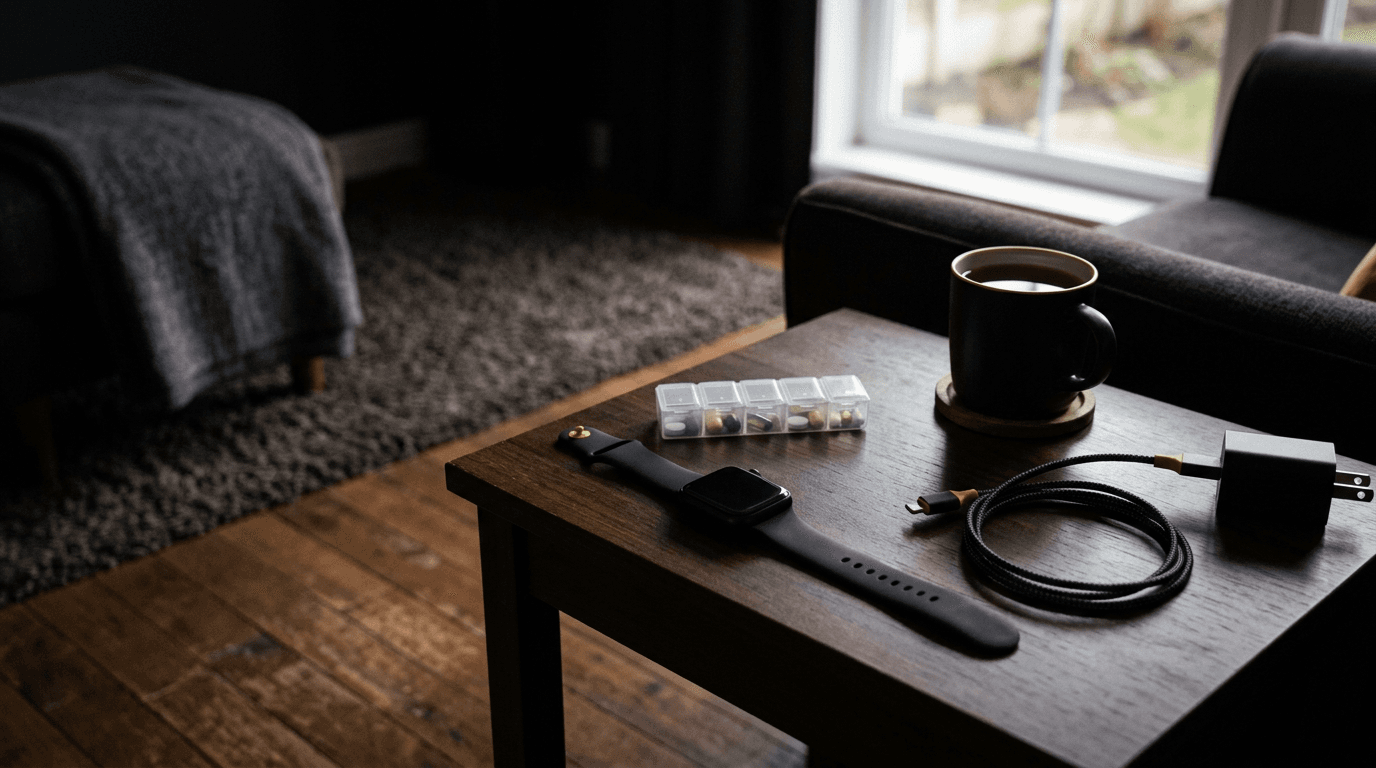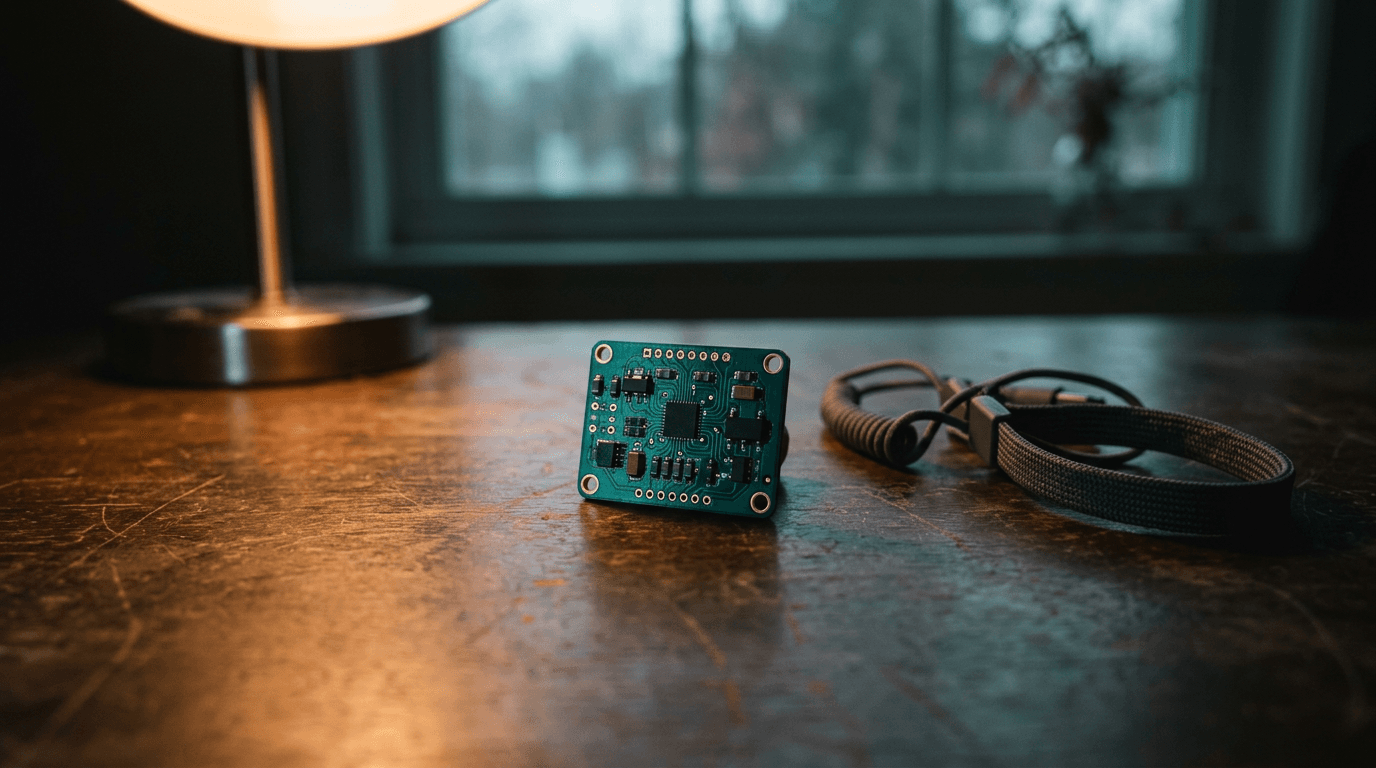



A heart-rate variability score is a stopwatch listening to the gaps between heartbeats. Healthier nervous systems vary those gaps a little; tired ones flatten them. The wearable is reading a real signal. Whether that signal is actionable depends on how much it varies in you, day to day, in the absence of training. Most people learn that their bad-night number is roughly their average minus ten percent, and after a week the score stops feeling like news.
What it is
Heart rate variability is the variation in the time between successive heartbeats, measured in milliseconds. A heart that beats at a perfectly metronomic sixty beats per minute is not necessarily a healthy heart; a heart that varies its rhythm slightly from beat to beat is showing that the autonomic nervous system is doing its job. The watch or ring captures a pulse waveform, usually with light, and software derives the gaps from that. The result is a single number, often a rolling average, compared to your own baseline. It is not a measure of fitness the way VO2 max is. It is a measure of recovery and stress load, and it is noisy. The number moves when you are sick, when you drink, when you sleep badly, and when you train hard. That is the point, and also the problem.
How it works (in plain language)
The sensor shines light into your skin and watches how much bounces back. With each pulse, the reflected light changes, and the device times those changes. That timing is pulse rate variability, an estimate of heart rate variability rather than a direct reading. A review comparing the two found the estimate reasonable at rest but drifting during movement and when the pulse is weak. The software then filters the signal, throws out bad beats, and calculates a summary statistic. Different brands use different windows and formulas, which is why two devices on the same wrist can disagree. The number is not wrong, exactly. It is a house style. Treat it as a relative number, not a clinical reading, and compare it only to itself.
Why it matters for movement and health
For an ordinary person trying to train sensibly, the value is in the trend, not the daily score. A week of numbers below your normal range is a decent hint that you are carrying more load than you can absorb, whether that load is training, work, or a cold coming on. A single low morning reading after a bad night is not a reason to skip a workout. The evidence for using heart rate variability to diagnose work-related stress is thin; one study concluded the measure does not fully reflect acute workload and its diagnostic role is not well supported. So the useful move is modest: watch the direction over two or three weeks, and let it nudge decisions you were already half-making. One tool among many, not the future of fitness.
Open caveats
Accuracy is the first caveat. Optical sensors struggle with motion, cold hands, and tattoos, and the derived number inherits those problems. The second is privacy: heart rate variability is health data, and the app showing you a pretty graph is also a server somewhere. Read what the company says it does with the signal, and assume the default is more sharing than you would choose. The third is interpretation. A high number is not automatically good, and a low number is not automatically bad; both depend on context the device does not have. If you check the score before you have decided how you feel, you have handed the watch too much authority. Use it as a mirror that does not get bored, and keep your own judgment in the room.
FAQ
Is a higher HRV always better?
No. A high number can mean good recovery, but it can also show up when you are rested and doing nothing, or when the sensor is reading a calm moment. A low number can mean fatigue or illness, or just a cold hand. Context matters more than the direction of the arrow.
Can I compare my HRV to a friend's?
Don't. Baselines are personal, and brands calculate the number differently. Two people with the same fitness can show wildly different scores, and two devices on the same wrist can disagree. Compare yourself only to your own recent weeks.
Should I skip a workout when my HRV is low?
One low morning is not a verdict. If the number has been below your range for a week or more, and you also feel flat, that is a reasonable nudge to ease off. If you feel fine, train — and let the trend, not the single reading, have the final word.