

What it is
The watch on your wrist counts steps and nags you about rings. The watch on your mother's wrist is supposed to notice when she does not get up. Those are not the same product, and they are not judged by the same standard.
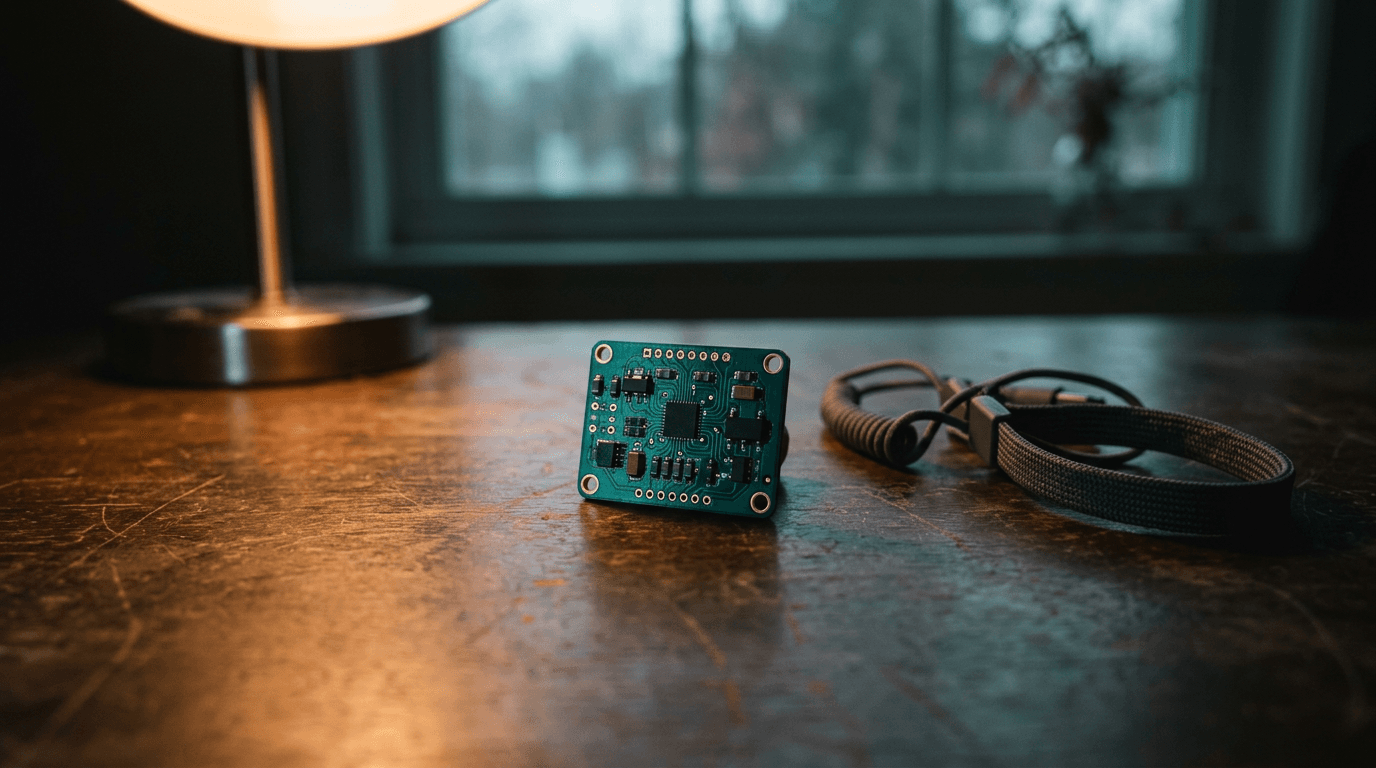
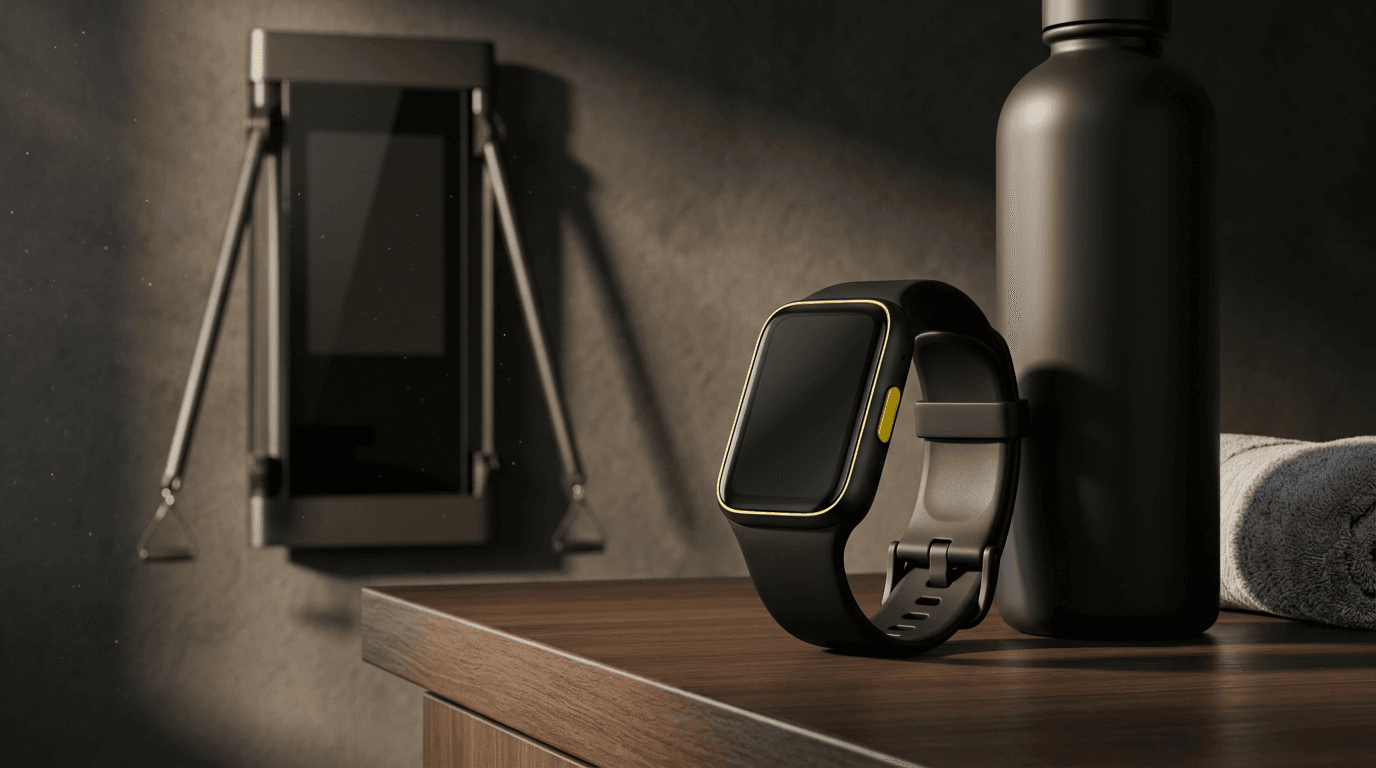
The devices themselves look familiar: a smartwatch, a ring, a pendant, a belt. The category is defined less by shape than by intent. AgeTech startups have leaned into simple interfaces and long battery life rather than cramming in features, which is the right trade for a user who does not want to learn a new operating system. Some watches track heart rhythm, blood oxygen, and movement patterns at a level good enough for consumer screening and a clinician's follow-up, as the IEEE AgeTech coverage of the sector notes. Others, like a smartbelt, borrow sensors from other industries and use them to watch gait and posture. None of this is exotic hardware. It is the same accelerometer and optical pulse sensor as everywhere else, pointed at a different set of problems.
How it works (in plain language)
Strip the branding and you find three or four sensors. A motion sensor notices acceleration and rotation; software reads the shape of that motion to decide whether you just sat down hard or fell. A pulse sensor shines light into the skin and watches how the reflection changes with each heartbeat. A temperature sensor notices small shifts. From there, algorithms guess the rest, and that guessing is where the accuracy lives or dies.
Fall detection, for example, classifies a short free-fall signature followed by a sudden stop and a period of stillness. The Apple Watch Series 4 was the first consumer wearable to get FDA authorization for fall detection, and later generations improved the algorithm. Still, independent evaluations indexed through IEEE Xplore report that consumer devices generally show lower sensitivity than dedicated medical systems, which is a polite way of saying they miss some real falls. A watch is not a nurse in the room. It is a smoke alarm with a similar hit rate.
Why it matters for movement and health
The case is strongest where the alternative is nothing. An older adult living alone who falls overnight, or in a room far from a phone, faces the longest lie time and the worst outcomes. A watch that can place a call is not perfect, but it shortens the gap between a fall and help.
Cardiac monitoring has a similar shape: AI analysis of ECG recordings can flag atrial fibrillation risk earlier than waiting for a symptomatic episode, and the highest-value populations are older adults with hypertension, heart failure, or prior stroke. The same motion data that detects a fall can also show a slow decline in walking speed or sit-to-stand time, and automated analysis of physical performance tests is now accurate enough to segment those tasks without a lab. Put together, this is less a fitness gadget and more a set of tripwires for the things that tend to go wrong late.
Open caveats
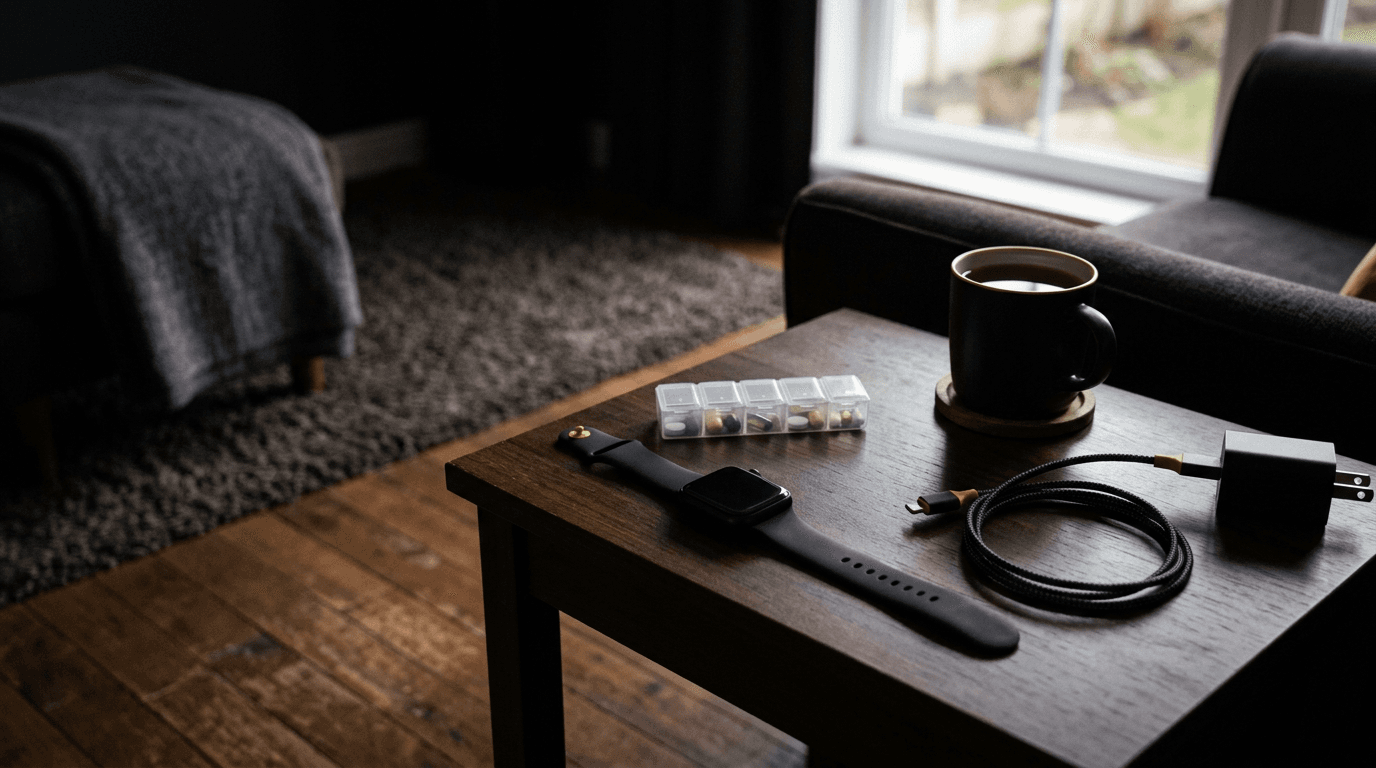
The unsexy caveats arrive in a cluster. First, false positives are real: a dropped watch, a clap, a hand gesture. If the device cries wolf, people take it off, and a wearable in a drawer protects no one. Second, sensitivity is not clinical-grade. A consumer wearable may miss a slow slide down a wall, which is exactly the kind of fall that strands someone. Third, battery and connectivity are quiet failure modes; a watch that needs daily charging and the home Wi-Fi is only as good as the household's habits. Fourth, the data does not diagnose anything by itself. Treat the alert as a relative signal, not a clinical reading, and let a clinician decide what it means. Finally, privacy: continuous location and health telemetry from an older adult is sensitive, and the person wearing it should know who sees it and how to turn it off.
FAQ
Does a fall-detection watch actually catch a fall?
Sometimes. It is tuned to catch the dramatic signature — a quick drop, a sudden stop, then stillness — and it misses slow slides down a wall. It also fires on dropped devices and hard claps. That is not a reason to skip it; it is a reason not to treat it as the only pair of eyes in the house.
Should I buy my parent a smartwatch for heart rhythm monitoring?
If they have hypertension, heart failure, or a prior stroke, the atrial-fibrillation case is real and worth a conversation with their doctor. For everyone else, the false-alert tax is real: a notification that says 'possible AFib' can generate a lot of anxiety over a benign blip. Buy it as a screening tool, not a diagnosis.
What is the one thing that most often kills these devices in practice?
The charger. A watch that needs to be plugged in every night is only as reliable as the household's habits, and the same goes for the Wi-Fi it depends on. Battery and connectivity are the quiet failure modes that turn a safety device into a drawer ornament.