

A step counter is three pieces in a trench coat. An accelerometer turns motion into a stream of numbers. A filter decides which of those numbers are signal and which are the world shoving you around. A detector counts peaks in the cleaned stream and hands a number to an app that decides how to present it. Each piece has its own opinion about what a step is, and the opinions only agree most of the time.
What the system actually does
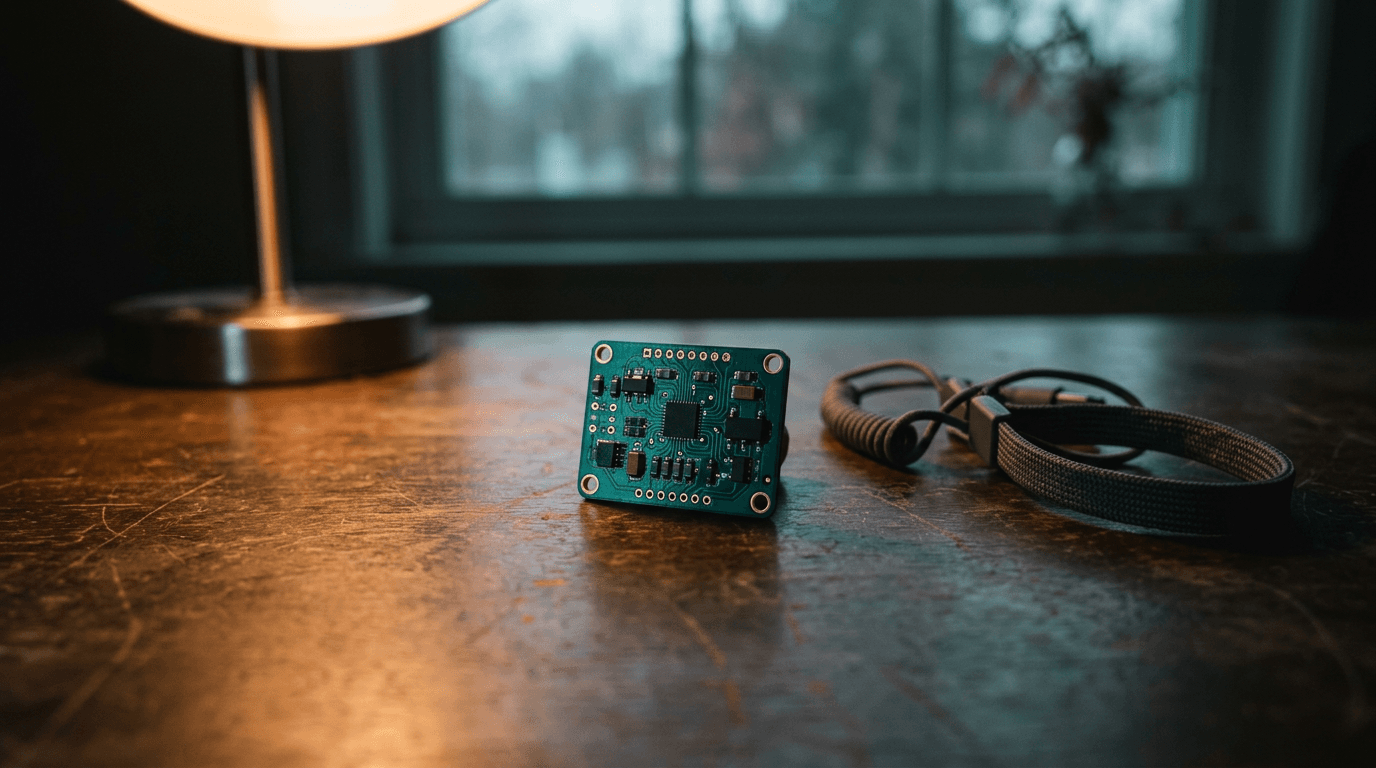
The sensor reports acceleration along three axes many times a second. Walking produces a periodic bump — a heel strike, a push-off, a swing — riding on top of gravity and whatever else the body is doing. The filter's job is to separate that periodic bump from the rest. Some implementations use a bandpass filter tuned to typical step frequencies, roughly one to three steps per second. Others use a moving average, a high-pass stage, or a small learned model. The detector then looks for peaks above an adaptive threshold, enforces a refractory period so one step is not counted twice, and increments a counter.
That pipeline sounds tidy. It is not. The threshold has to move because a jog and a shuffle produce very different amplitudes, and a fixed threshold either misses the shuffle or double-counts the jog. The refractory period has to be long enough to suppress ringing and short enough to allow a fast cadence. Every constant in the chain is a compromise, and the compromises are where the errors live.
Each layer, in turn
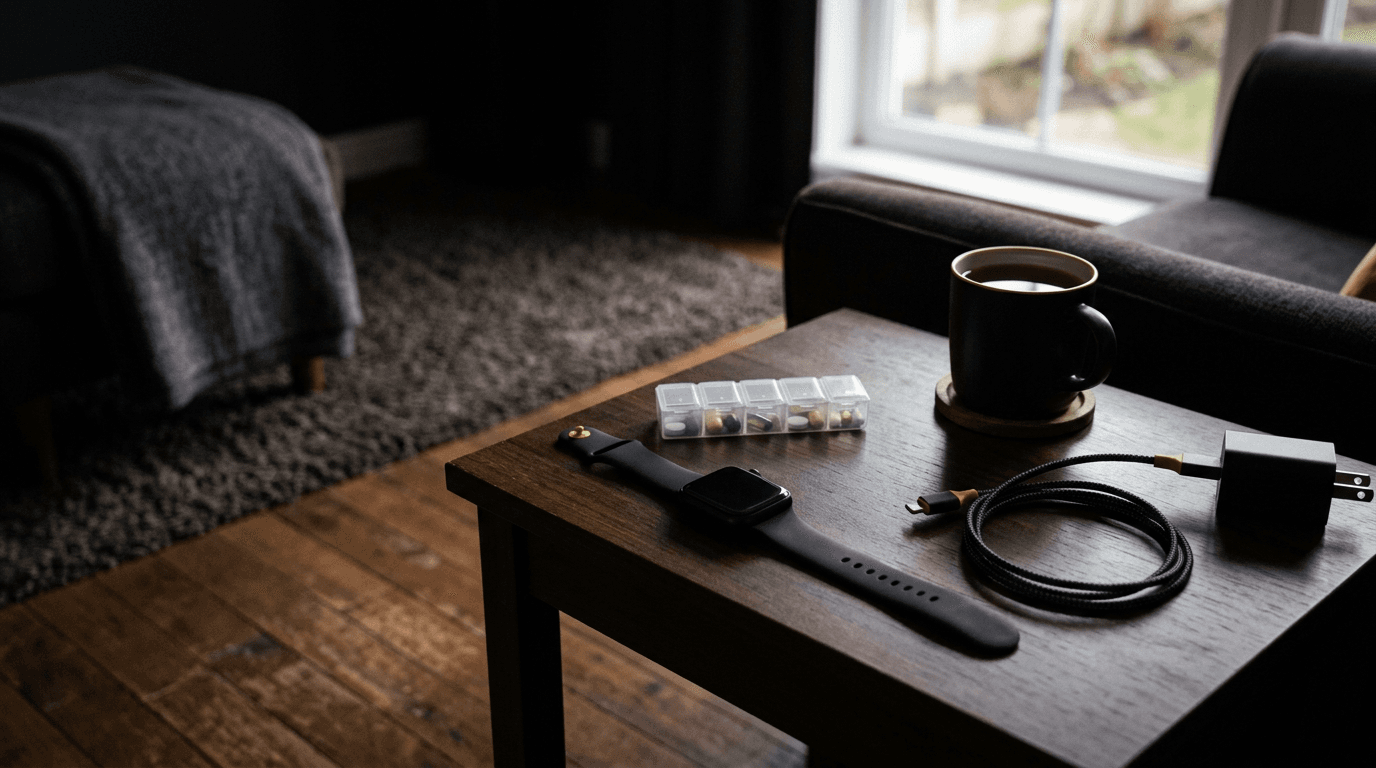
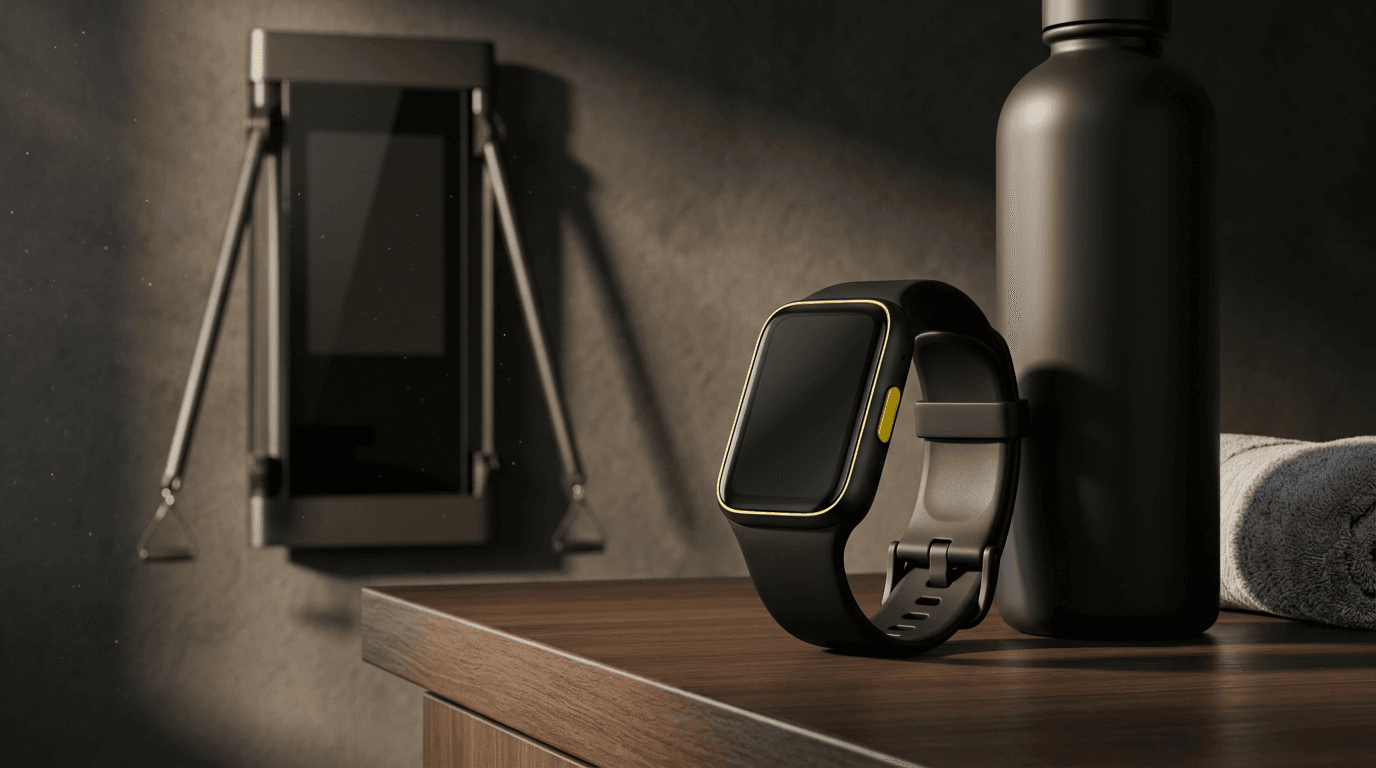
Start at the sensor. Wrist-worn accelerometers see arm swing more than they see footfall, so the signal is a proxy for walking rather than a measurement of it. Pocket and hip placements see the body's center of mass and track steps more directly, but they pick up chair scoots and car vibrations. The sensor itself is honest; the placement is the variable. This is the same lesson as photoplethysmography on a wrist — the hardware is fine, the location is the argument.
Next, the filter. A bandpass tuned to walking frequencies will reject a slow shuffle below the passband and a fast sprint above it. That is a design choice, not a defect, but it means the counter has a preferred gait. Adaptive filters try to track the dominant frequency instead, which helps across speeds but can lock onto a rhythmic arm swing during a phone call.
Finally, the app. It may smooth counts over a day, round to a goal, or credit partial steps. Each of those is a presentation decision layered on top of a detection decision, and the two can disagree. A user who sees 9,800 steps at 11 p.m. and 10,000 at midnight is watching the app, not the detector.
Edge cases, where it gets interesting
Pushing a stroller is the classic one. The hands are occupied, the arm swing is suppressed, and a wrist counter sees almost nothing. Hip counters do better because the body still bobs. Carrying a bag on one side biases the signal toward that arm. Climbing stairs changes the amplitude and cadence in a way that some detectors read as walking and others as noise.
Then there is the hand wave. A vigorous gesture at walking frequency can pass the bandpass and trip the detector. This is why some counters report steps while you are sitting and gesturing at a screen. The fix is usually a second feature — periodicity, or correlation across axes — but that adds latency and complexity. The adaptive step detection work notes that amplitude-based counting after filtering raises error rates precisely because gaits differ between people.
Noise itself is not one thing. Sensor noise is random and small. Motion artifacts are structured and large. The interesting failures come from the structured kind, because it looks like signal to a filter that only knows frequency.
What breaks, and why that is useful to know
Step counts are most reliable for steady walking on flat ground with a consistent placement. They are least reliable at the edges: very slow, very fast, hands occupied, or the device loose. Knowing this does not make the number useless. It makes the number interpretable. A count of 10,000 from a pocket during a commute is a different kind of evidence than 10,000 from a wrist during a stroller walk.
The engineering lesson is that filtering is not a cleanup step bolted onto a clean measurement. It is part of the measurement. The bandpass defines what counts as a step; the refractory period defines what counts as two. Change either and the same walk produces a different number. That is not a bug in the product. It is the product, and it is worth knowing where the seams are.
Graph-based and learned filters are pushing on this. The graph neural network approach iterates message passing to integrate distant neighbors, and the Ising noise filter treats filtering as a physics-informed graph problem. The periodic source detection work leans on regularizers to separate periodic signal from noise. These are the same problem wearing different clothes: decide what is periodic, and the count falls out.
FAQ
Why does my watch count steps when I'm just waving my arm?
Because a hand wave at walking frequency looks like a step to a bandpass filter. The filter only knows frequency, not intent. Some counters add a second check — periodicity or cross-axis correlation — but that costs latency and battery.
Is a pocket count more accurate than a wrist count?
Usually, for walking. Pocket and hip placements track the body's center of mass, which moves with each step. Wrist sensors track arm swing, which is a proxy. But pocket counters pick up chair scoots and bus vibrations, so neither placement wins everywhere.
Can I compare step counts between two different devices?
Only loosely. Each device has its own filter constants, threshold behavior, and app-level smoothing. Two phones on the same walk can disagree by hundreds of steps. Treat the number as a trend for one device, not a universal measurement.