


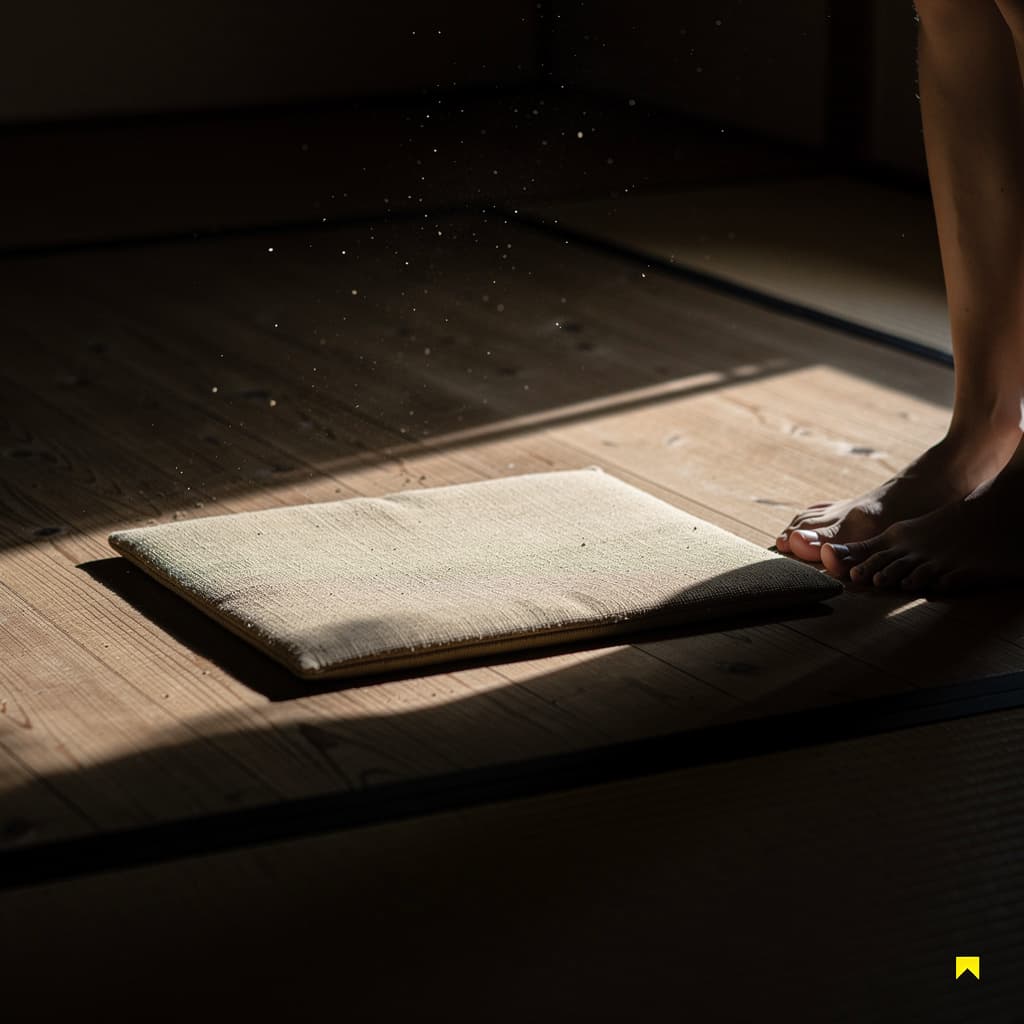
A push-up done in five seconds is one push-up. The same push-up across thirty seconds is ten. The body learns from time under attention, not repetitions. Recovery follows the same law. It is not the absence of training; it is the presence of a quieter demand.
Principle
Recovery is the rep you do not count.
Practice
Between harder efforts, do not stand still. Walk in place. Let the arms swing without force. Perform a few bodyweight squats that barely bend the knee—only as deep as comfort allows. This is not laziness. It is calisthenics at its lowest intensity, the kind the ancient Greeks would recognize: movement without equipment, without hurry. After the work is done, spend five minutes in rhythmic motion—a slow march, a gentle torso twist. Then hold a stretch for thirty seconds, not to conquer range but to visit it. End with three minutes of deep breathing, inhaling as if the air were thick, exhaling until the ribs soften.
Reflection
Notice the impulse to fill recovery with something productive. The mind wants to earn its rest. But the hip opens slowly, the way a door swells in summer. You cannot rush the season. When you return from an injury, give yourself two days of rehabilitation for each day you were still. Start with range-of-motion work—small circles, gentle extensions. Then add weight, gradually, using only your body at first. Test the movement each time: can you go a little lower without pain? Pain is not an enemy here. It is a voice. Listen to it, and it will tell you where the edge is. Do not cross it. Over weeks, the edge moves. You will not remember when it became easy.
One question for the reader
What would change if you treated recovery as the main practice, and exertion as its complement?
FAQ
How do I know if I am doing recovery right?
If you finish feeling more awake than when you started, you are on the path. Recovery should leave you with a quiet readiness, not fatigue. Pay attention to your breath—if it deepens and slows without effort, the practice is working.
Can I really rebuild strength by moving so gently?
Yes, because strength is not only about force. It is about control and tissue adaptation. Gentle, consistent movement signals the body to repair and reinforce without triggering protective spasms. Over weeks, the capacity returns, often more durably than before.
What if I feel pain during these recovery movements?
Stop and listen. Pain is information, not a barrier to push through. Adjust the range, slow the pace, or choose a different movement. If pain persists, consult a healthcare professional—this practice complements medical advice, never replaces it.
References
- ACE - Certified™: September 2024 - Body-weight Interval Training: Equipment Free and Highly Versatile — acefitness.org
- Calisthenics: An effective, low-frills way to stay fit - Harvard Health — health.harvard.edu
- Treating Sports Injuries - Harvard Health Publications - Harvard Health — health.harvard.edu
- Getting Back to Fitness After an Injury — acefitness.org
As with any physical practice, consult a physician before beginning a new regimen, especially if you are recovering from injury or managing a health condition.