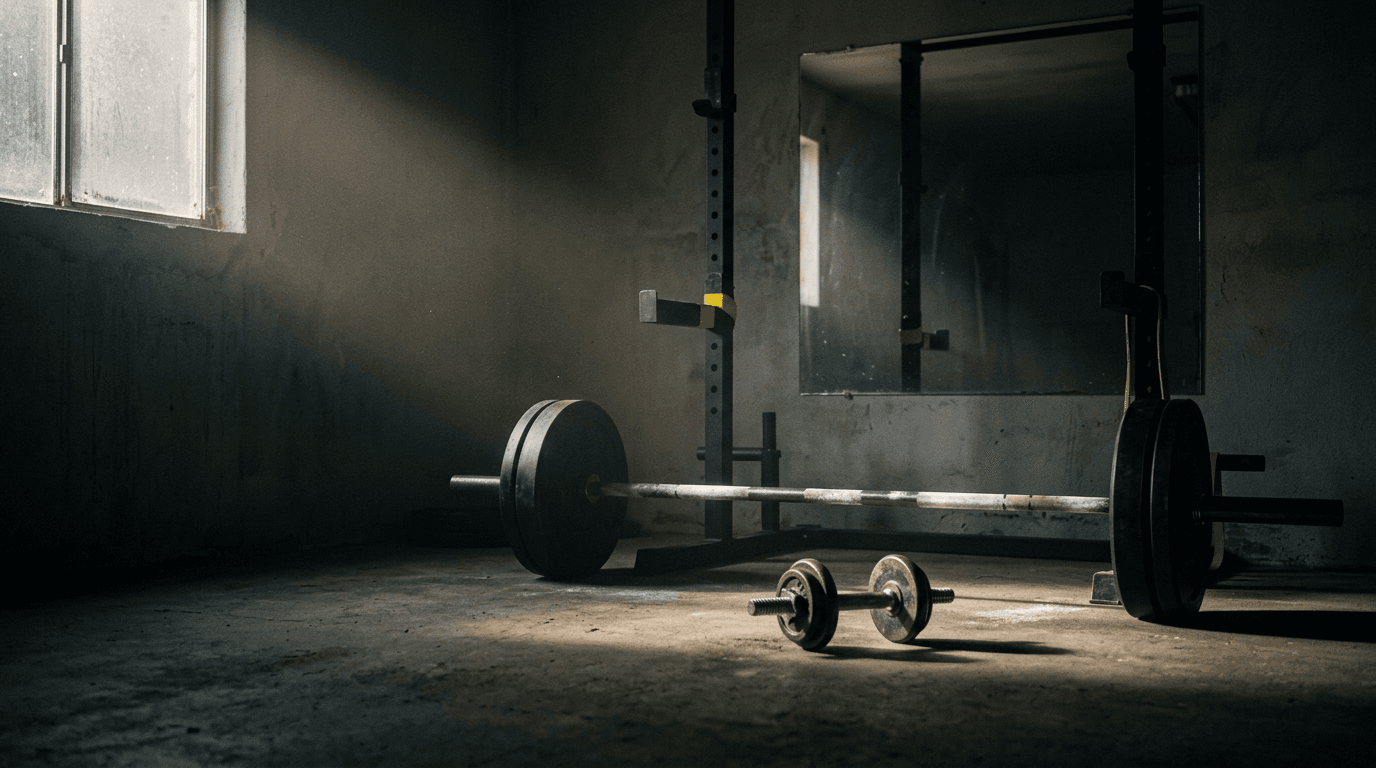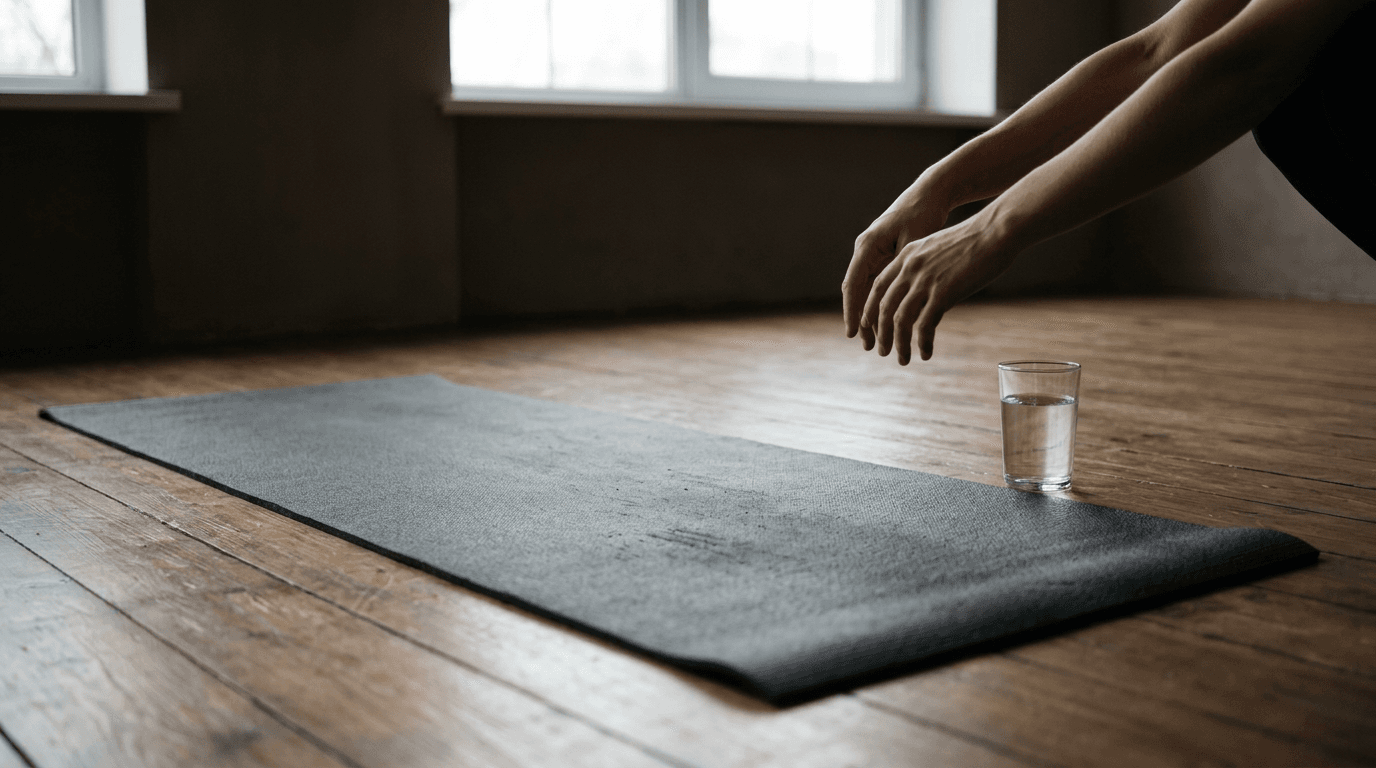



A push-up done in five seconds is one push-up. The same push-up across thirty seconds is ten. The body learns from time under attention, not repetitions. Slow yourself enough to feel the elbow finding its line, the breath finding its rhythm. Speed will come back when it is needed. Patience does not.
Principle
Strength is not a count. It is a conversation with load over years. A body-weight squat done in ten seconds reveals the wobble you sprint past. The wobble is the teacher.
Practice
Choose one movement. A squat, a push-up, a quadruped hip extension. The ACE model suggests 10–20 slow repetitions for the base phase, holding each for a full breath cycle. Inhale on the lowering, exhale on the rise. Count the seconds: four down, two pause, four up. If you cannot control the descent, you are not yet ready for speed. Research on calisthenics confirms that even a handful of exercises, done without hurry, can build muscle and power over months. The bones ask for impact, but they also ask for direction. A slow lunge teaches the knee to track over the ankle, not to collapse inward. That alignment, repeated, becomes the architecture of a stronger hip.
During the rest, do not scroll. Walk in place, or stand and breathe. A cool-down of static stretches held for thirty seconds, followed by slow deep breathing, settles the nervous system. The breath is the bridge between effort and recovery.
Reflection
Notice where the movement rushes. The top of the push-up, when the arms want to lock out and quit. The bottom of the squat, when the hips want to bounce. These are the edges of your patience. Stay there. The body will ask to speed up. Do not let it. A study of eight lower-body exercises found a 15% increase in strength after ten months. Ten months. Not ten days. The body changes the way a tree grows: you do not see it until you look back.
Body-weight training is functional because it demands coordination. A slow push-up is a moving plank. A slow squat is a negotiation between ankle, knee, and hip. The joints learn to speak the same language. When you remove external weight, you must create resistance through time and angle. That is the art.
Most students arrive wanting to be flexible by next month. They leave when month four asks the same of them. The hip opens slowly, the way a door swells in summer. Sit on the floor each evening for ten minutes. Do nothing else. In two years you will not remember when it became easy.
One question for the reader
What is the one movement you avoid slowing down, and what would it ask of you if you did?
FAQ
Why should I slow down when I can do more reps quickly?
More reps do not equal more learning. Slowing exposes the wobble—the weak point your speed masks. The body builds strength from time under tension, not from a tally. A single slow rep can teach what a hundred rushed ones never will.
How long before I see results from slow training?
Research shows measurable strength gains after ten months of consistent practice. The body changes like a tree, imperceptibly day to day, but clearly when you look back. Patience is the work; the results arrive on their own schedule.
Can I combine slow training with my regular workouts?
Yes. Choose one movement to slow down as a warm-up or finisher. The control you build will carry over to every other exercise. Even five minutes of deliberate slowness can rewire how your joints communicate.
References
- How to Design Body-weight Training Workouts Using the ACE Integrated Fitness Training Model — acefitness.org
- Calisthenics: An effective, low-frills way to stay fit — health.harvard.edu
- The best exercises for your bones — health.harvard.edu
Consult a physician before beginning any new exercise practice, especially if you have underlying health concerns or a history of injury.