


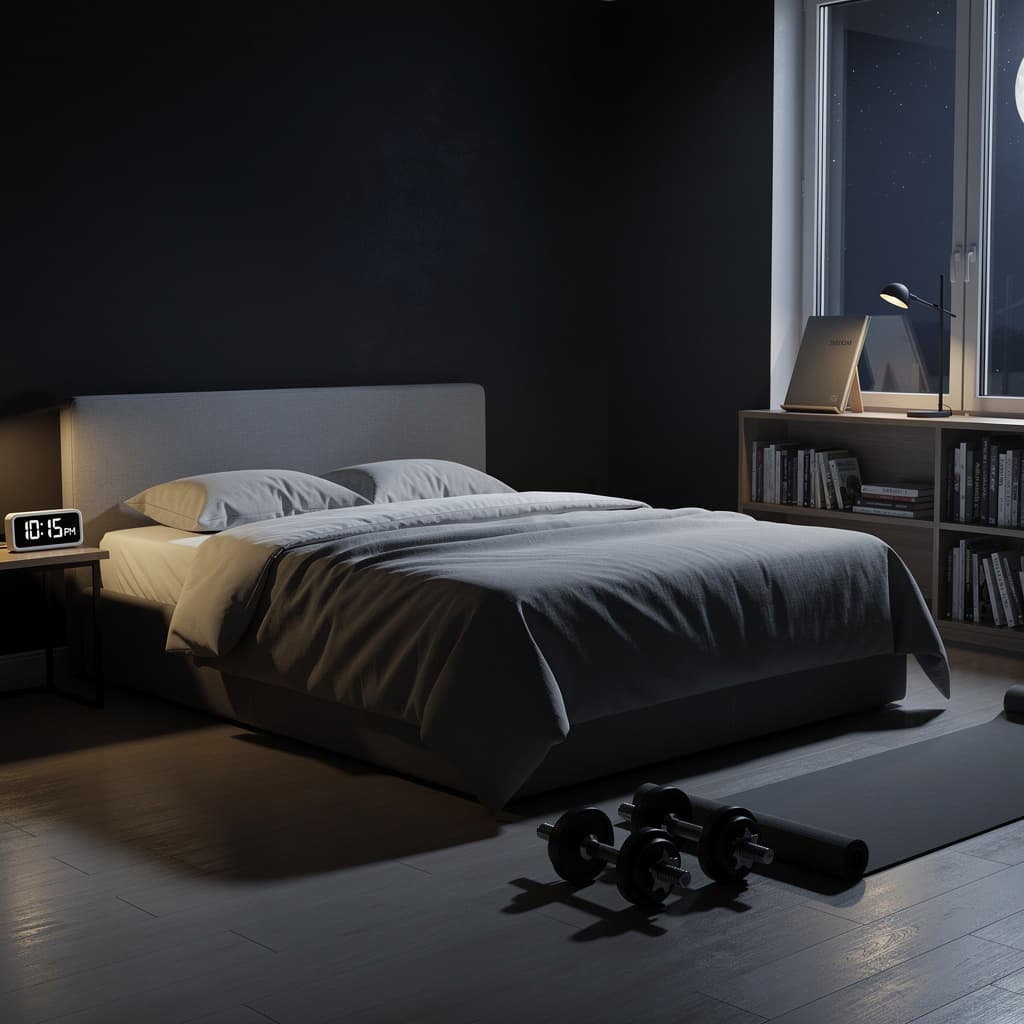
Recent meta-analytic work on exercise and sleep has shifted the conversation from broad associations to specific effect sizes. A 2017 systematic review of randomized controlled trials on resistance exercise and sleep reported that the aggregate effect on sleep quality was modest, with standardized mean differences generally falling in the 0.3 to 0.5 range across studies (Kovacevic et al., 2017). The estimate varied by population: older adults with insomnia showed larger improvements than younger, healthy cohorts, where floor effects in baseline sleep quality likely attenuated the signal. These numbers frame resistance training not as a potent standalone intervention for sleep, but as a contributor within a multifactorial approach.
Mechanisms Linking Resistance Exercise to Sleep
The physiological pathways through which resistance training might influence sleep are not fully mapped, but several candidates have support. Acute bouts of high-intensity resistance exercise elevate core body temperature and sympathetic nervous system activity, which, if performed too close to bedtime, could delay sleep onset. However, chronic training appears to enhance parasympathetic reactivation and reduce systemic inflammation, both of which are associated with deeper slow-wave sleep. A 2016 meta-analysis on exercise and sleep apnea proposed that improvements in upper airway muscle tone and reductions in fluid shifts during recumbency may explain the observed decrease in apnea-hypopnea index (Aiello et al., 2016). These mechanisms are plausible but remain under direct testing in resistance-training-specific protocols.
Evidence Summary: Effect Sizes and Confidence Intervals
The 2017 review by Kovacevic and colleagues pooled data from 13 RCTs and found that resistance exercise improved subjective sleep quality, as measured by the Pittsburgh Sleep Quality Index, with a mean difference of roughly -1.5 points on the global score (95% CI: -2.3 to -0.7). Objective measures, such as actigraphy-derived sleep efficiency, showed smaller and less consistent gains, often with confidence intervals crossing zero. More recently, a 2024 systematic review and meta-analysis focused on obstructive sleep apnea reported that exercise interventions—including resistance training—reduced the apnea-hypopnea index by approximately 6 events per hour (Lin et al., 2024). The effect persisted across all severities of sleep apnea and was independent of changes in body mass index. These findings strengthen the case for exercise as an adjunctive treatment, though the authors note that the quality of evidence is moderate and the included trials varied in exercise modality, duration, and adherence.
Practical Application
For practitioners, the data suggest that resistance training can be recommended as part of a sleep health strategy, particularly for individuals with obstructive sleep apnea or older adults with insomnia. A twice-weekly program of moderate-to-high intensity, using compound movements and progressive overload, aligns with the protocols that produced the largest effects in the literature. Timing may matter: some evidence indicates that finishing exercise at least 90 minutes before bedtime minimizes sympathetic carryover. However, the interaction with individual chronotype and training status has not been systematically studied, so a trial-and-error approach is warranted. Clinicians might consider integrating resistance training with cognitive behavioral therapy for insomnia components—stimulus control, sleep restriction, and relaxation training—given the additive benefits observed in multicomponent behavioral sleep interventions (Gradisar et al., 2020).
Caveats and Limitations
Several limitations temper the conclusions. First, the majority of studies rely on self-reported sleep outcomes, which are subject to recall bias and may overestimate treatment effects. Second, the heterogeneity in training variables—volume, intensity, frequency, and exercise selection—precludes precise dose-response recommendations. Third, the bidirectional relationship between sleep and training adaptation remains underexplored; while poor sleep likely blunts training-induced gains in strength and hypertrophy, the moderating role of sleep duration or quality on resistance exercise outcomes has not been quantified in a robust meta-analysis. Fourth, publication bias may inflate the apparent benefits, as null findings are less likely to be published. Finally, the long-term sustainability of sleep improvements after training cessation is unknown, as follow-up periods rarely extend beyond six months.
References
- The effect of resistance exercise on sleep: A systematic review of randomized controlled trials — PubMed
- Effects of aerobic exercise and resistance training on obstructive sleep apnea: a systematic review and meta-analysis — PubMed
- A Systematic Review and Meta-Analysis of Behavioral Sleep Interventions for Adolescents and Emerging Adults — PMC
- Interrelationship between Sleep and Exercise — PMC
- Exercise can improve sleep quality: a systematic review and meta-analysis — PMC
Readers should consult a physician or qualified healthcare professional before making changes to their exercise or sleep routines, particularly if they have a diagnosed sleep disorder or other medical concerns.