

A common belief is that a perfect sleep environment requires a long list of purchases: blackout curtains, a white noise machine, a cooling mattress, maybe a smart alarm that tracks your cycles. The data is more specific. Clinical guidelines consistently emphasize that the bedroom should be a place associated with sleep, not with wakeful activity. The evidence for any single gadget is thin. The evidence for a quiet, dark, cool room is not.
The misconception
Many people assume that sleep environment means buying the right products. They read listicles about the ten essential items for better sleep and feel behind before they start. The misconception is that complexity equals effectiveness. In sleep medicine, the opposite is often true. The bedroom is a cue. If you work in bed, scroll in bed, or argue in bed, your brain learns that the bed is for alertness. The environment is not just a physical space; it is a behavioral signal. The most cited guidelines, including those for shift workers, list the sleep environment as one of several core practices, but they do not recommend a specific brand or device. They recommend consistency and simplicity. The careful tip is not to buy anything. It is to subtract.
What the data shows
The evidence for a cool, dark, quiet room is not new, but it is often buried under product marketing. One consensus guideline for shift workers, developed through a Delphi process with 155 experts, includes sleep environment as a key component of healthy sleep practices. Another clinical practice guideline for sleep disorders notes that modifying the sleep environment is a non-pharmacological measure used to prevent injuries in REM sleep behavior disorder. The occupational therapy literature goes further: it identifies three goals for sleep management—minimize the influence of bodily function on sleep, promote an environment conducive to sleep, and restructure daytime activity. The physical environment matters, but so do social factors, like a sleep partner or a pet. The data does not say that a perfect bedroom guarantees sleep. It says that a cluttered, bright, noisy bedroom makes sleep harder. Regularity beats timing. Environment beats equipment.
One careful tip
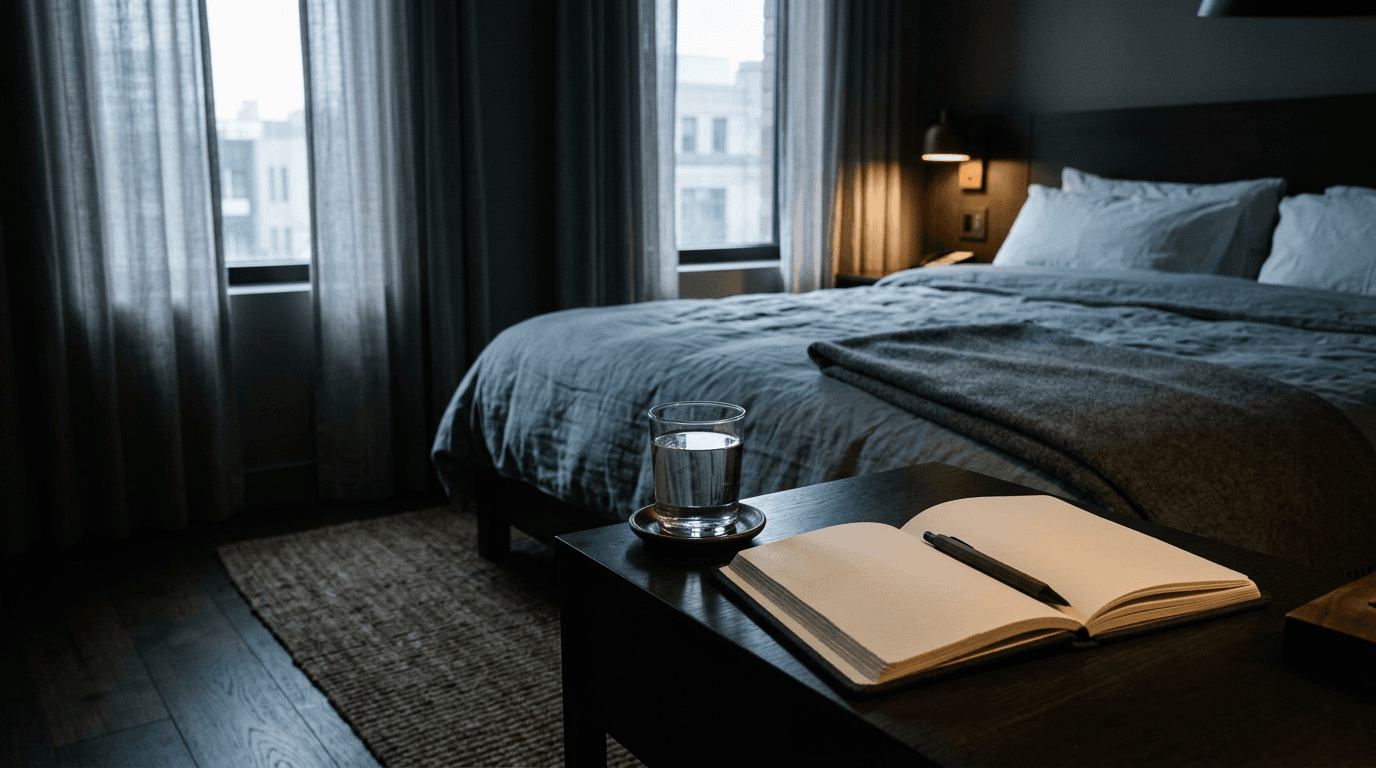
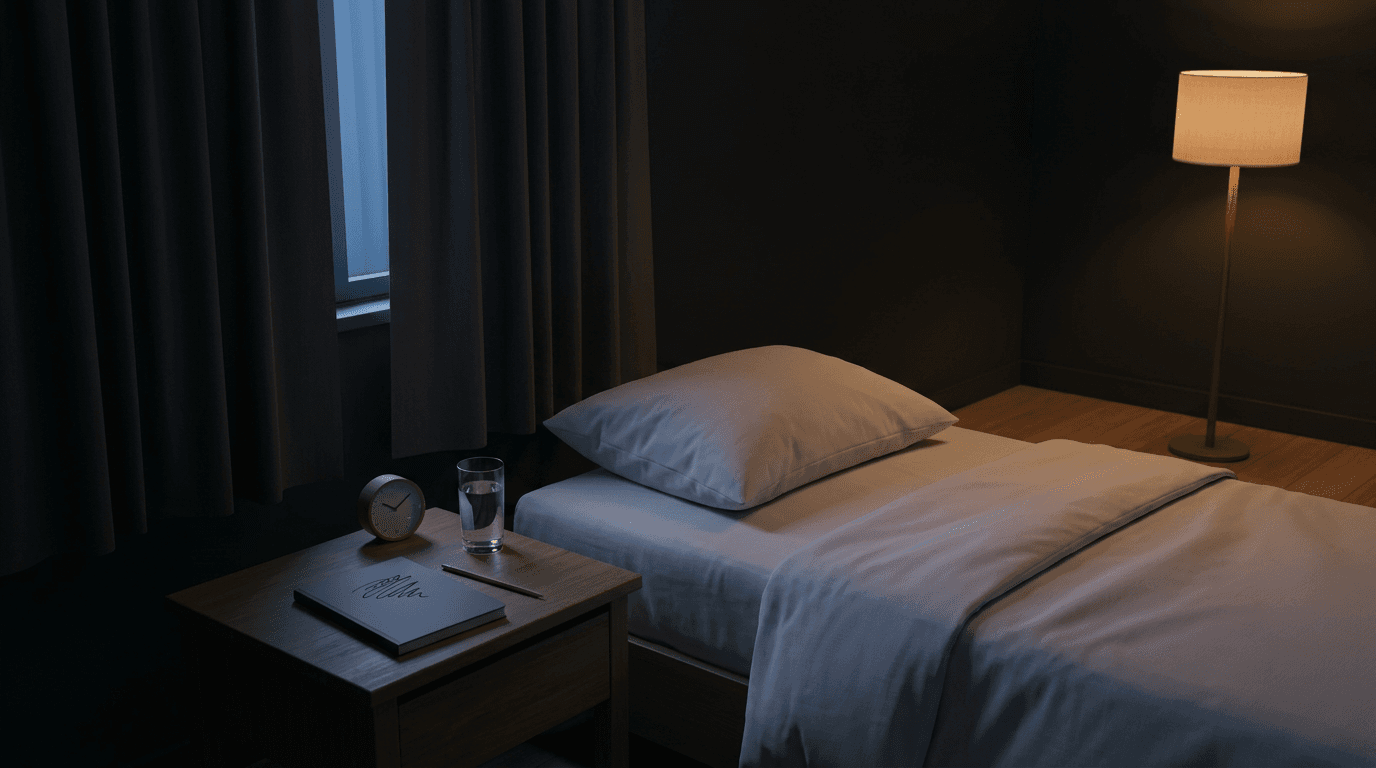
Here is the one change that carries the most weight: make your bedroom a place that says sleep, and nothing else. Start with darkness. If light seeps in, use a sleep mask or inexpensive blackout lining. Then address noise. A fan or a white noise app can mask disruptive sounds. Then temperature. Cooler is better—around 65 to 68 degrees Fahrenheit for most adults. Do not add a television. Do not bring a laptop to bed. If you cannot fall asleep after twenty minutes, leave the room and do something quiet until you feel sleepy. This is not a listicle. It is one tip with three parts. The careful tip is to fix the environment first, and let your behavior follow.
When to see a clinician
This tip is not for everyone. Shift workers, who must sleep during daylight, need more structured strategies, such as controlled light exposure and scheduled naps. People with bipolar disorder or epilepsy should not attempt sleep restriction techniques without medical supervision. Nursing home residents and older adults with complex health conditions may need individualized plans. If you have tried a quiet, dark, cool bedroom for a few weeks and still struggle to fall asleep or stay asleep most nights, that is a reason to see a clinician. Insomnia is the most prevalent sleep disorder, and it is treatable. Do not let a simple environmental tweak delay a proper evaluation.
FAQ
Do I really need to spend money on blackout curtains and a white noise machine?
No. The evidence points to the environment, not the equipment. A sleep mask and a fan can do the job for a fraction of the cost. The goal is darkness and quiet, not a specific brand.
What if I can't make my bedroom completely dark or quiet?
Do what you can. Even small changes—like turning off electronics, using a sleep mask, or adding a fan—can help. The point is to reduce the cues that keep your brain alert, not to achieve perfection.
How long should I try this before seeing a doctor?
Give it a few weeks of consistent effort. If you still have trouble falling asleep or staying asleep most nights, that's a signal to talk to a clinician. Insomnia is treatable, and a professional can help you find the right approach.