

Five small things to make tonight's sleep easier.
1. Set your thermostat to 65°F now
Takes ten seconds. A cool room helps you fall asleep faster and stay asleep longer. Most people sleep best between 65°F and 68°F. If you wait until bedtime, you'll forget. Do it now. If 65°F feels too cold, try 68°F. The goal is slightly cool, not shivering. A fan helps in warmer months; in colder months, crack a window. Your body temperature naturally drops at night—a cool room supports that drop. If you share a bed, negotiate a number. One decision, removed.
2. Block the light
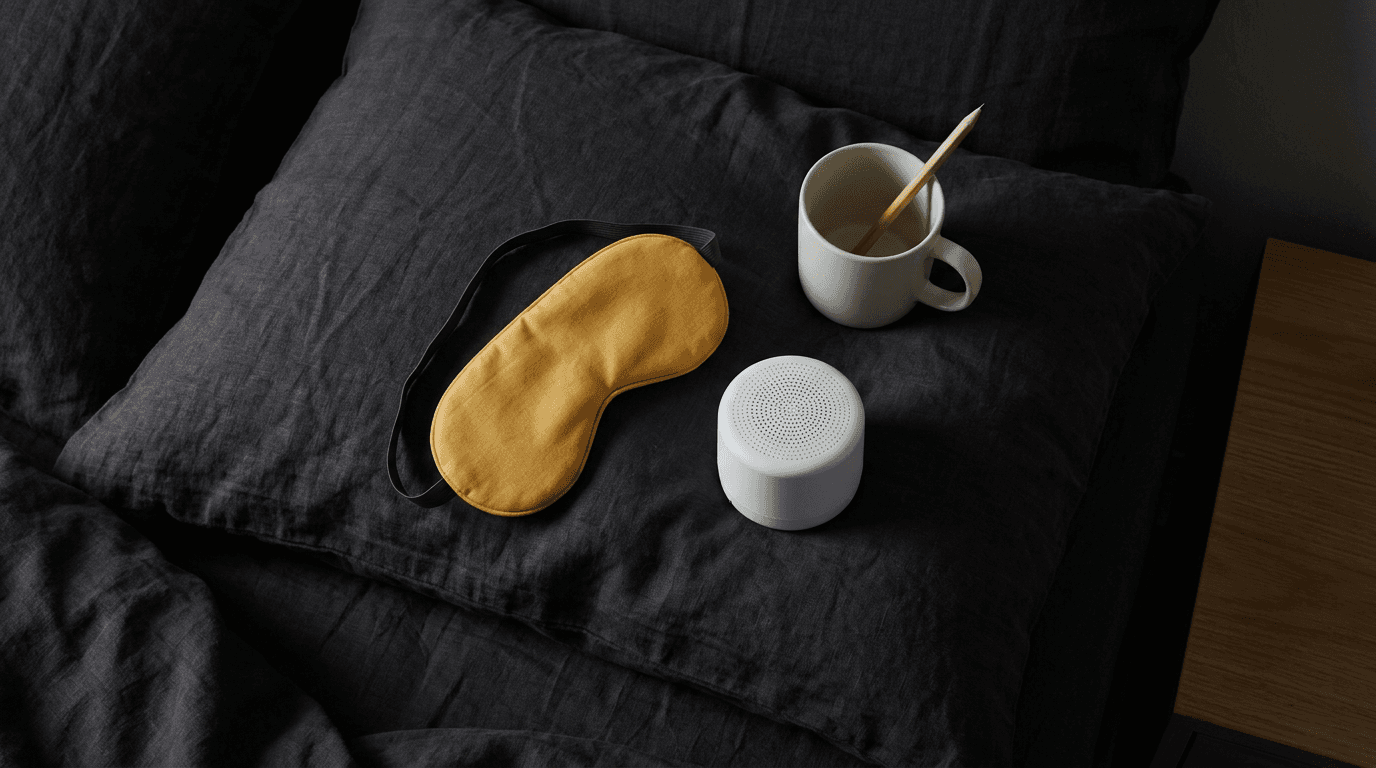
Takes two minutes. Even small amounts of light can delay sleep onset and reduce deep sleep. Use blackout curtains or a sleep mask. Close your bedroom door to block hallway light. Cover or turn off electronics with LEDs. A single blinking light can disrupt melatonin. If you need a nightlight, use a dim red one—red light interferes less with sleep. Do this now, before you get tired. Dark signals sleep to your brain.
3. Pick a sound masker
Takes thirty seconds. Sudden noises pull you out of deep sleep, even if you don't fully wake. A consistent background sound masks those disruptions. Use a white noise machine, a fan, or a recording of rain or ocean waves. Set the volume to blend with outside noise, not overpower it. If you hear traffic, neighbors, or a snoring partner, this helps. Place the sound source near the door or window where noise enters. Turn it on before you get into bed. Noise is the enemy of depth.
4. Move your phone to another room
Takes fifteen seconds. Phones emit blue light that suppresses melatonin. Notifications can wake you or create anxiety. Even the presence of a phone in the bedroom can make your mind less restful. Charge it in the kitchen or bathroom. If you use your phone as an alarm, buy a cheap alarm clock. If you must keep it in the bedroom, put it face down and in do-not-disturb mode. Better yet, leave it outside the door. You can check it in the morning. Blue light and buzzing kill rest.
5. Do one quiet thing for ten minutes
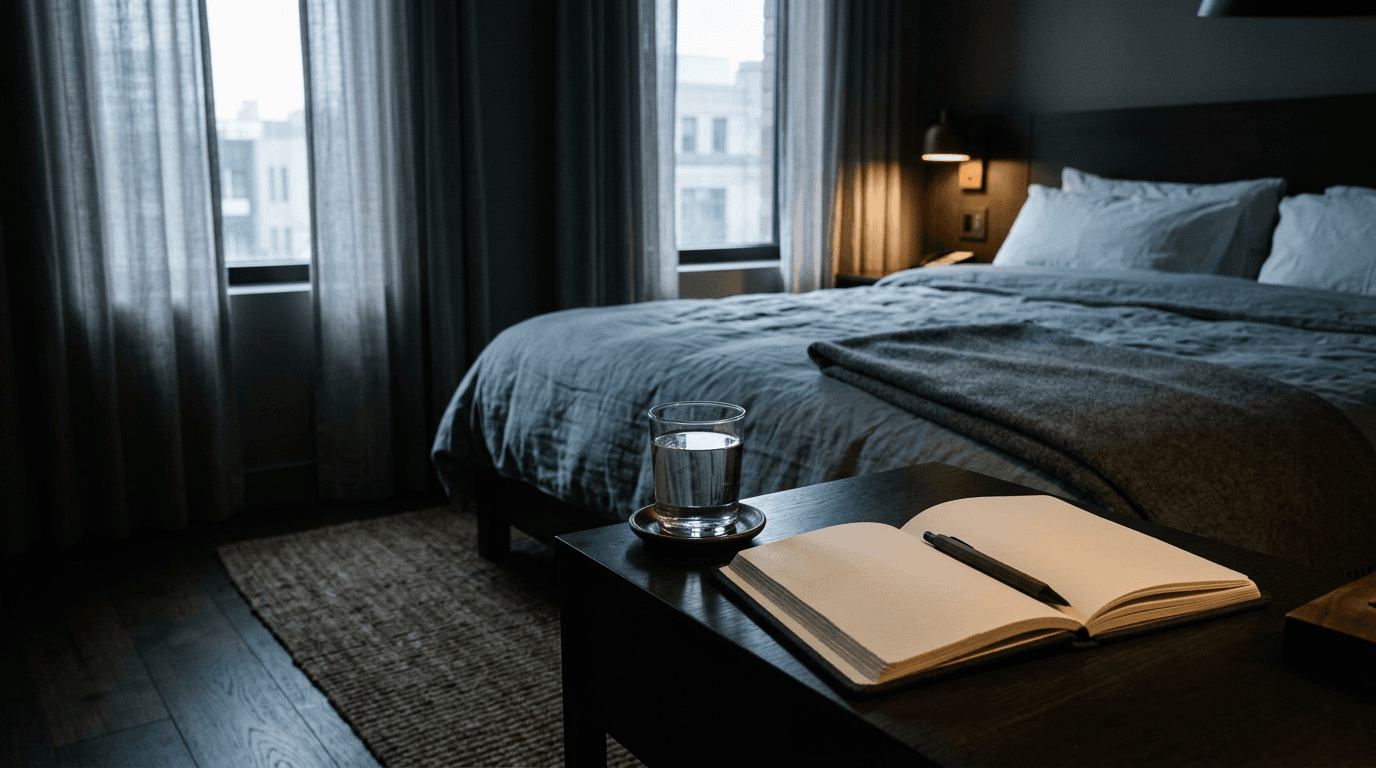
Takes ten minutes. A wind-down routine signals your brain that sleep is coming. Choose something low-stimulation: read a physical book, listen to calm music, do gentle stretches. Avoid screens. Consistency is key—do the same thing each night. Your brain will associate it with sleep. If ten minutes feels too long, start with five. The goal is to slow down, not to accomplish a task. Reading, not scrolling. The brain unwinds in silence.
One decision at a time. Tonight, try one.
FAQ
What if I can't get my room to 65°F?
Aim for the coolest you can manage, ideally below 70°F. Even a small drop helps. Use a fan, lighter bedding, or a cooling pillow. The point is to support your body's natural temperature dip, not to freeze.
Do I really need to banish my phone if I use night mode?
Night mode reduces blue light but doesn't eliminate the mental pull of notifications or the temptation to check. Out of sight is out of mind. A $10 alarm clock removes the last excuse.
What counts as a "quiet thing" before bed?
Anything that doesn't involve a screen or intense focus. Reading a physical book, gentle stretching, or listening to calm music all work. The key is low stimulation—your brain should wind down, not rev up.