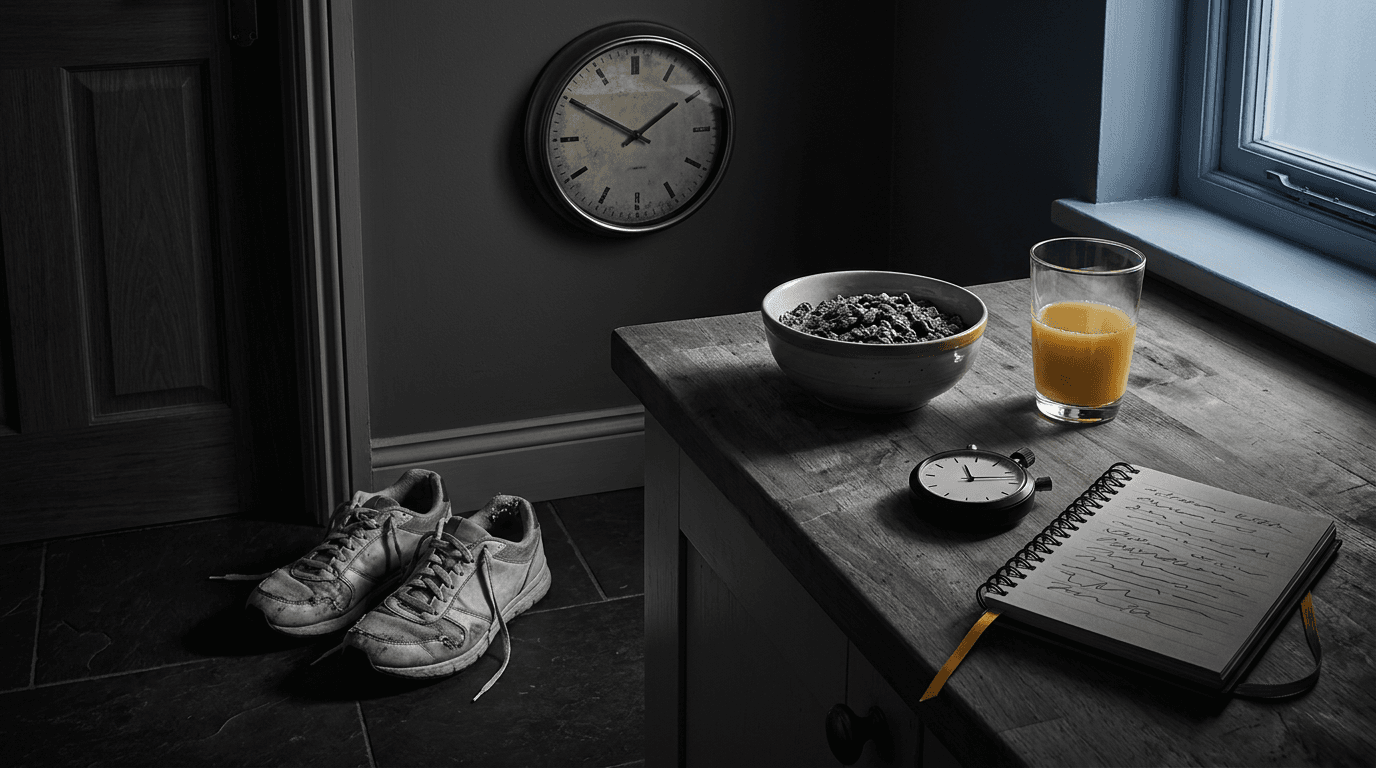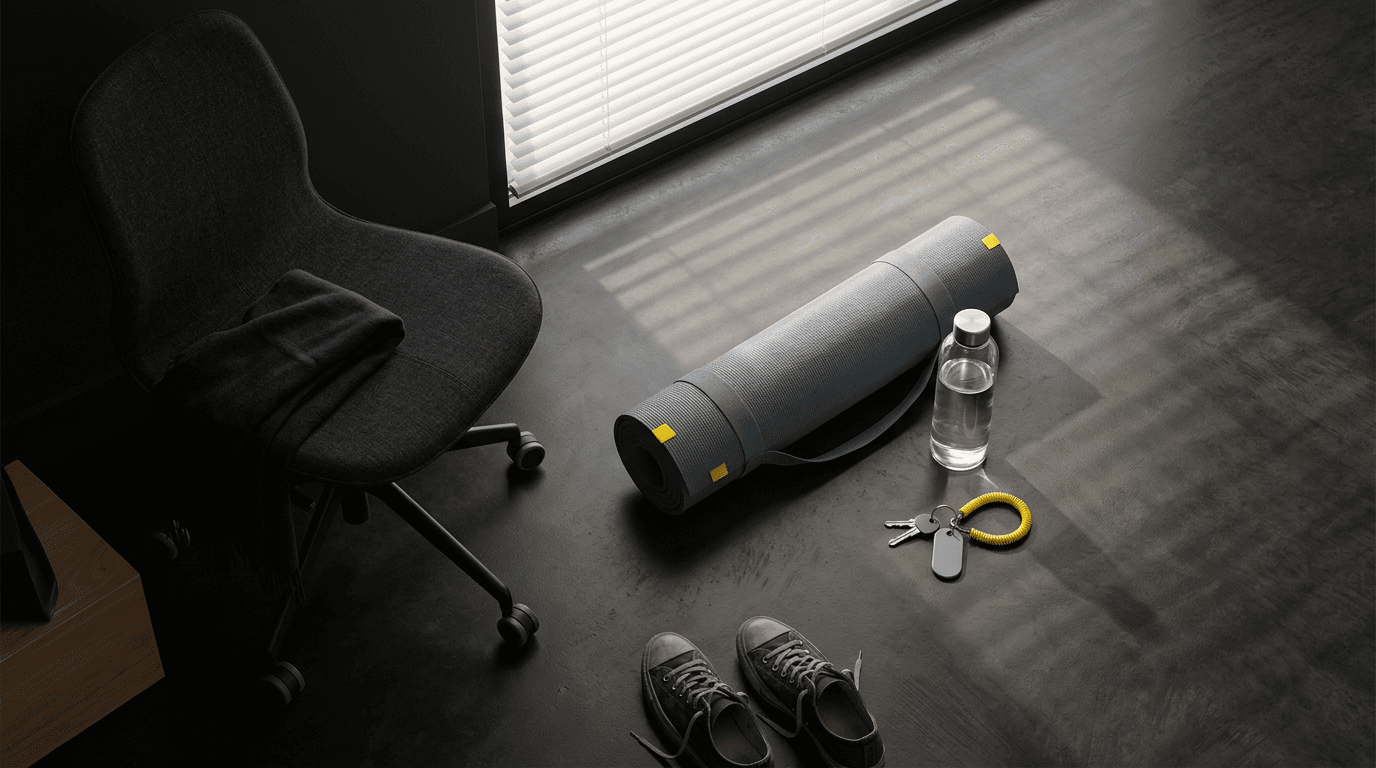


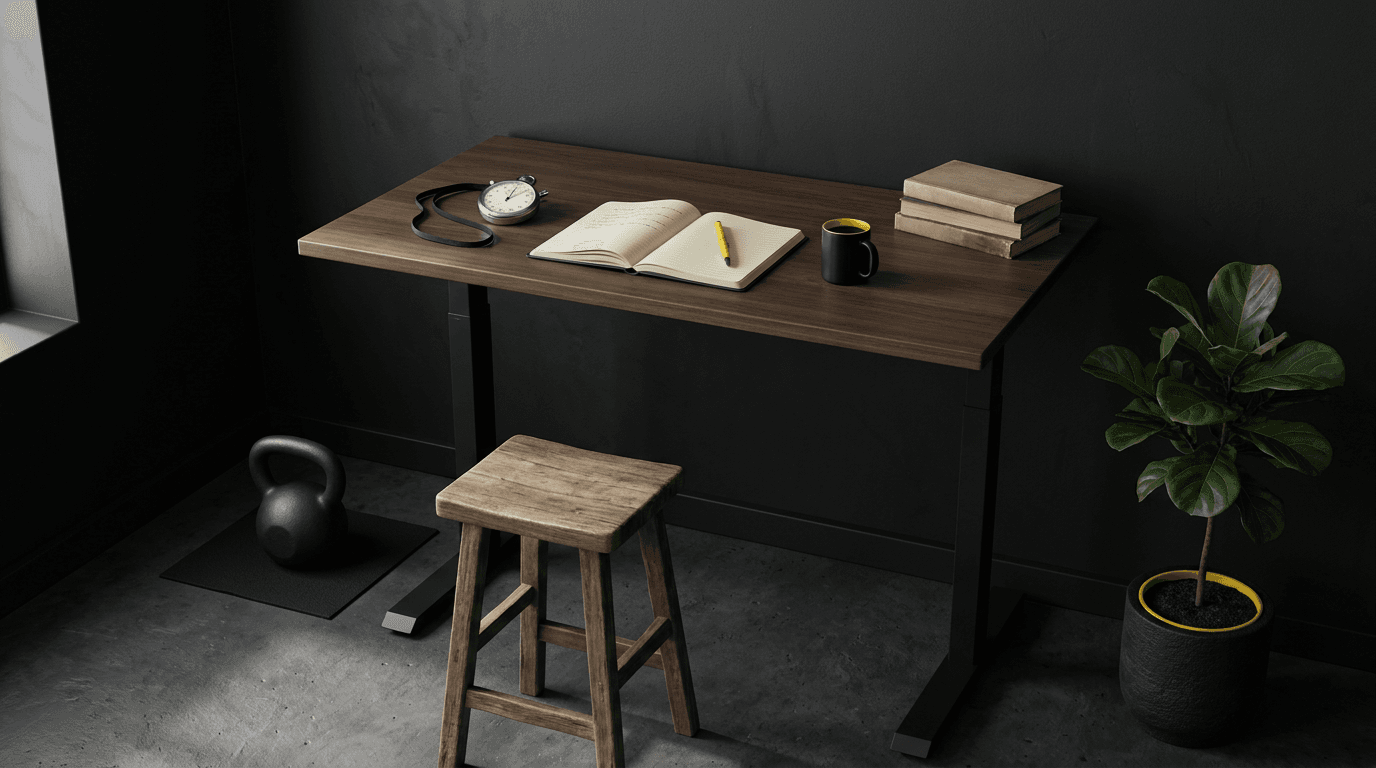
Standing desks don't fix sitting by themselves. The calorie difference is nearly a wash—88 versus 80 per hour. The real return is movement and alertness. Here are three versions of the transition, priced in minutes. Pick the one that fits your next gap, not the one that sounds best.
The 60-second version
Stand up. That's it. No desk adjustment, no gadget. If your desk is fixed height, stack a box or a thick book on it and raise your monitor to eye level. Before: you're seated, spine folded. After: you're upright, ribs over hips. Cost: one minute, zero recovery.
The marginal benefit is small but real. You'll burn an extra eight calories per hour, which is nothing. But you'll also break the sitting streak. The Mayo Clinic researchers found that even short interruptions reduce sedentary time. That's the actual ROI—not calories, but the break itself.
Returns diminish past the first minute for this version. Don't pad it. If you only have sixty seconds, use them to stand, reset your posture, and get back to work.
The 5-minute version
Stand up and add a movement loop. Walk to the end of the hall and back. Do ten calf raises. Roll your shoulders. The point is to get blood moving, not to log a workout. Before: you've been sitting for an hour. After: you've stood, moved, and returned to your task with a clearer head.
The Mayo Clinic study on active workstations found that walking pads and steppers improved cognition without hurting performance. You don't need a treadmill for five minutes. A short walk around the office does the same thing—it's the movement, not the equipment.
Time cost: five minutes, plus the two minutes it takes to re-focus afterward. That's seven total. Still cheap. The benefit is better than the 60-second version because you're actually shifting your physiology, not just your posture.
The deep version (15-30 min)
This is the full transition. Set up a proper standing desk—either a converter or a workaround like the sawhorse-and-plank approach. Then plan your day in standing blocks: 25 minutes standing, 5 minutes sitting, repeat. Before: you're deciding once. After: you're building a system that runs all day.
The Harvard Health writer who fired his chair reported extra steps, better afternoon alertness, and less back ache. That's the deep return. But it comes with a cost: adjustment time. Your legs will ache for the first week. Your feet will complain. That's normal. The fix is to ease in—start with 20-minute standing blocks, not eight hours.
This version also includes a walking break. A 15-minute walk at lunch burns about 210 calories per hour pace—the real calorie burner, not standing. Use the deep version to install the habit and the walk as the payoff.
Pick one
You don't need all three. The 60-second version is for the day you're buried. The 5-minute version is for the day you have a small gap. The deep version is for the weekend when you can set up your space properly. Each is a complete unit. You do not owe yourself the bigger one if the smaller one was the actual decision today.
Deciding to stand at all is enough. The data doesn't demand heroics. Sitting more than eight hours with no activity carries risk, but 60 to 75 minutes of moderate movement offsets it. That's a walk, not a marathon. Start with one minute. Then five. Then maybe the full setup. Returns diminish past the deep version—don't buy a thousand-dollar desk if a box works.
Pick the one that fits your next gap, not the one that sounds best.
References
- The truth behind standing desks — Harvard Health
- Mayo Clinic study finds active workstations may improve cognitive performance — Mayo Clinic News Network
- Replace your chair with a standing desk — Harvard Health
- Sitting risks: How harmful is too much sitting? — Mayo Clinic