

Saturday morning, and the market is already humming. The tomato vendor is stacking heirlooms in uneven towers, their skins taut and smelling of the vine. I pick up a few, not because I have a recipe, but because they are here, and because a tomato in July needs almost nothing. A drizzle of oil, a flake of salt, a torn leaf of basil. That is a meal, and it is also roughly fifteen grams of protein if you add a soft-boiled egg, a slow release of carbohydrates, and the kind of red that means lycopene. Name the ingredient before the nutrient. The tomato first, then the science.
At the market
I watch people shop on weekends. Some clutch phones, scrolling through lists, their faces tight with the effort of chasing efficiency. Others drift, touching a peach, smelling a melon, letting the season guide them. The latter group always looks happier. A simple meal prep ritual doesn't start with a spreadsheet; it starts here, with a basket and a willingness to be led. Today I buy a whole chicken, a bag of farro, three lemons, a head of cauliflower, a bunch of kale, a tub of yogurt. This isn't a plan. It's a palette. From these few things, a week of eating will emerge.
The dish
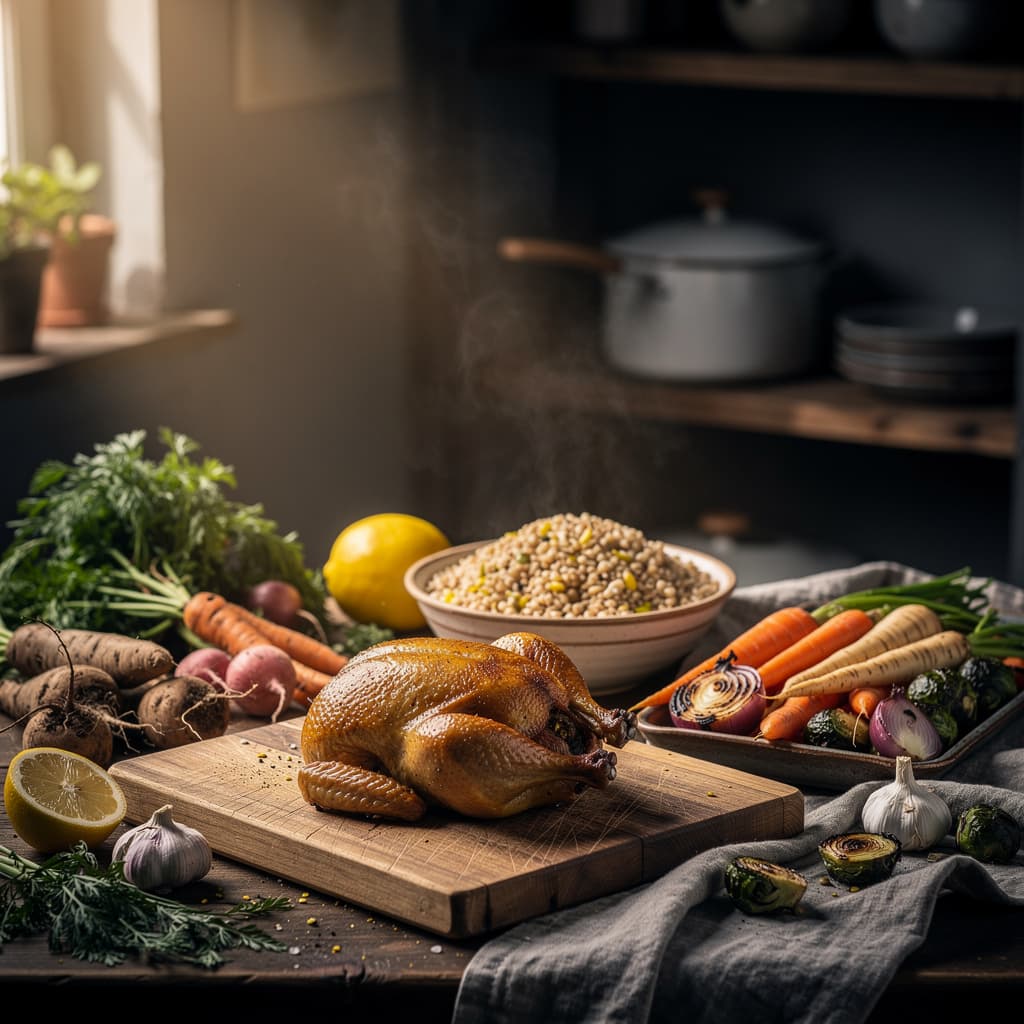
Back home, I set the oven to two hundred and twenty Celsius. That number matters. Roasted vegetables get a bad name from people who roast them at the wrong temperature. Low and slow gives you steam; high and fast gives you edges. I break the cauliflower into florets, toss them with oil and salt, and spread them on a hot tray in a single layer. They go in for twenty-five minutes, until the tips are dark and the stems yield to a knife. Meanwhile, the chicken gets salt and a lemon shoved in its cavity, and slides into the same heat. The farro simmers on the stove with a bay leaf. In an hour, the kitchen smells like a grandmother's Sunday, and I have done almost nothing.
This is the dish, but it is also many dishes. The chicken, once cooled, gets pulled apart. Some of it stays in chunks for tomorrow's lunch with farro and a spoonful of yogurt. Some gets shredded for a quick soup with kale and a squeeze of lemon. The cauliflower, if it survives Sunday, will top a grain bowl or get reheated with an egg on top. The kale can be massaged with oil and salt for a salad, or wilted into the farro. The yogurt is a sauce, a dressing, a breakfast with fruit. A single afternoon of gentle cooking, and the fridge holds the bones of a dozen meals. The only trick is buying enough that some of it survives Sunday.
The macro story
I don't count grams, but I know what I'm eating. The chicken is protein, obviously—about thirty grams per hundred grams of meat—but it also brings collagen from the bones if you simmer the carcass later for stock. The farro is a slow carbohydrate, the kind that releases its energy over hours rather than minutes, and it carries a surprising amount of protein itself, around seven grams per cooked cup. The cauliflower is fiber and vitamin C, and roasting it caramelizes its natural sugars without adding any. The kale is dark green, the kind that makes a cardiologist smile, full of folate and vitamin K. The yogurt is fat and protein, and if you choose a good whole-milk version, it also brings probiotics. Together, this is a balanced meal, not because I engineered it, but because whole foods, simply prepared, tend to balance themselves. The Precision Nutrition folks talk about a meal template—a palm of protein, a fist of vegetables, a cupped hand of carbs, a thumb of fat. That's not a rule; it's an observation. When you cook with ingredients first, you fall into that pattern naturally.
Try this weekend
On your next slow day, go to the market without a list. Buy a whole chicken and two vegetables that look good. Roast them both at two hundred and twenty Celsius, on separate trays, until they are done. Cook a pot of grains—farro, quinoa, rice, whatever you have. When everything is cool, pack it into containers, but don't separate everything into single meals. Leave the components separate, so you can combine them differently each day. A bowl of farro with cauliflower and yogurt on Monday. A salad of kale and cold chicken with lemon on Tuesday. A soup of shredded chicken and kale simmered in stock on Wednesday. This isn't meal prep as a chore; it's a ritual, a quiet investment in the week ahead. And it's forgiving. Some weeks you'll do more, some weeks less. As one source puts it, how far you progress all depends on what you want, what you need, and what you can reasonably do right now.
For personal medical concerns, please consult a qualified physician.
FAQ
What if I can't find farro or a whole chicken?
Swap without guilt. Any whole grain works—quinoa, brown rice, barley—and a pack of bone-in thighs or a whole roasted chicken from the market counter gets you close enough. The ritual isn't about the exact ingredient; it's about buying a few whole things and letting them guide your week.
How do I keep the components from drying out by Wednesday?
Store them separately in sealed containers, and add a splash of water or a damp paper towel when reheating grains. The chicken stays moister if you pull it off the bone and keep it in larger pieces, shredding only what you need each day. A spoonful of yogurt or a drizzle of oil revives most things.
Is this enough variety for a whole week?
It's a foundation, not a prison. One roast chicken and a grain can become soup, salad, a bowl with an egg, or a wrap with whatever fresh herbs or pickles you have. The same ingredients shift personality with a new acid, spice, or texture. You'll eat better than you think.