


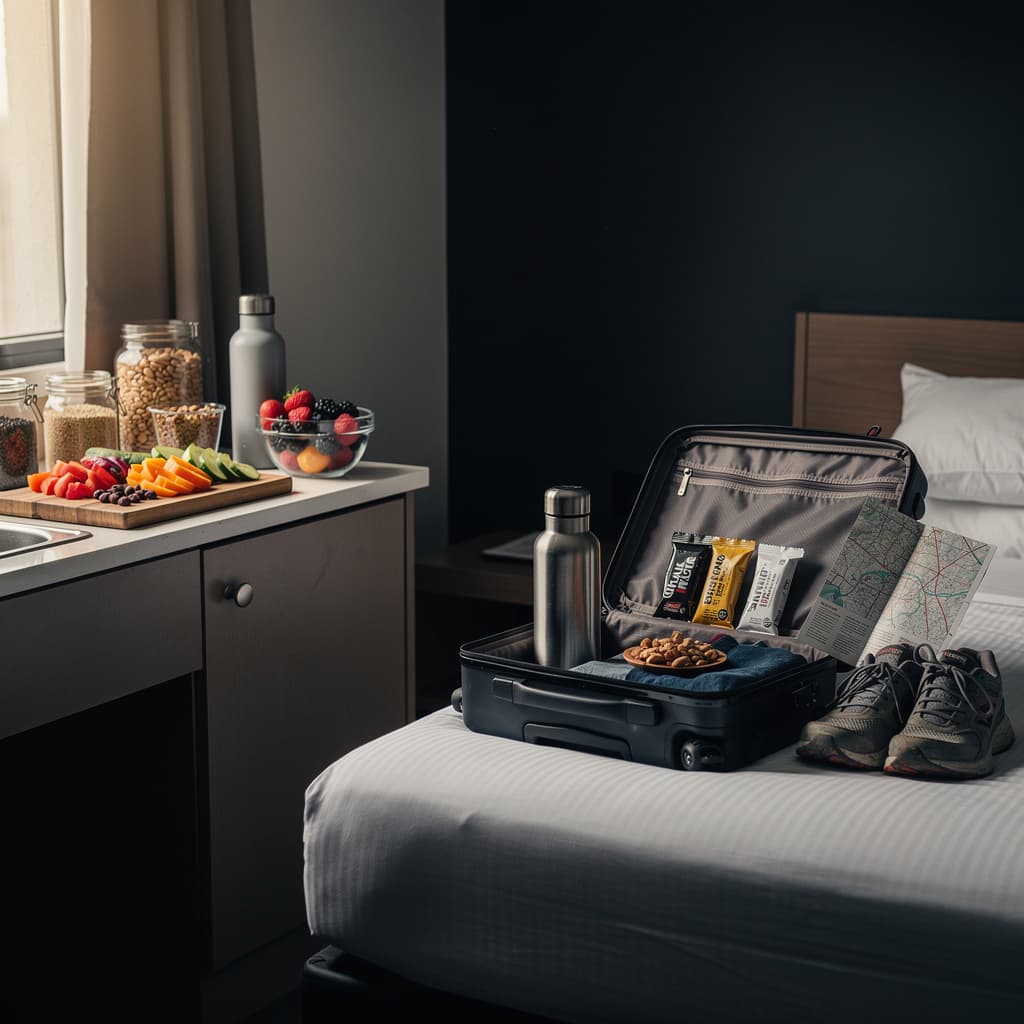
You have probably read that travel ruins nutrition. The evidence is more forgiving than the panic. A systematic review and meta-analysis from the Evidence Analysis Center found that medical nutrition therapy provided by dietitians improves nutrition status and clinical outcomes—so the real edge isn't a perfect plan, it's having one you can adapt (sm.eatright.org). Total daily intake patterns matter most, and a few flexible ranges can keep you on track without obsessing over every airport meal.
The Common Claim: Travel Derails Everything
We hear it constantly: business trips, vacations, or even a weekend away will blow up your nutrition. The fear is that irregular meals, unfamiliar food, and limited options make it impossible to eat well. But the all-or-nothing mindset is the real problem. If you normally aim for 1.4–2.0 grams of protein per kilogram of bodyweight, missing a single meal doesn't erase weeks of consistency. Distribution helps at the margins, but total daily intake is the heavyweight.
What the Evidence Says
No RCT has ever shown that one off-plan day destroys body composition or performance. The literature on endurance sports nutrition underscores that individual needs vary by exercise demands and event specifics (ajcn.nutrition.org). The same principle applies to travel: your personal baseline and activity level dictate what "on track" means. A low-carbohydrate, high-fat approach, for instance, is suboptimal for most endurance athletes and fails as a one-size-fits-all strategy (ajcn.nutrition.org). The takeaway? Rigid diet rules crumble under real-world conditions. Flexible ranges survive.
Hydration during travel is another area where extremes mislead. Drinking ahead of thirst rarely improves performance below the ninety-minute mark, and overdrinking without sodium can cause more problems than mild dehydration. A practical rule for a travel day with light activity: 400 to 800 ml of water spread across the day is enough for most. If you're sweating more—say, walking miles through terminals in heat—add electrolytes. The hour after training is convenient, not magical. Eat, sleep, repeat.
Practical Takeaway: Build a Travel-Nutrition Floor
Instead of aiming for perfection, set a floor. For protein, target at least 1.4 g/kg daily, even if meals are irregular. A simple move: pack single-serve protein powder or bars that deliver 20–30 grams each. That way, if your hotel breakfast is all carbs, you can still hit your range. For hydration, carry a refillable bottle and aim for pale yellow urine by midday—no need to count milliliters obsessively.
Carbohydrate needs vary wildly. If you're mostly sedentary during travel, lower intake won't hurt. But if you're training, protect pre- and post-exercise carbs. A meta-analytic view confirms that carbohydrate availability is a key determinant of endurance performance (ajcn.nutrition.org). So, on heavy training days, don't skip the rice or bread just because you're on the road.
Fiber often dips during travel, leading to sluggish digestion. A practical fix: pack single-serving oatmeal packets or nuts. They're airport-friendly and can bridge the gap until you find a decent meal. Ranges, not points: aim for 25–35 grams of fiber daily, but don't stress if you land at 20 on a travel day.
Caveats
These strategies are for generally healthy, active adults. If you have a medical condition like diabetes, kidney disease, or gastrointestinal disorders, your needs differ. The Academy of Nutrition and Dietetics emphasizes that individualized medical nutrition therapy, delivered by a registered dietitian nutritionist, is the gold standard (eatright.org). Travel doesn't have to unravel your progress, but it does require a plan that bends without breaking.
Spokespeople for the Academy are trained to translate nutrition science into actionable advice (sm.eatright.org). Their message aligns with what I see in practice: the best travel nutrition strategy is the one you'll actually use. Convenient, not magical. Eat, sleep, repeat. As always, consult a physician or dietitian for personalized medical concerns.
FAQ
What if I can't hit my protein target while traveling?
Don't panic. One low-protein day won't undo your progress. Focus on total daily intake over the trip—pack a few single-serve protein powders or bars to fill gaps when meals fall short. Even hitting 1.2 g/kg is still protective, and you can make up the difference when you're home.
How do I stay hydrated without overdoing it on travel days?
Let thirst and urine color guide you. For light activity, 400–800 ml of water across the day is plenty. If you're sweating more, add electrolytes—especially sodium—to avoid the sluggishness that comes from plain water overload. Skip the gallon jug; it's rarely necessary.
Can I just fast during travel and eat later?
It depends on your goals and activity. If you're sedentary, a compressed eating window might work fine. But if you're training or walking a lot, skipping meals can tank energy and recovery. A better bet: eat something small every 3–4 hours, even if it's just a handful of nuts or a bar, to keep your engine running.