


You have probably read that you need 25 or 38 grams of fiber a day. The numbers are not wrong, but they are population-wide estimates, not personal prescriptions. The evidence on fiber is stronger for what it prevents than for what a single gram target achieves. A 2021 systematic review and meta-analysis found that higher fiber intake was associated with a lower risk of colorectal cancer, though the effect size varied by fiber source and population. That finding alone should shift the conversation from “get enough” to “get enough from the right places.”
Common Claim: You Must Hit a Specific Daily Fiber Number
The 25-gram-for-women, 38-gram-for-men benchmark comes from the Institute of Medicine. It is based on the amount needed for cardiovascular protection, not gut health or satiety. Many people treat it as a pass/fail threshold. The evidence does not support that binary thinking. Total intake matters, but the type of fiber and the food matrix it comes in change the outcome. Isolated soluble fiber, for example, decreased energy intake by 69% in one systematic review, compared with 30% for insoluble fiber. Appetite suppression followed a similar pattern: 59% versus 14%. That does not mean insoluble fiber is useless—it supports stool bulk and regularity—but it does mean that gram-for-gram, soluble fiber punches above its weight for satiety.
What the Evidence Says
The colorectal cancer meta-analysis, published in 2021, pooled data from multiple prospective cohorts and showed a statistically significant inverse association between dietary fiber intake and cancer risk. The protective effect was most pronounced for cereal fibers and whole grains. Another line of research, focused on gut microbiota, reveals that athletes typically harbor more diverse microbial communities than sedentary controls, and fiber intake is a key driver of that diversity. However, the relationship is not linear: very high fiber intakes—above 50 grams daily—can cause bloating, gas, and even interfere with energy intake in athletes who need to meet high caloric demands. A review in Advances in Nutrition noted contradictory findings in athlete studies, likely because fiber timing and type were not controlled. The takeaway: fiber benefits are real, but they are modulated by dose, source, and individual tolerance.
Practical Takeaway
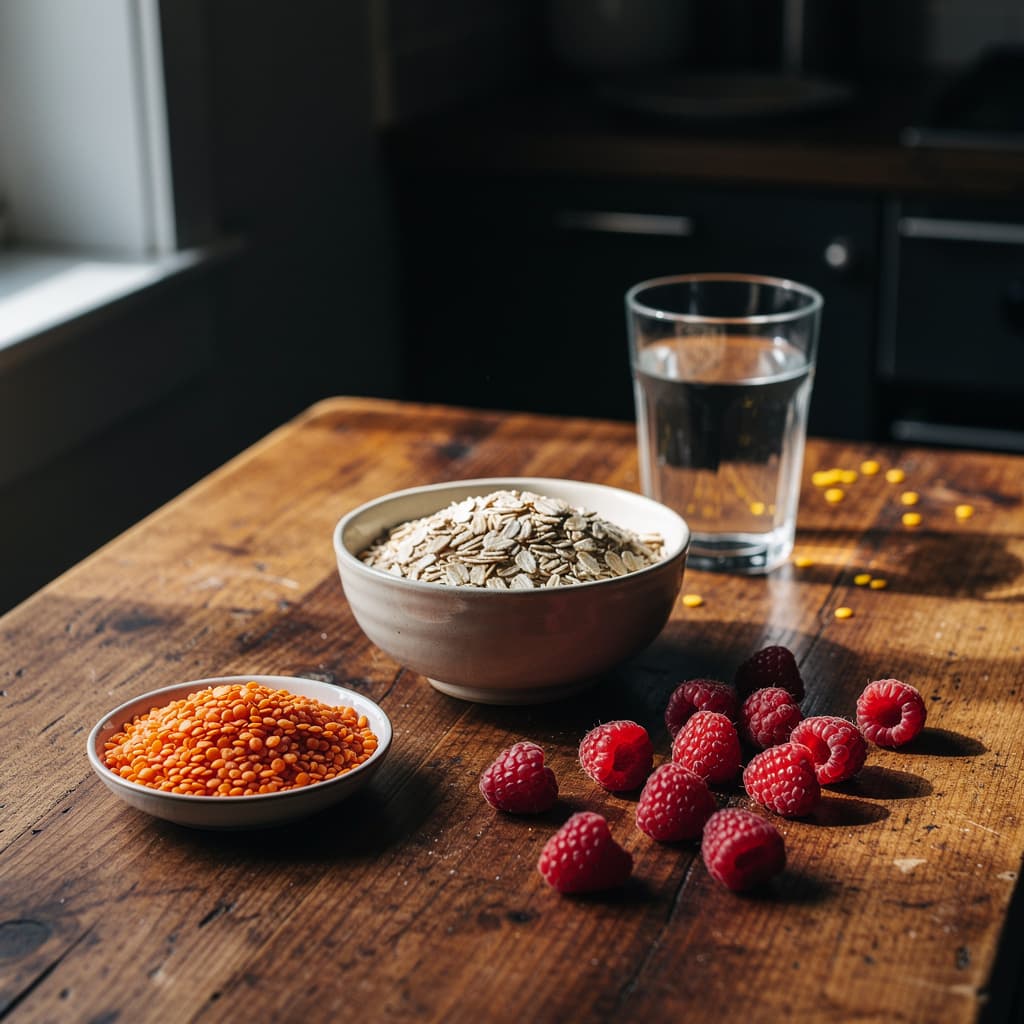
Instead of fixating on a single daily target, build your plate around whole-food fiber sources at each meal. Oats, barley, legumes, apples, berries, carrots, and sweet potatoes deliver a mix of soluble and insoluble fibers. A practical starting point: aim for 8–10 grams of fiber per meal across three meals, which lands most adults in the 24–30 gram range. If you are an athlete in a high-volume training block, front-load fiber earlier in the day and taper it before key sessions to avoid GI distress. One kitchen analogy: think of fiber like the scaffolding of your meal. It holds everything together and slows digestion, but if you overbuild it, the structure gets uncomfortable. Start with one swap—steel-cut oats instead of refined cereal, lentils instead of white rice, an apple instead of apple juice—and let the grams accumulate without calculator fatigue.
Caveats
Fiber intake should increase gradually, paired with adequate fluid, to give your gut time to adapt. Those with irritable bowel syndrome or other GI conditions may need to modify fiber type and amount under professional guidance. The evidence on fiber and cancer prevention is observational, not from randomized controlled trials, so we cannot claim causation. Supplements like psyllium husk can help close gaps but do not replicate the full matrix of whole foods. If you have a personal or family history of colorectal cancer, or if you experience persistent digestive symptoms, consult a physician or registered dietitian for tailored advice. Always consult a physician before making significant dietary changes, especially if you have underlying health conditions.
References
- ASN Supports National Cancer Prevention Month — nutrition.org
- Effects of isolated soluble fiber supplementation on body weight ... — ajcn.nutrition.org
- Fueling Gut Microbes: A Review of the Interaction between Diet ... — advances.nutrition.org