


You’ve tracked protein to the gram. Fiber? Probably not. A systematic review and meta-analysis of dietary fiber in athletes confirmed what dietitians have long suspected: intake is low across the board, for males and females alike, and often lowest in those who need it most (The American Journal of Clinical Nutrition). The gap between recommendations and reality is wide enough to matter for performance and health.
What the Evidence Says
Fiber does more than keep you regular. It’s the primary fuel for gut microbes, which produce short-chain fatty acids that dial down systemic inflammation. A meta-analysis of randomized controlled trials in children and adolescents found that higher fiber intake reduces chronic low-grade inflammation (Current Developments in Nutrition). The mechanism is conserved: fiber feeds microbes, microbes modulate immune responses, and athletes with heavy training loads benefit from dampened inflammatory signaling.
In athletes, the data are messy but instructive. A review of diet–gut microbe interactions noted contradictory findings on fiber and performance, likely because total intake varied so much between studies (Advances in Nutrition). When intake is adequate—somewhere in the 25–35 g/d range for most active adults—the microbial profile shifts toward species that produce anti-inflammatory metabolites. Below that threshold, the benefits fade.
Evidence hierarchy matters. The systematic review and meta-analysis on athlete fiber intake is the strongest signal we have: it aggregates observational data and shows a clear deficit. The inflammation meta-analysis is RCT-level evidence, though in a different population. Together, they form a coherent picture: fiber is underconsumed, and fixing that has measurable physiological effects.
Practical Takeaway
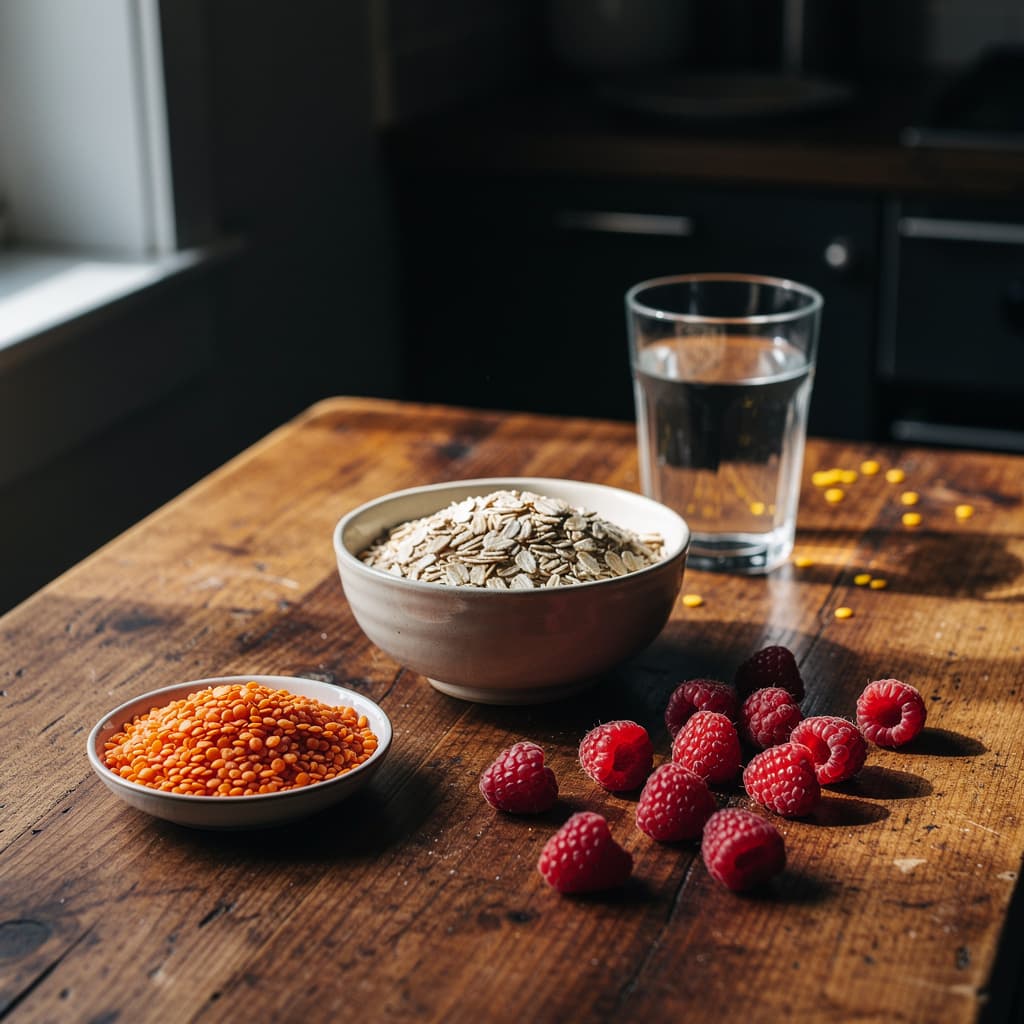
Ranges, not points. Aim for 25–35 grams of fiber daily from whole-food sources. If you’re currently eating half that, don’t jump to 35 tomorrow—the gut needs time to upregulate enzymes and adjust motility. Add 5 grams every few days. A practical kitchen move: pick one high-fiber food per meal. Oats at breakfast (4 g per half-cup), lentils at lunch (8 g per half-cup cooked), a cup of raspberries as a snack (8 g). That alone puts you near 20 grams. Top up with vegetables at dinner and you hit the range without a spreadsheet.
Hydration is non-negotiable. Fiber absorbs water in the colon; without enough fluid, you trade one problem for another. For most, an extra glass of water per 10 grams of added fiber is a safe starting point. Athletes training in heat need more, but the principle holds.
Distribution matters less than total intake. Unlike protein, where four meals of 0.4 g/kg outperform two large ones, fiber timing is forgiving. Spread it across the day to avoid GI distress during training, but the priority is the daily sum. The hour after training is convenient, not magical—for fiber, it’s irrelevant.
Caveats
Fiber supplements are not a shortcut to the benefits of whole foods. Isolated fibers lack the polyphenols and micronutrients that accompany fiber in plants, and the microbial response is blunted. Some supplements, like psyllium, have evidence for cholesterol lowering, but they don’t replicate the full spectrum of effects seen with dietary fiber. Use them as a bridge, not a replacement.
Individual tolerance varies. Athletes with a history of IBS or FODMAP sensitivities should increase fiber under guidance, focusing on low-fermentable sources like oats, carrots, and chia seeds. Gut training is real: consistent intake over weeks improves tolerance, even for higher-fiber foods like legumes.
This column is for informational purposes and does not constitute individual medical advice. Consult a physician or dietitian for personalized nutrition guidance, especially if you have gastrointestinal conditions or are making significant dietary changes.
FAQ
How quickly can I bump up my fiber without wrecking my gut?
Add 5 grams every few days, not all at once. Your gut needs time to adjust enzyme production and motility. Pair each increase with an extra glass of water—fiber without fluid is a recipe for bloating and constipation. If you’re prone to GI issues, start with low-fermentable sources like oats, carrots, and chia seeds.
Do I really need 25–35 grams, or is that just for sedentary folks?
That range holds for most active adults, including athletes. The systematic review on athletes specifically found intakes consistently below recommendations, and the anti-inflammatory benefits kick in when you’re hitting those numbers. More isn’t always better—beyond 35 grams, you may see diminishing returns and more GI trouble.
Can I just take a fiber supplement and call it a day?
Supplements miss the full package. Whole foods bring polyphenols, vitamins, and a matrix that feeds a wider range of gut microbes. Psyllium can help lower cholesterol, but it doesn’t replicate the anti-inflammatory effects of dietary fiber. Use supplements as a temporary bridge while you work on real-food sources.