

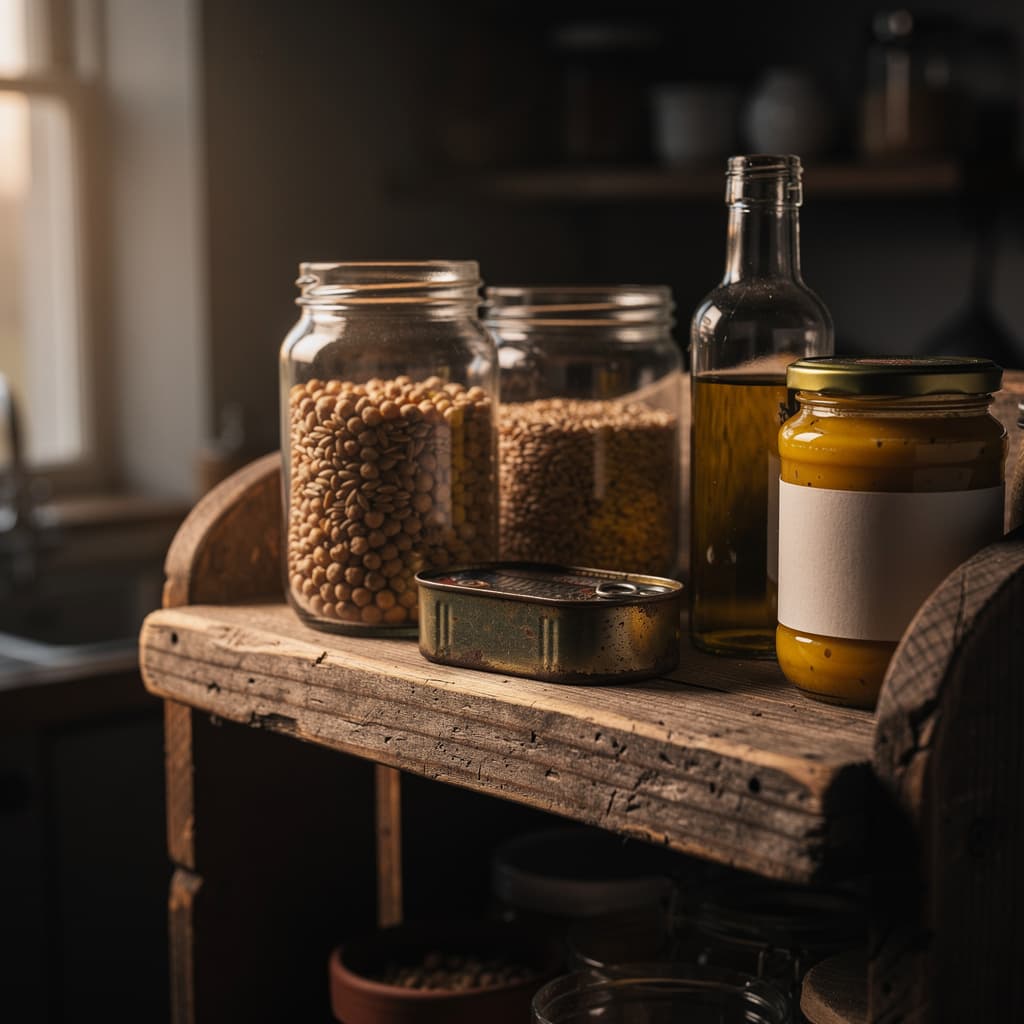
Wednesday morning I opened the cupboard and found three cans of chickpeas, a jar of Dijon mustard, and a half-empty bag of farro. That is not scarcity; that is a weeknight waiting to happen. A well-stocked pantry is not about hoarding — it is about having the right quiet ingredients that can become dinner in the time it takes to boil water. Legumes, whole grains, a few tins of fish, and a bottle of good olive oil are the backbone of meals that taste intentional without requiring a trip to the store. When the fridge looks bare, the pantry is where the cooking begins.
At the market
The produce aisle still gets most of my attention, but I have learned to walk the center aisles with the same curiosity. Last Saturday I lingered near the dried beans, a bag of black lentils catching the light like tiny dark pebbles. Next to them, a row of canned sardines in olive oil, their tins cool to the touch. I picked up a jar of Dijon mustard, the kind with visible seeds, and a box of farro that promised a chewy, nutty grain in twenty minutes. These are not impulse buys; they are the foundation of a pantry that works as hard as I do. Canned beans — cannellini, garbanzo, kidney — are a quick source of protein that need only a rinse before they join a salad or a warm skillet. Dried lentils cook faster than rice and ask for nothing more than a bay leaf and a glug of oil. Tuna, anchovies, and sardines bring a savory depth that turns a bowl of grains into a meal that feels complete. When I teach someone to shop, I tell them to look for unsalted stocks and broths, a neutral oil like canola for baking, a fruity olive oil for dressing, and toasted sesame oil for finishing a stir-fry. These are the ingredients that make a Wednesday dinner possible.
The dish
Last night I made a warm farro bowl with lemon, olive oil, and a can of chickpeas I had drained and patted dry. I roasted the chickpeas at two hundred and twenty Celsius on a hot tray in a single layer, watching them turn golden and crisp at the edges while the farro simmered on the stove. Once the grain was tender, I stirred in a spoonful of Dijon mustard, the zest of a lemon, and a pour of that fruity olive oil. The chickpeas went on top, still warm, and I finished the bowl with a handful of flat-leaf parsley from the windowsill. The whole thing took maybe twenty-five minutes, and it tasted like a meal I had planned for days. The mustard gave it a creamy sharpness, the lemon lifted everything, and the chickpeas added a crunch that made each bite interesting. A pantry meal should never feel like a compromise; it should feel like a quiet victory.
The macro story
Farro and chickpeas together deliver a complete protein, the kind that keeps you full without weighing you down. A cup of cooked farro has about eight grams of protein and plenty of fiber, while chickpeas add another twelve grams per cup, along with iron and slow-digesting carbohydrates. The olive oil brings monounsaturated fats that help your body absorb the fat-soluble vitamins in the parsley. A squeeze of lemon adds vitamin C, which makes the iron from the chickpeas more available. This is not a meal you need to analyze; it is a meal that simply works. Canned fish like sardines or tuna would push the protein even higher, and a soft-boiled egg on top would turn it into a breakfast that carries you until lunch. The pantry staples I keep on hand — beans, grains, mustard, oils — are the building blocks of plates that happen to align with what a dietitian would recommend. They are low in added sugar, modest in sodium if you choose unsalted versions, and endlessly adaptable. When you cook from the pantry, you are less likely to reach for heavily processed foods because dinner is already halfway there.
Try this weekend
This Sunday, take twenty minutes to assess what is already in your cupboard. Pull out the cans of beans, the half-used bag of quinoa, the jar of mustard hiding behind the honey. Make a list of what you need to fill the gaps: a box of farro, a tin of anchovies, a bottle of toasted sesame oil. Then, before the week begins, cook a pot of grains and roast a tray of chickpeas. Store them separately in the fridge, and you will have the start of a meal every night. On Monday, toss them with arugula and a mustard vinaigrette. On Tuesday, warm them with sautéed greens and a fried egg. The pantry is not a backup plan; it is the first place I look when I am hungry. For personalized nutrition guidance, please consult a physician or healthcare professional.
References
- 3 Strategies for Successful Meal Planning — eatright.org
- Creating a Grocery List — eatright.org
- 7 Kitchen Staples for Teen-Friendly Meals — eatright.org
- Processed Foods: A Closer Look — eatright.org