

Saturday morning at the market, the last of the winter squash sat next to a crate of leeks still wet from the field. I bought both, plus a chicken because the stallholder swore by its fat. That night we roasted it plain, with salt and a lemon half. By Sunday there was a carcass, a cup of gravy, and a bowl of mashed potato nobody had finished. The leftover reflex kicked in before I cleared the table.
At the market
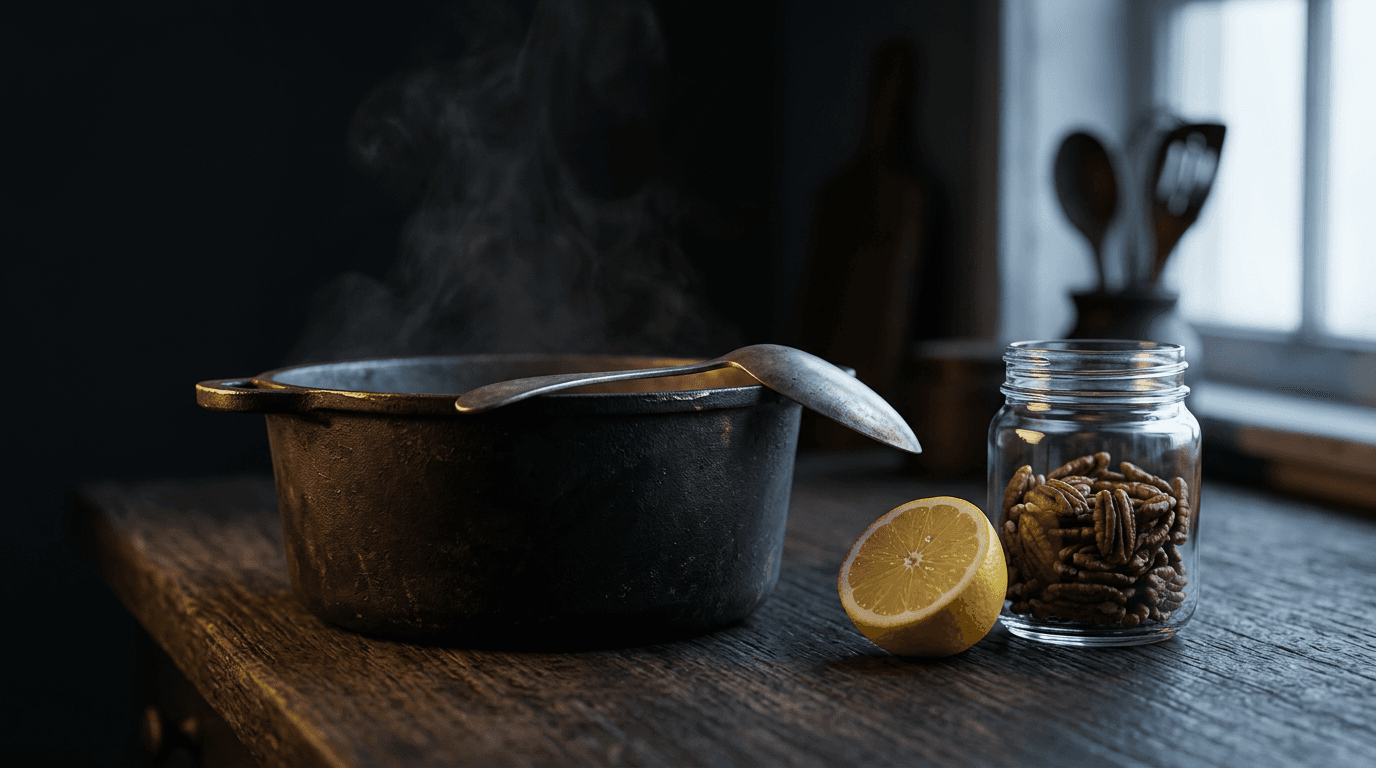
I buy for two meals now, not one. The chicken is for Sunday; the leeks and squash are for Monday's pot. At the stall I ask for the bird with the most skin, because that fat gets skimmed and saved. The gravy is strained, chilled, and the fat lifted off with a spoon — a habit I took from a line cook who never wasted a drop. The vegetables go in the bottom drawer whole, because cut leeks go slimy by Wednesday. A small jar of toasted pecans is the thing that turns a reheated wrap into something you want to eat. Buy enough that some survives Sunday. That is the whole market lesson.
The dish
Monday's pot starts with the skimmed gravy, loosened with a little water. In go the leftover chicken, pulled from the bone, and the roasted squash cubed. The leeks get sliced and sweated in a knob of butter until translucent, then added. I thicken with the mashed potato, a spoonful at a time, until the broth holds a spoon. A handful of shredded greens at the end, just wilted. Twenty minutes of simmering, and the kitchen smells like a Sunday that got a second chance. This is not a recipe so much as a method: gravy as base, meat and vegetables as body, potato as thickener. Taste it twice — once for salt, once for whether it needs a squeeze of lemon.
The macro story
Here is what that pot holds without anyone putting it on a label. The chicken brings protein and a little fat; the squash brings slow carbohydrate and fiber; the leeks bring flavor and more fiber; the greens bring the dark green that makes a cardiologist smile. The skimmed gravy is mostly collagen and minerals. You could stack this into numbers, but the numbers would miss the point: a second meal built from the first is often better balanced than a fresh one, because it already has a little of everything. The one rule I keep is the thermometer — reheat to 165°F internal, and never let the pot sit out more than two hours. That is not a number on a label; it is a safeguard.
Try this weekend
Roast a chicken or a tray of vegetables on Saturday. On Sunday, before you put anything away, portion the leftovers into small containers rather than one big one — they cool faster, and faster cooling is safer cooling. Monday, make the pot. Start with the gravy or the roasting juices, add the meat and vegetables, thicken with potato or a spoon of yogurt, finish with something raw and green. Reheat only the portion you will eat that night, and use a thermometer. Holiday cranberry sauce left in the jar? Spread it in a whole-wheat wrap with sliced meat and shredded greens; the tartness cuts the fat. Freeze stock in small amounts and cook rice or couscous in it later instead of water. The invitation is small: cook once more than you need, and treat the second meal like the first. For any personal health or dietary questions, consult your physician.
FAQ
How long can I keep the leftover chicken before it goes into Monday's pot?
Three to four days in the fridge, and only if it went in cold and fast — within two hours of coming off the heat. Past that, freeze it the day you roast it and thaw in the fridge overnight. If it smells off or feels tacky, it is off. No pot rescues that.
My gravy split when I reheated it. Did I ruin it?
No — splitting is just fat separating from the liquid, which is exactly what you want to skim anyway. Warm it gently, lift the fat with a spoon, and whisk the rest back together over low heat. Add a splash of water if it tightens too much.
Can I skip the potato and thicken another way?
Yes. A spoon of yogurt stirred in off the heat, or a little cooked rice mashed into the broth, does the same job. Breadcrumbs work too, though they drink more liquid. Taste after each addition — thickening is easier to add to than to undo.