

A step taken in five seconds is one step. The same step across thirty seconds is a lesson. The body learns from time under attention, not distance covered. Slow yourself enough to feel the heel peeling from the ground, the knee tracking over the second toe. Speed will find you when it is needed. Presence does not.
Principle
Walking is not a warm-up for training. Walking is training.
Practice
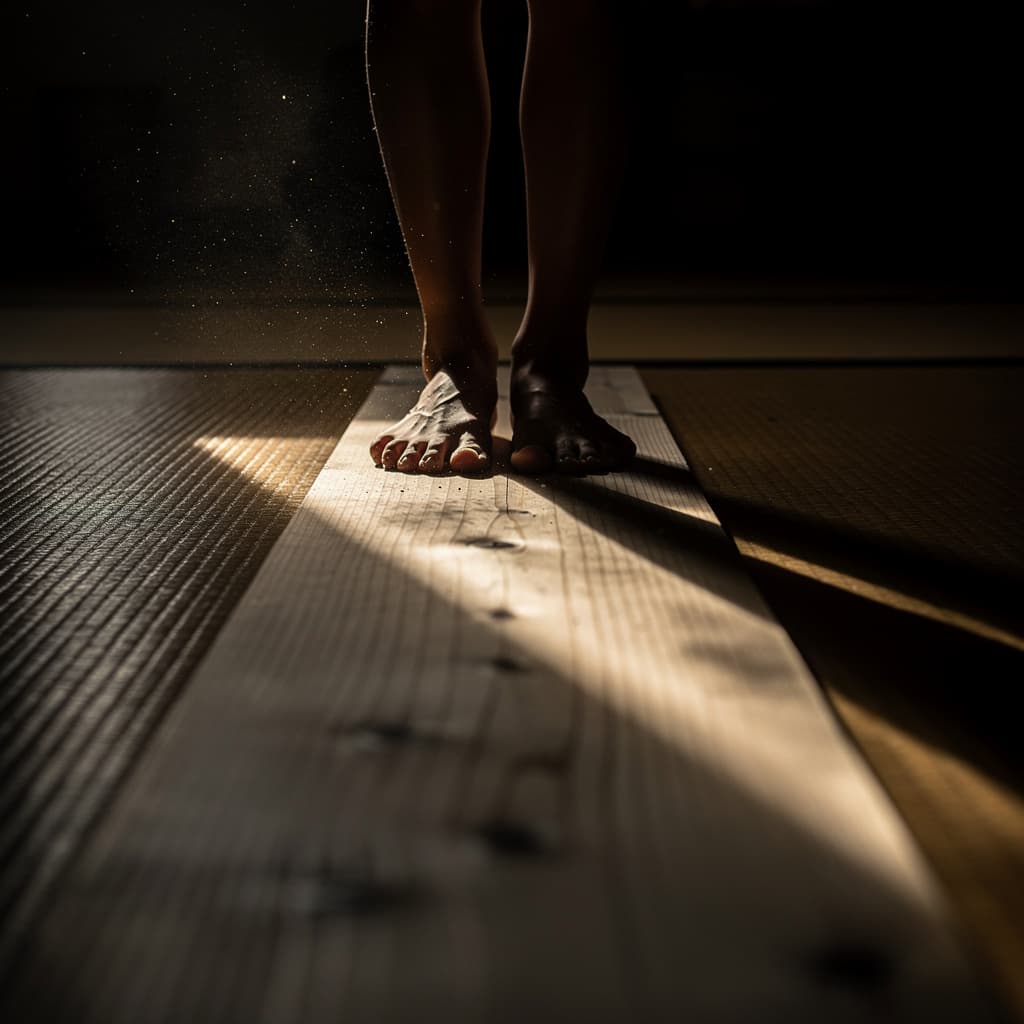
Choose a stretch of ground — twenty meters, a driveway, a quiet hallway. Walk its length as if each step were a single, deliberate rep. Let the arms hang heavy. Let the breath move through the nose, slow and unforced. At the end, turn. Do not rush the turn. The turn is part of the step.
Do this for ten minutes. Do not count steps. Do not track distance. Pay attention to the sole of the foot meeting the earth, the way the ankle rocks forward. If the mind wanders, bring it back to the breath. This is a bodyweight exercise, no different from a push-up slowed to a crawl.
Reflection
Most walkers walk to get somewhere. The walker who trains walks to be somewhere. After a month, you may notice the hip releasing at the top of the stride. After a year, you may notice the shoulders settling without instruction. The walk does not change. The walker does.
Life moves at different speeds. A walk can be a sprint through an airport or a shuffle behind a toddler. The practice accepts both. What matters is that the breath stays steady, the feet stay connected, and the mind stays with the movement. Unpredictability is part of the path.
One question for the reader
What would happen if you walked tomorrow as if it were the only exercise you would ever need?
References
- The advantages of body-weight exercise — Harvard Health
- Calisthenics: An effective, low-frills way to stay fit — Harvard Health
- Creative Body-Weight Exercises | 5 Workouts to Try — ACE Fitness
- Maintaining Health and Fitness in Parenthood — NSCA
Any movement practice carries individual considerations. Please consult a physician or healthcare professional before changing your physical routine.