

A beginner-friendly label is a bit like a restaurant menu that says “chef’s choice.” It promises you will not have to make hard decisions, and that the outcome will be at least decent. In tech, the label usually means a short setup guide, a single button where competitors have four, and defaults that hide the sharp edges. That is genuinely useful. But the label also implies the device will protect you from mistakes, and that is where things get slippery. The tool reduces friction, not the need for judgment.
What it is
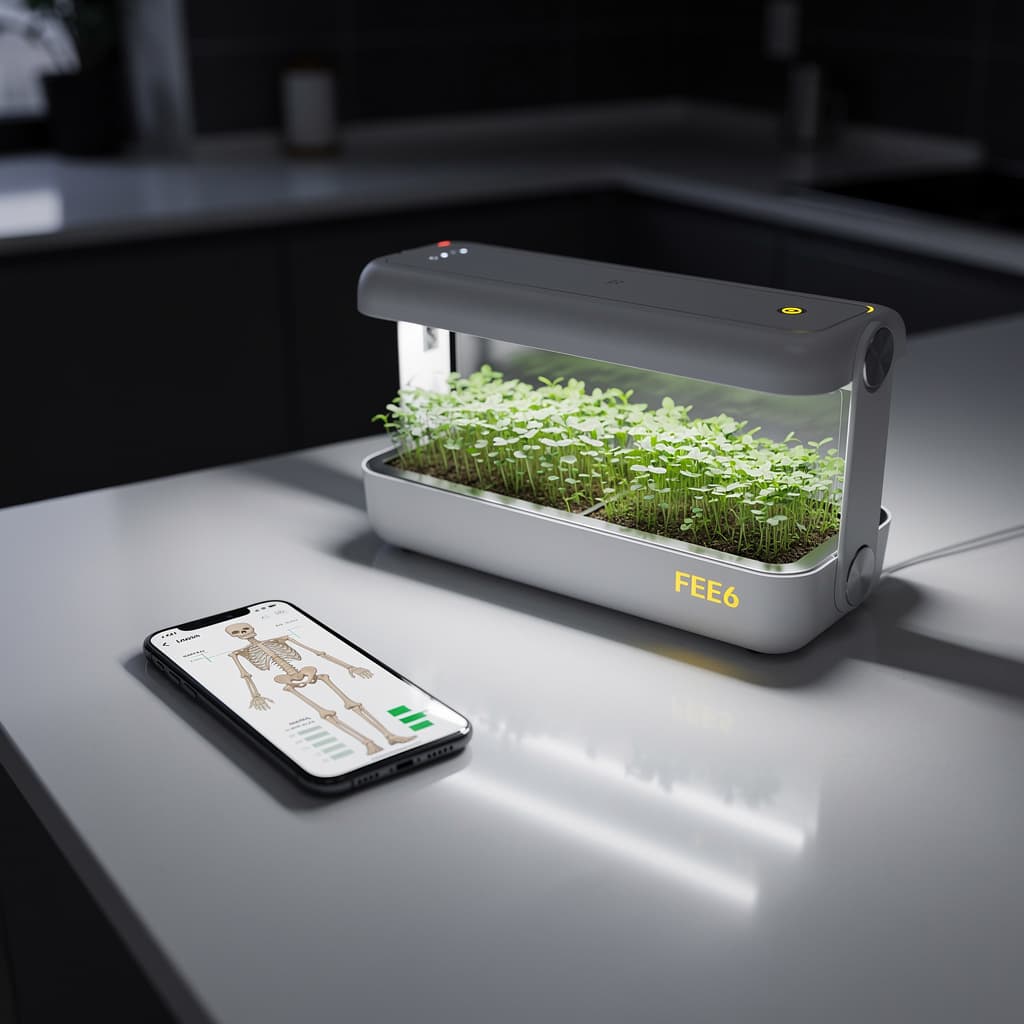
Beginner-friendly tech spans a wide band: automated indoor gardens that handle watering schedules, AI fitness apps that count your squats, smart kitchen gadgets that promise perfect results with one tap. The common thread is that they take a process that normally requires some learning and compress it into a few guided steps. The InstaFarm microgreens grower, for example, ships with pre-seeded trays and a self-regulating water tank. You fill the reservoir, plug it in, and harvest in about a week. No soil mixing, no timer programming. The WIRED review noted that setup takes minutes and the device is “extremely easy to use.” That is the promise in a nutshell: a superfood farm without the farming.
How it works (in plain language)
Under the hood, these devices lean on two things: sensor-driven automation and software that makes guesses. The InstaFarm uses a pump and moisture sensors to keep the growing medium damp. An AI posture coach uses a phone camera to track roughly twenty joints, then compares your shape to a reference skeleton and flags drift. The magic is that you never see the sensor data or the reference skeleton. You see a green checkmark or a gentle nudge to straighten your back. The machine translates messy signals into a simple verdict. That translation layer is the whole product. It is also where accuracy claims start to wobble.
Why it matters for movement / health
For someone who has never grown a plant or done a squat, the beginner-friendly wrapper builds confidence. You get a win on day one, and that momentum matters. The InstaFarm delivers a tray of microgreens before you have time to get bored. An AI posture app catches the obvious form errors that a new lifter would miss. The health benefit is real if the tool nudges you toward consistency. But the wrapper also teaches you to trust the green checkmark, and that habit can outrun the tool’s actual competence. A heart-rate variability score that flattens after a bad night is a real signal; a posture app that misses a subtle hip shift is not. The difference is how much the tool’s accuracy degrades at the edges of its training data, and beginners are not usually told where those edges are.
Open caveats
The first caveat is the accuracy metric itself. AI companies often report something called AUC—area under the receiver operating characteristic curve—which summarizes how well a model separates two categories on a scale from 0 to 1, where 1 is perfect. Managers fixate on this number, as the MIT Sloan article points out, but AUC hides a lot. A model can have a high AUC and still be terrible at the specific subgroup you care about. The MIT News piece on bias reduction describes a method that improved worst-group accuracy by tweaking the dataset rather than the model, which is promising but also a reminder: the model you bought was trained on data that probably did not include enough people who move like you. When the posture app says your plank is perfect, it might just mean your shape is close to the average of its training set, not that your spine is neutral.
The second caveat is that beginner-friendly devices often rely on reviews to build trust, and those reviews are not always genuine. The WIRED guide on spotting fake reviews suggests looking up the brand’s website, checking reviewer profiles, and finding reviews on other platforms. A product with five hundred five-star ratings and a brand that has no official website is a warning sign. Even real reviews can be misleading if the reviewer used the device for three days and never pushed it past the onboarding flow. A microgreens grower that works flawlessly for the first two trays might clog its pump on the third. The beginner-friendly promise feels fragile when you have to troubleshoot a problem that the simple interface was designed to hide.
The third caveat is the drift between what the tool measures and what you actually need to know. The InstaFarm automates watering, but it does not optimize light spectrum for different seed types. The AI posture coach flags drift, but it cannot tell you why your left hip is tighter on Tuesdays. The tool gives you a number or a checkmark, and you have to decide whether it is actionable. If the number disagrees with how you actually feel, trust the body. That is not a beginner-friendly instruction, but it is the one that keeps you from outsourcing too much judgment to a sensor.
References
- The No. 1 Question to Ask When Evaluating AI Tools — MIT Sloan Management Review
- InstaFarm Automated Indoor Microgreens Garden Review: Easy Being Green — WIRED
- How to Spot Fake Reviews on Amazon: Tools and Advice — WIRED
- Researchers reduce bias in AI models while preserving or improving accuracy — MIT News