

The Pitch
The pitch is simple: plug in a dongle, install an app, and prove you're a safe driver. The discount is real. So is the data flow. The question is not whether telematics programs work—they do, for the insurer. The question is what else that data gets used for, and who else gets to see it.
Some programs offer a discount just for installing the app, before you've driven a single monitored mile. That should tell you something. The data itself has value beyond your discount.
The carrier frames it as a win-win. You save money. They price risk more accurately. Both statements are true. But the privacy policy is where the real terms live. Read clause eleven, the one about sharing with affiliates and service providers. It will say something about personalization or product improvement. It will not say "we sell your driving data to data brokers." That happens anyway.
What They Collect
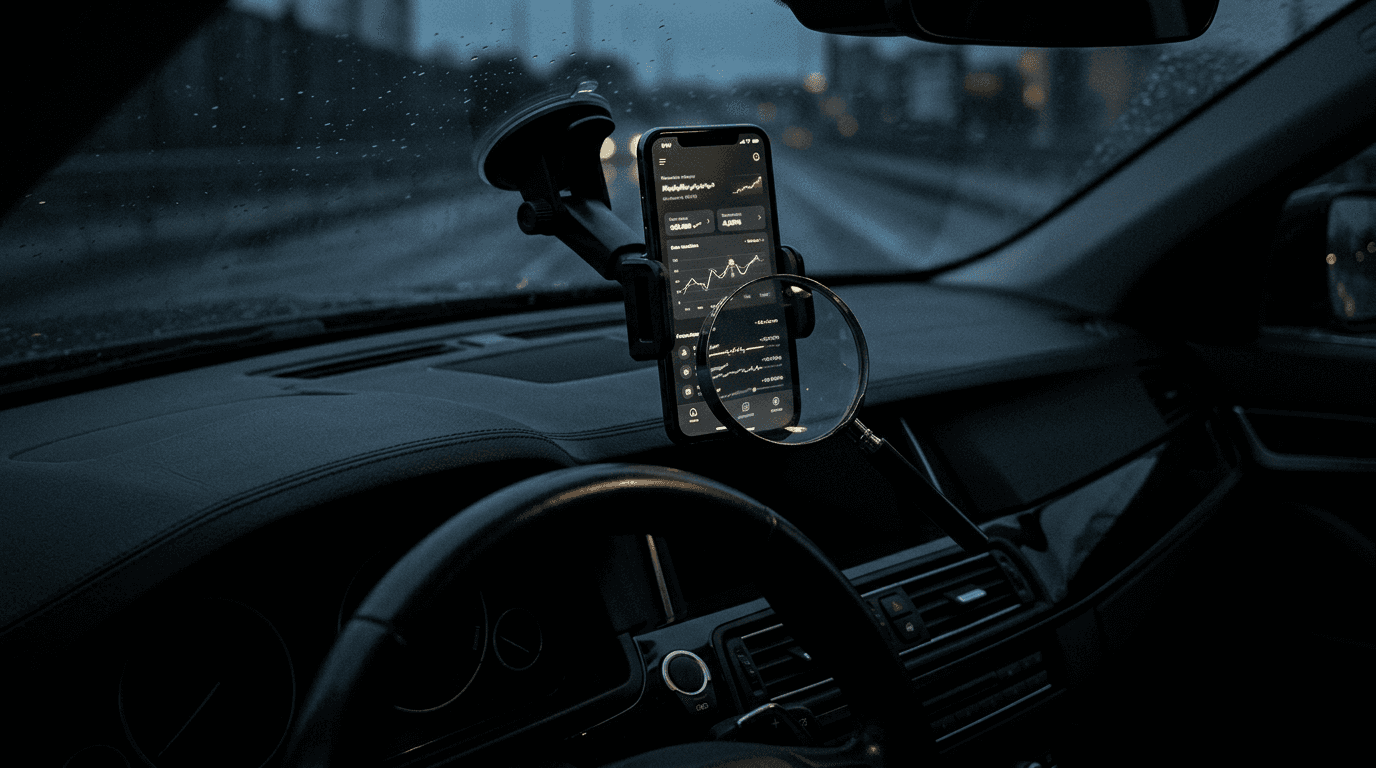
Telematics programs collect far more than mileage. A typical app logs your speed, acceleration, braking, cornering, and the time of day you drive. Some also pull your phone's gyroscope and accelerometer data, which can infer phone handling while driving. The car itself, if connected, adds GPS location, seatbelt status, and even weight in the cabin.
The FTC's issue spotlight on surveillance pricing notes that connected cars can collect significant amounts of privacy-sensitive data, and that manufacturers share driving behavior with third parties that insurers use to set rates. That's not a hypothetical. It's happening now, through partnerships disclosed in dense policy updates.
Under the Gramm-Leach-Bliley Act, insurers are financial institutions. They must give you a privacy notice and let you opt out of some sharing. But the opt-out does not cover everything. It does not stop the insurer from using your data internally to set your rate. It does not stop them from sharing with affiliates for marketing, depending on the state. And it does not apply to data collected by a third-party telematics vendor, which may have its own policy.
What They Don't Tell You
The discount is the visible part. The invisible part is the secondary market for your driving data. The FTC's surveillance pricing spotlight describes how vehicle data flows to data brokers and others, and how that information is used to inform rates. The same data that earns you a discount today can be used to raise your rate tomorrow, or to deny coverage entirely.
There's also the question of accuracy. Telematics data is not always precise. A hard brake logged by a phone in a cup holder is not the same as a hard brake logged by a car's onboard system. But the insurer treats both as fact. You won't see the raw data. You'll only see the resulting premium.
The FTC has taken enforcement actions against insurers for privacy violations, including cases involving SAFECO, State Farm, and The Hartford. Those cases are about deceptive practices, not just data sharing. The lesson is that the industry's promises need scrutiny.
Your Move
Before you enroll, read the privacy policy. Look for the section on data sharing. See if there's an opt-out that doesn't kill the discount. If there isn't, ask yourself if the saving is worth the surveillance.
If you already have a telematics app, check the permissions. Does it need access to your contacts? It doesn't. Does it need location when the app is closed? It might, but you can often restrict that. Take the opt-out on day one, if one exists. And if the insurer offers a discount for installing the app but not for driving well, that's a red flag. They want the data, not your driving record.
Free at point of sale rarely is. The same applies to insurance discounts. The price is your privacy, and the payment happens every mile.
FAQ
Can I get the discount without sharing all my data?
Sometimes, but not always. Some insurers let you opt out of sharing with affiliates and still keep the discount, depending on state law. But the core telematics data—speed, braking, location—is the price of admission. If the discount requires the app, you're sharing that data. Period.
What happens to my driving data after I cancel the policy?
That depends on the policy. Many insurers keep it for years, and the data may already be in the hands of data brokers. You can ask the insurer to delete it, but they're not always required to. The best time to ask is before you enroll, not after.
Is there a way to see what data my insurer has on me?
You can request a copy under some state laws, but it's rarely easy. Start with a written request to the insurer's privacy office. If they refuse, file a complaint with your state's insurance commissioner. Don't expect the raw telematics feed—you'll get a summary at best.