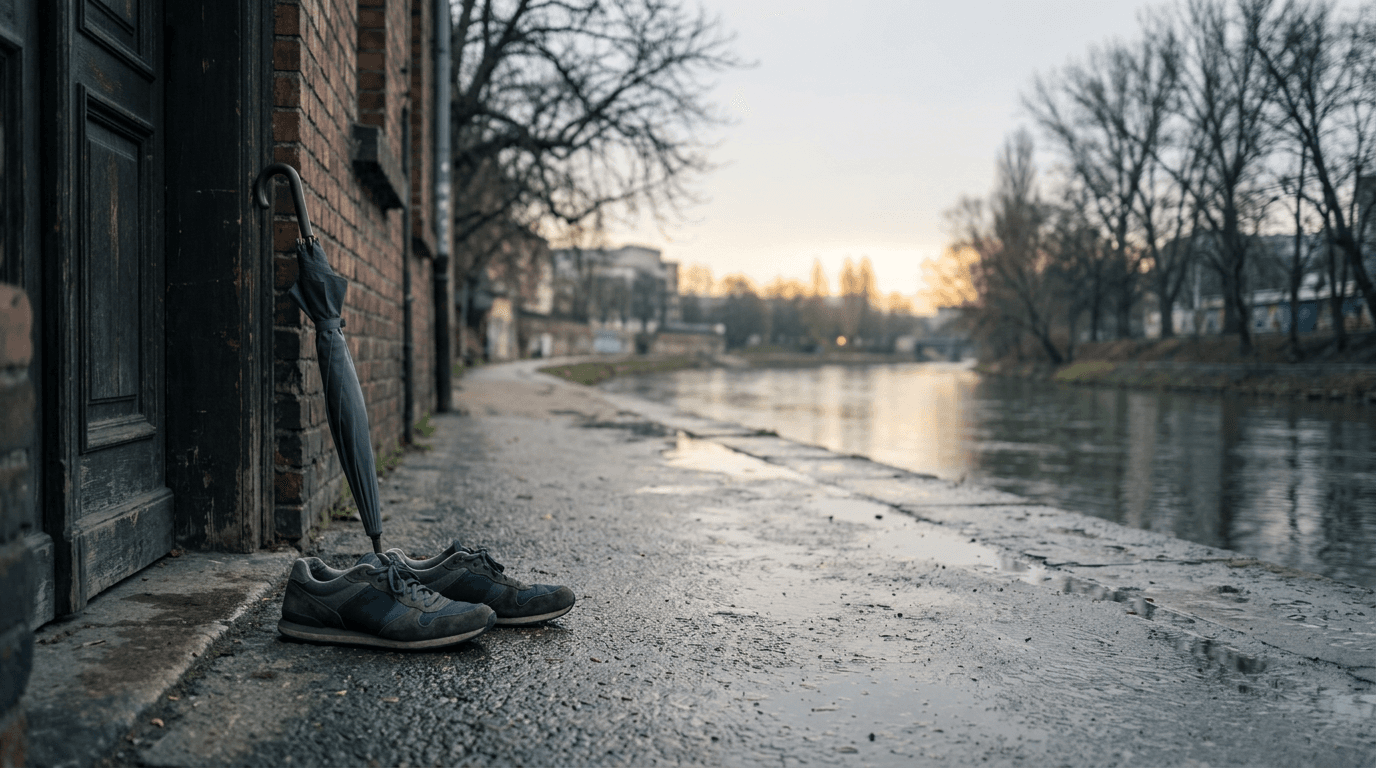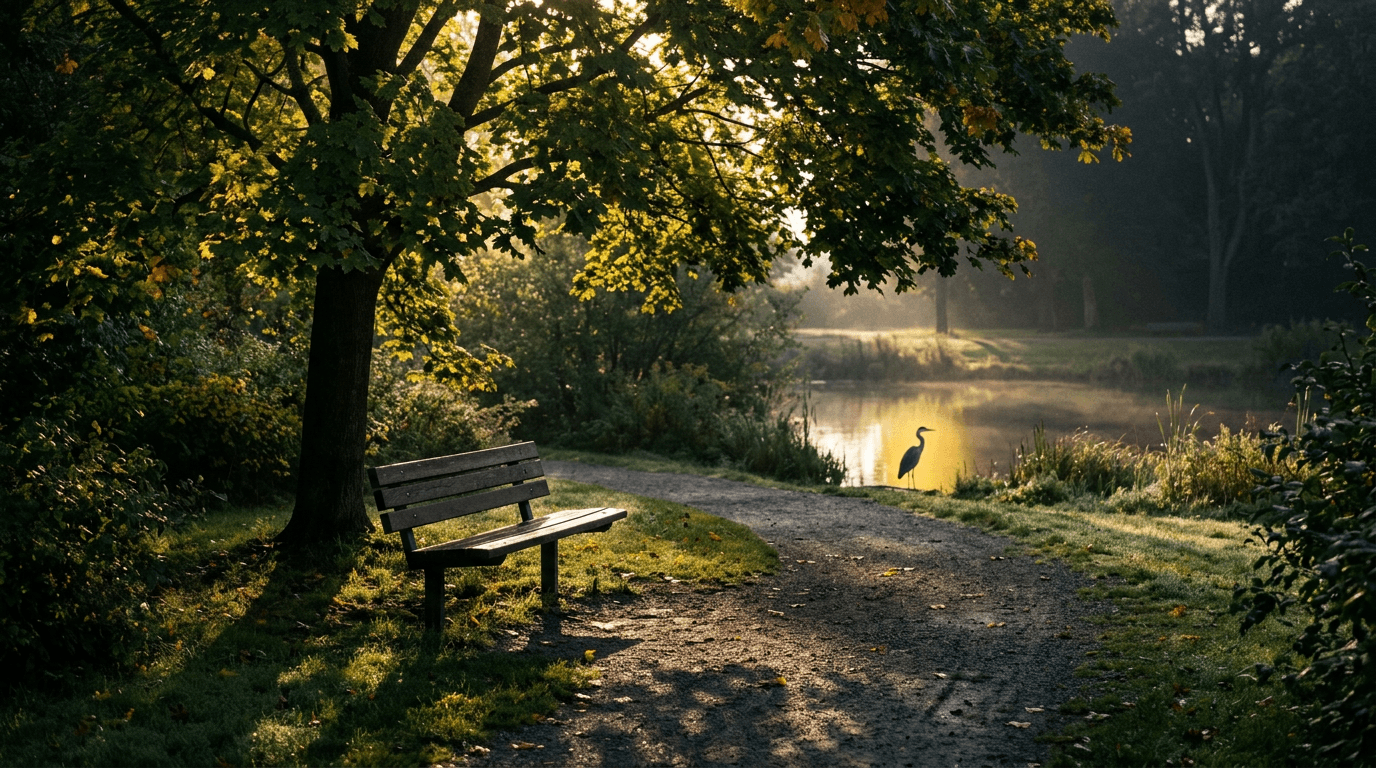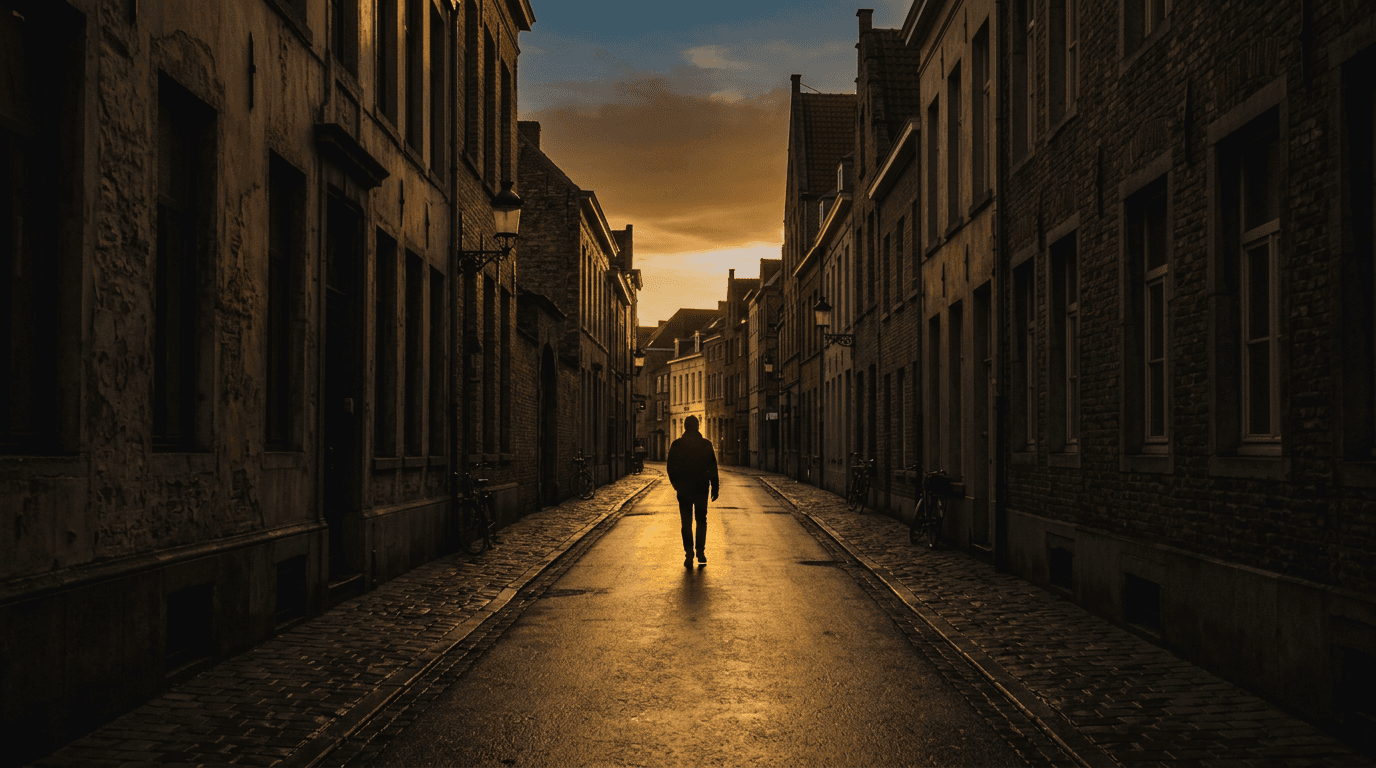


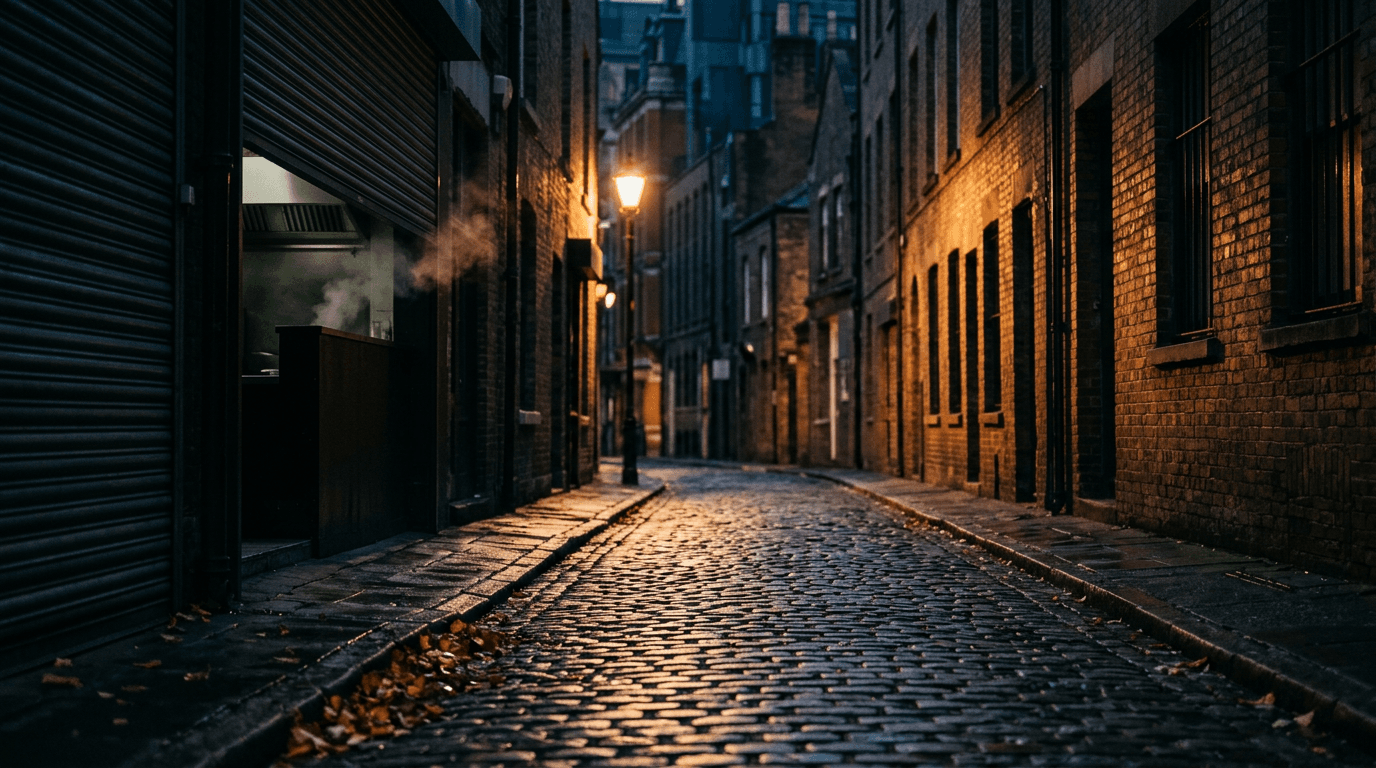
At half past six on a Tuesday in late October, the corner of Yongkang and the lane behind the temple is still dark enough that the streetlamp does most of the work. The bakery shutters go up with the same metallic complaint they make in July, but the air that rushes out is different — less butter, more yeast, as if the dough itself has noticed the cold. A man in a faded jacket carries a paper bag toward the river, and his breath makes a small cloud that dissolves before the next lamp. The boy on the scooter still weaves between two cats, but he wears gloves now. The walker who steps out at this hour inherits all of it for free. There is no app for that part.
What unfolds
By seven, the tai chi practitioners have claimed the square in front of the temple, their movements slower than the season. The delivery scooters arrive at ten, but their engines sound tighter, as if the cold has thickened the oil. By lunch, the queue outside the noodle shop has moved indoors, and the steam from the pot fogs the window so you cannot see who is eating. The same block that in June belonged to iced tea and open doors now belongs to soup and closed collars. Walk the same block four times in one morning and you have visited four different places — and that is before the season changes the cast entirely.
Sensory detail
The smell of the city shifts before the temperature does. In September, the gutters still carry the green scent of cut grass and rain; by November, they carry woodsmoke and the metallic tang of wet stone. The soundscape thins — fewer birds, more footsteps, the particular crunch of leaves that have dried in place. The texture of the air changes too: summer air is a weight, winter air is a blade. Even the light behaves differently, slanting low across the lane at four in the afternoon, turning the same brick wall gold for twenty minutes and then grey. The walker notices these things not because they are told to, but because the body registers them before the mind does.
Reader nudge
There is a particular pleasure in walking the same route as the season turns, watching the same corner change its clothes. The bakery's butter smell gives way to cinnamon; the cats find new patches of sun; the man in the faded jacket switches from a paper bag to a thermos. None of this requires a plan or a destination. It requires only that you step out at the same hour, on the same street, and let the differences find you. The walk is the destination. The season is the guide. For personal medical concerns, please consult a qualified physician.
FAQ
How often do I need to walk the same route to actually notice the change?
Once a week at the same hour is enough. The trick isn't frequency, it's repetition — same corner, same time, so the differences have something to push against. Two walks a week and you'll catch the bakery shifting from butter to cinnamon before the calendar does.
What if my street is boring and nothing ever changes?
Nothing is boring if you walk it at the same hour for three months. The cats find new sun patches, the delivery guys change jackets, the light hits the wall differently at four. Boring is just a street you haven't stood still on long enough.
Do I need to track any of this, or is that missing the point?
Tracking isn't the point, but it isn't the enemy either. If you want a record of where you walked and when the season turned on you, a map that logs itself is a quiet way to keep it. The noticing is still yours.