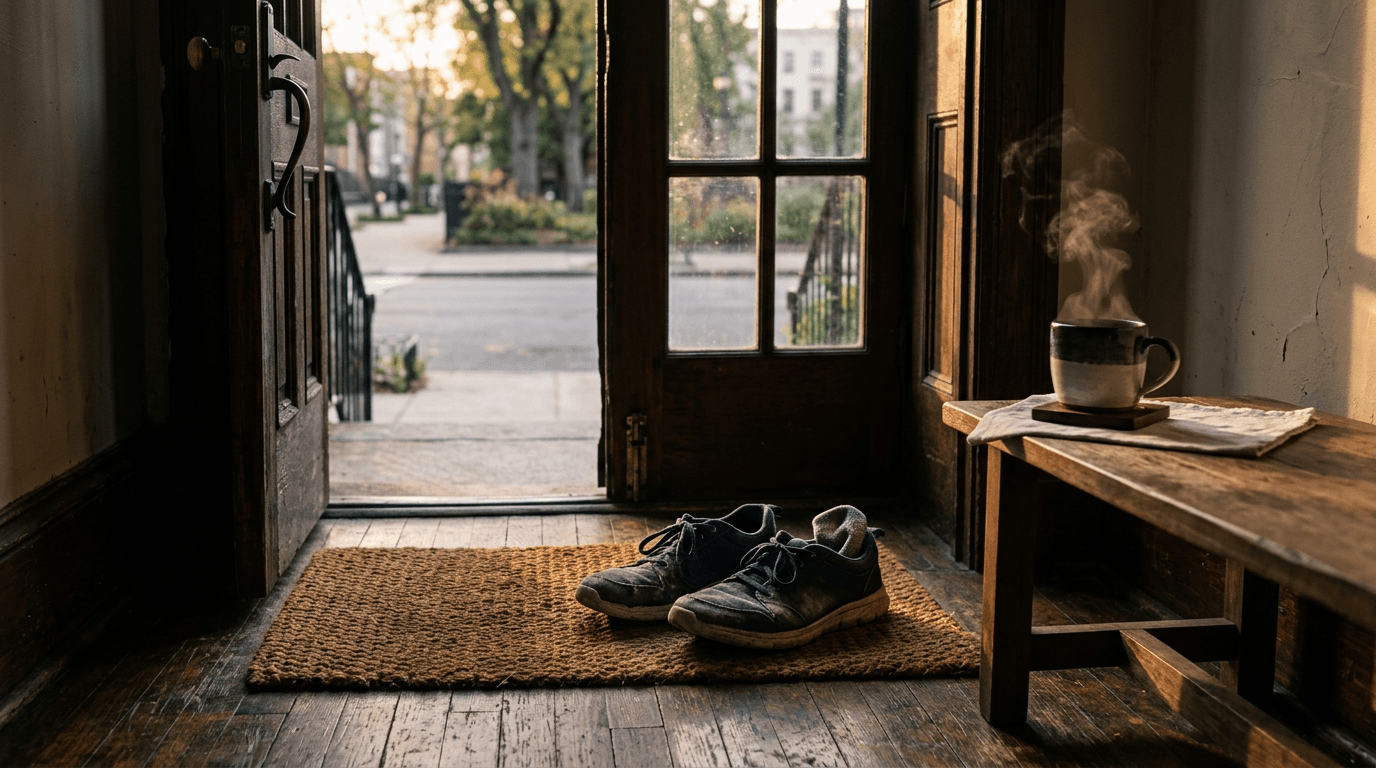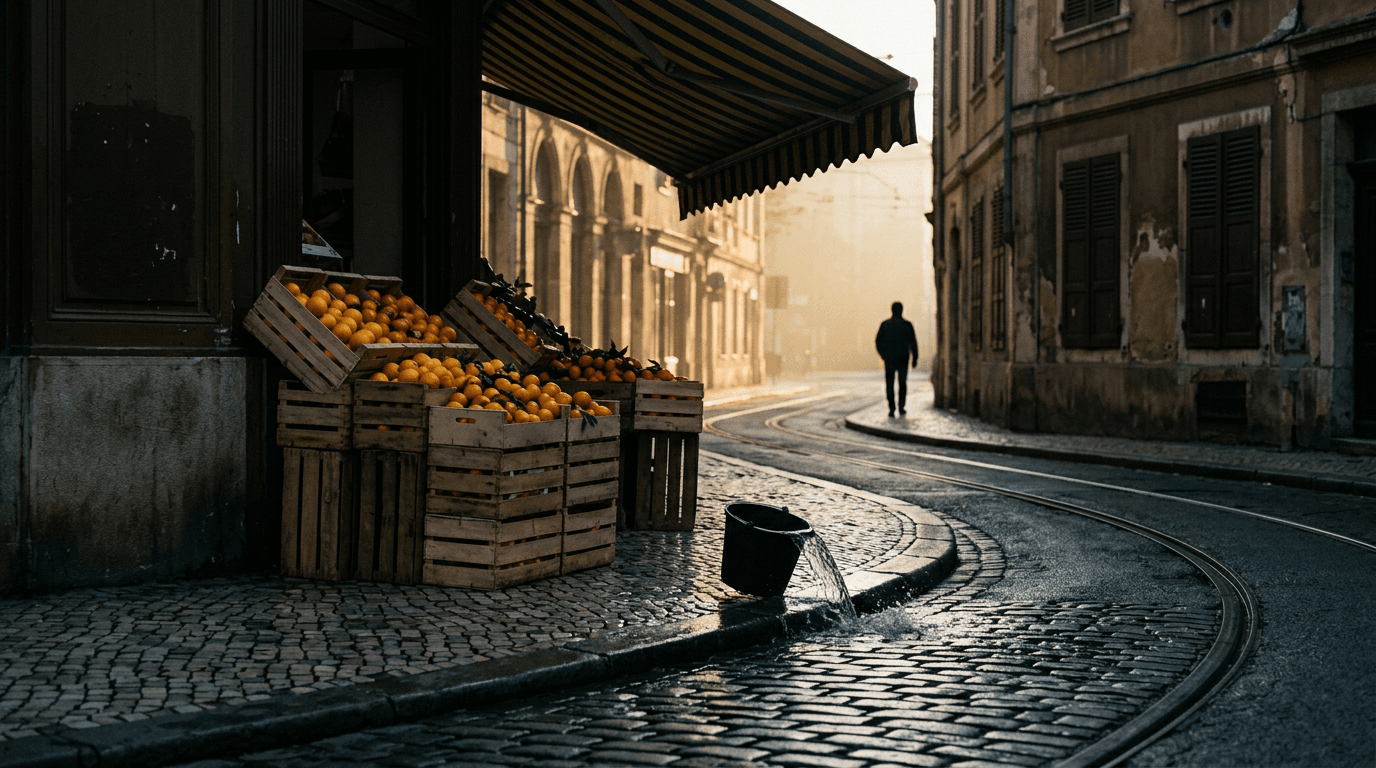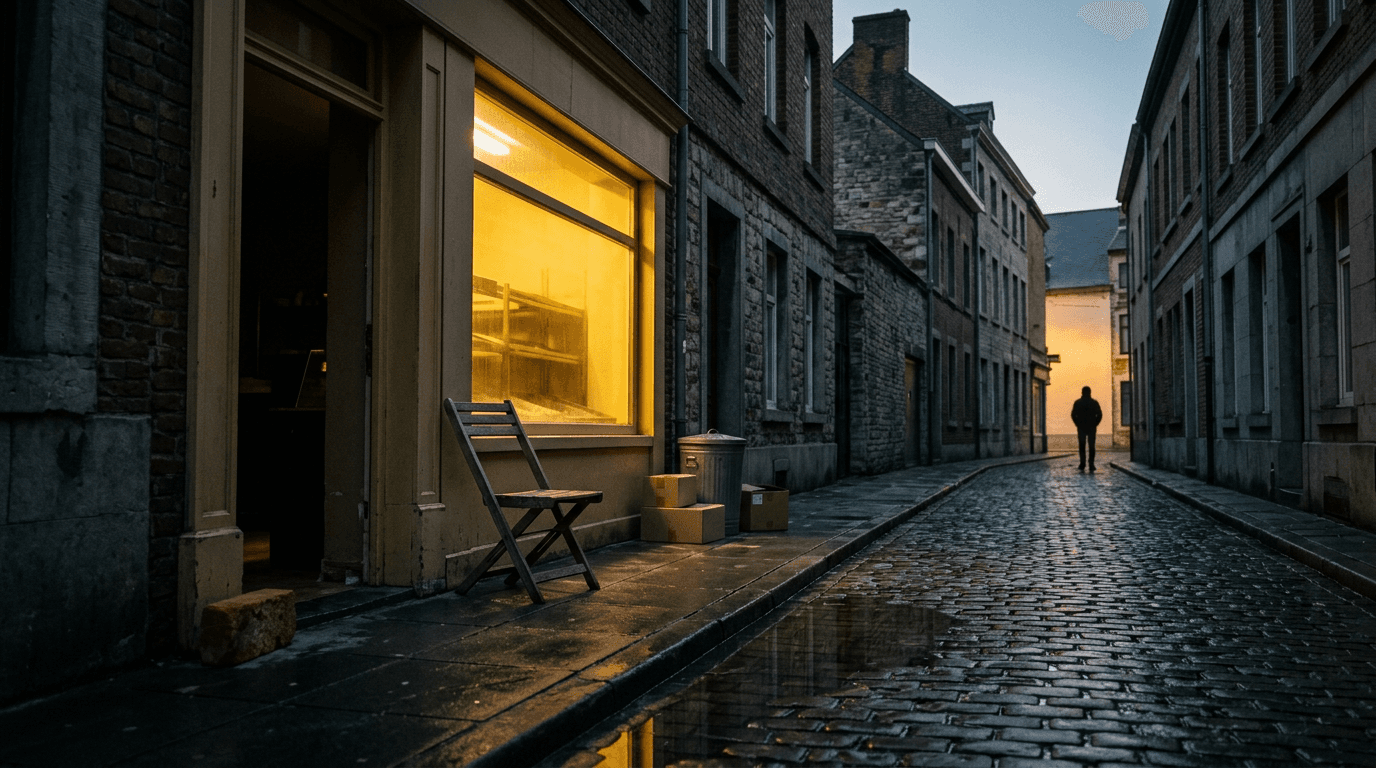


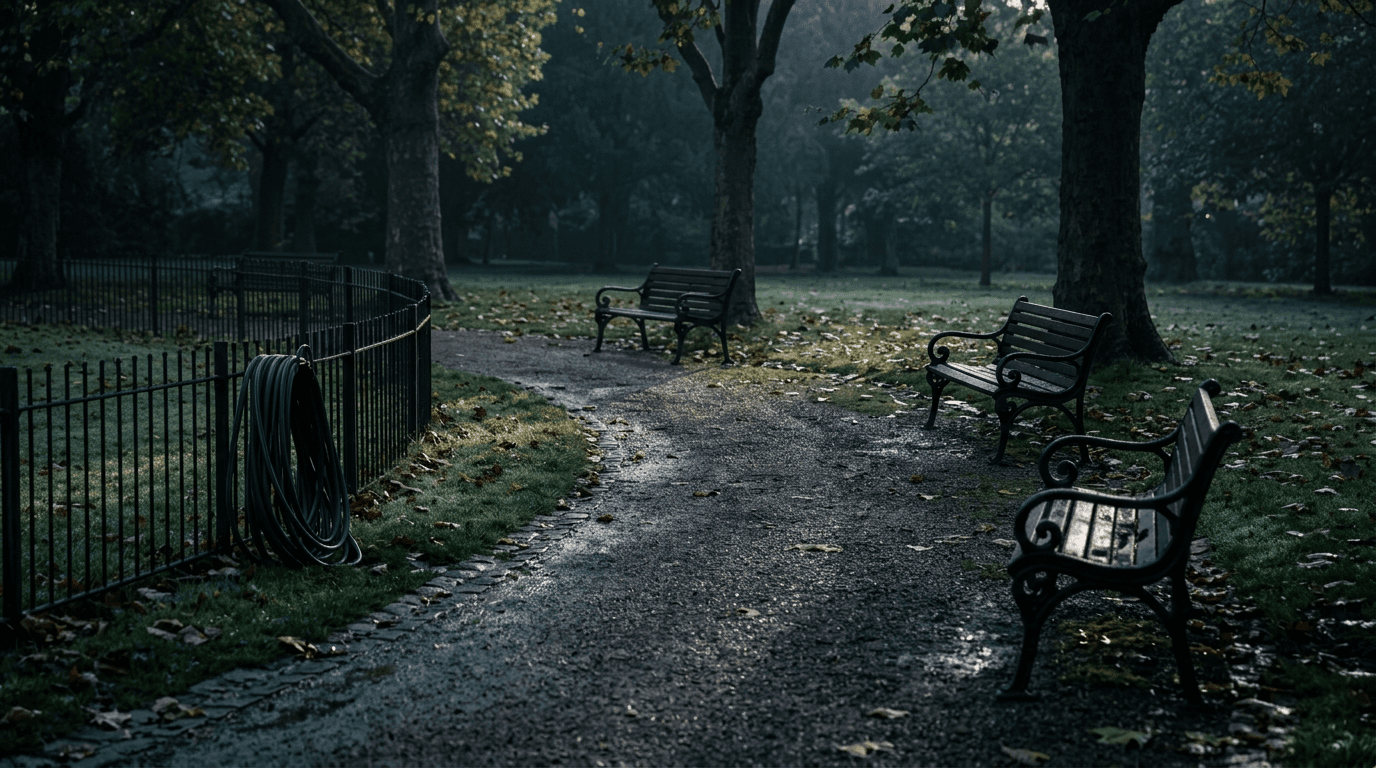
At six forty the iron gate of the small park behind the market is already open, though nobody official opened it, and the light comes in low and sideways across the wet grass. A man in a navy windbreaker waters a strip of lettuces along the fence, a patch he did not plant on purpose and tends anyway. Two pigeons lift off the path and settle again three steps ahead. The air smells of damp gravel and cut stems, and past the hedge a hose ticks against a wall. The walker who arrives at this hour does not have to earn anything. The park simply hands it over.
A corner, an hour, a gate left ajar
The park sits at the seam between the old residential lanes and the newer blocks, a rectangle of lawn and plane trees with a low wall the length of a cricket pitch. Copenhagen, in the WHO's telling, put ninety-six per cent of its residents within a fifteen-minute walk of a park, and the city's health profile reads like a consequence of that fact. Here the arithmetic is humbler but the same in kind: a fountain that runs from April to October, four benches facing different directions, a gravel loop of perhaps four hundred meters, and a basketball hoop with no net. The morning belongs first to the dog walkers, then to a tai chi group whose radio plays something slow and tinny, then to whoever else arrives. Nobody schedules the handover. It simply happens, the way weather happens.
What the walker sees before the day gets loud
A woman in a beige cardigan walks the loop counterclockwise, the same way she has for years, and the dew soaks her cuffs before the second bench. A young man in gym clothes runs the perimeter twice and stops, hands on knees, at the fountain. Two old men set a chessboard on a stone table and do not speak for eleven minutes. A mother pushes a stroller past the hoop and the baby watches the pigeons with the fixed attention of someone seeing birds for the first time. The WHO notes that parks cool cities and offer safe routes for walking and cycling; the review in Lancet Public Health found that time in urban green space can reduce the risk of early death, and that stress and mental health are part of the mechanism. The walker does not need the citation. He can see the shoulders drop, one bench at a time.
The smell of wet gravel and the sound of a hose
There is a texture to a park at this hour that no photograph keeps. The gravel is loose underfoot and gives a small crunch, then a softer one where the drainage dips. The grass holds water in the shaded half and the mower has not started, so the loudest thing is a hose ticking and a gate hinge complaining whenever someone enters. A plane tree drops a leaf the size of a hand, and it lands flat and stays. The bench slats are cold through a jacket, then warm where the sun has reached them, and the walker learns which is which without thinking. The WHO's work on urban green space describes interventions as modest things: signage, greening, improved paths, a new playground, walking groups. The park in the morning is exactly that modest, and exactly enough. There is no app for the smell of wet gravel.
An invitation, not an instruction
The park does not ask to be visited at dawn. It asks only that you come once without a route in mind, and let the loop decide how long you stay. Walk the same block four times in one week and you have visited four parks: the wet one, the loud one, the one full of schoolchildren at three, the one that belongs to the dog walkers at dusk. The health case is real, and the WHO is careful about it, noting that physical inactivity linked to poor walkability and lack of access to recreation accounts for roughly 3.3 per cent of global deaths, and that green space can reduce inequalities and aid mental health. But the case for the park is also smaller and more stubborn than that. It is a bench, a hose, a leaf, an hour that belongs to nobody in particular. If a morning opens, the gate is likely already ajar. For anything about your own health, consult a physician.
FAQ
Does it have to be six forty in the morning?
No — the hour is the point, not the clock. What matters is arriving before the park gets loud: before the mower, before the school run, before the benches fill. Any early hour will do the same work.
What if my neighborhood has no park like this?
Then borrow one. A gravel loop of four hundred meters is not a luxury; a schoolyard, a canal path, a cemetery with open gates will all hold the same morning. The WHO's modest interventions — greening, better paths, walking groups — start somewhere.
Is one walk a week actually worth anything?
Worth more than the spreadsheet suggests. The Lancet review ties time in green space to lower early-death risk and better mental health, and the mechanism is stress, not mileage. One unhurried loop beats four hurried ones.