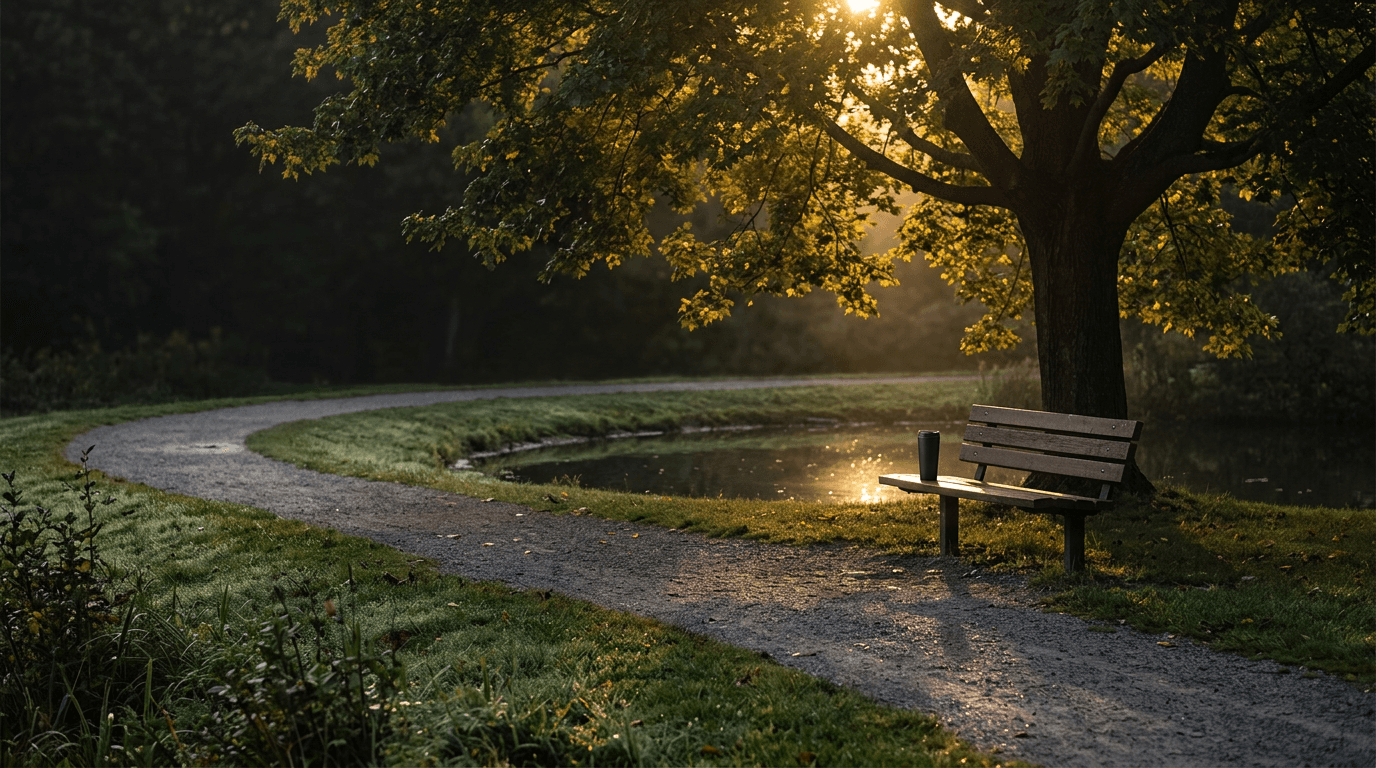


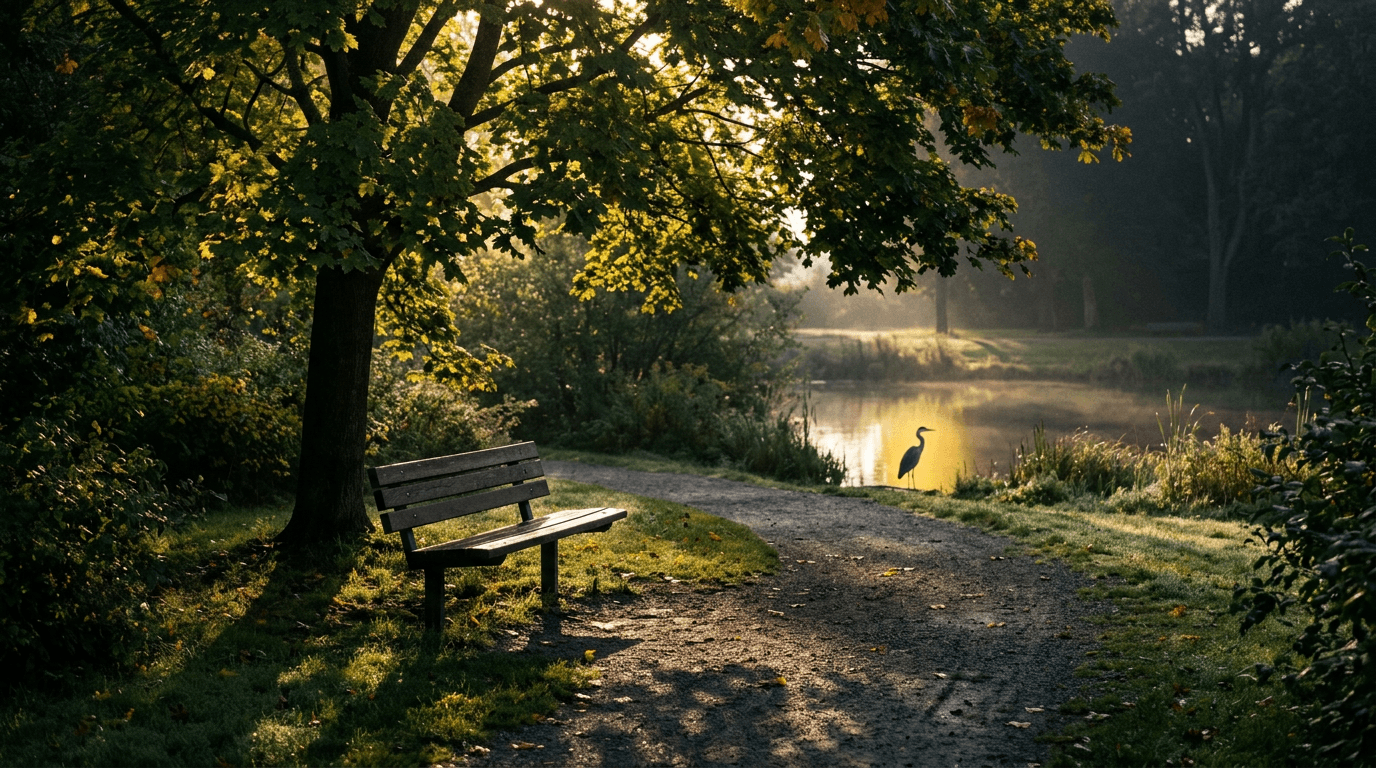
At seven forty-five the park gate is still cool to the touch, and the first walkers arrive with their own shadows. A jogger circles the pond twice, then stops to watch a heron stand motionless on one leg. An old woman unfolds a canvas chair under the maple and opens a book she will not read. The air holds the night's dampness, and the path is empty enough that you can hear your own footsteps as a kind of conversation. This is the hour when a green space feels less like a destination and more like a secret the city keeps for those who know to look.
What the Walker Sees
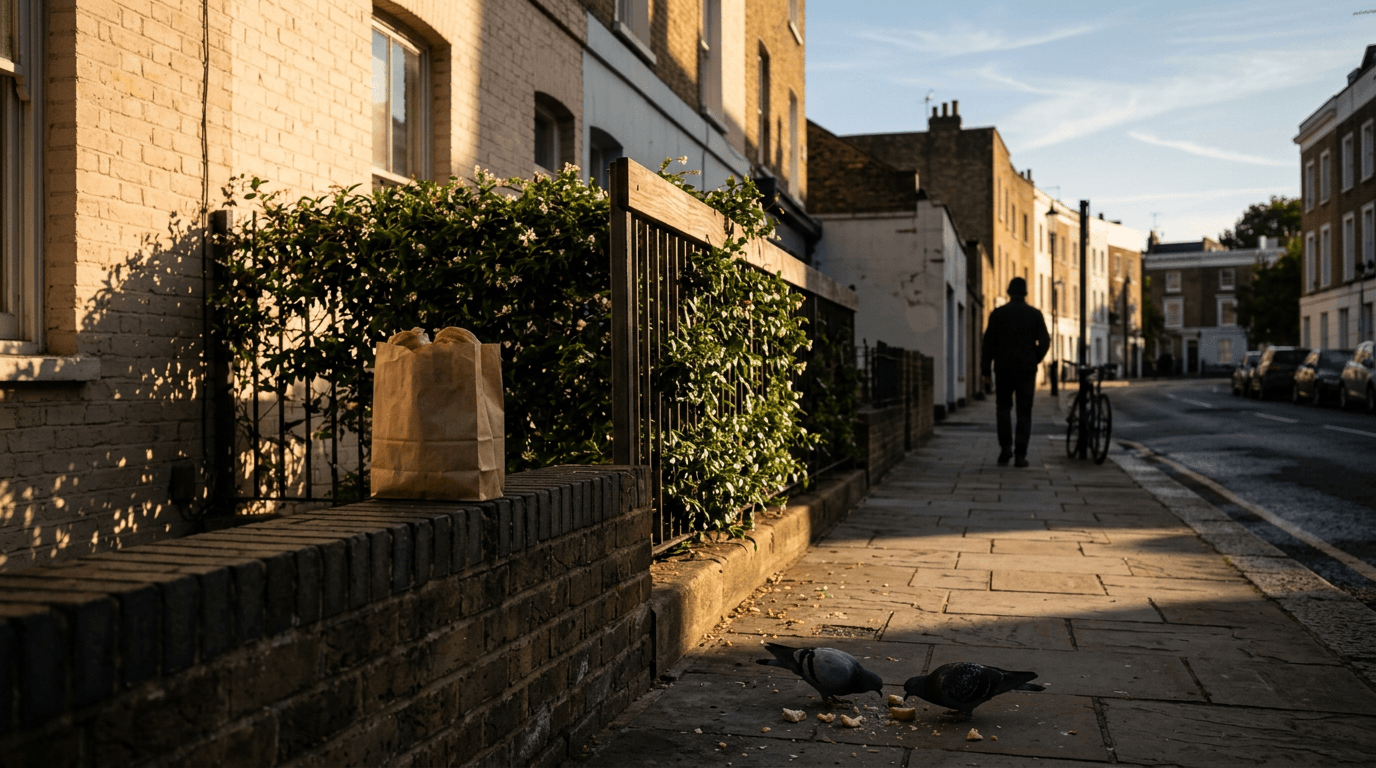
Walk the same loop four times and you have visited four different places. At first light, the park belongs to the tai chi practitioners and a sleeping dog. By eight, it belongs to the parents with strollers and the man who feeds the pigeons despite the sign. By nine, the benches fill with people who have nowhere else to be and no hurry to get there. The walker who stays past the morning rush notices the way the light shifts through the leaves, the way the shadows shorten and then begin to stretch again. Researchers at Virginia Commonwealth University found that walking in a shady, quiet neighborhood was like going to a therapist, trainer, and outdoor thermal oasis all at once. That is not a metaphor; it is a description of what the body does when it is given shade and quiet and a path.
The Sensory Layer
The smell of cut grass reaches you before the mower does, and the sound of sprinklers ticks like a metronome against the pavement. There is the texture of bark under your fingers when you touch a tree, the grit of gravel beneath your shoes, the cool of the metal bench when you sit. In Santo Tirso, a park was built on abandoned land along a stream, transforming a non-place into a space of value for the social, urban, and natural environment. That transformation is not only visual; it is olfactory, auditory, tactile. Green spaces are not just for the eyes. They are for the nose that catches the honeysuckle, the ears that catch the birdsong, the skin that feels the drop in temperature under the canopy. There is no app for that part.
The Invitation
Find the green space nearest you, the one you pass without entering. Tomorrow morning, or this evening, step inside. Walk slowly, or sit. Notice the way your breath changes, the way your shoulders drop. The Trust for Public Land notes that parks serve as communal spaces where people gather and foster a sense of belonging, and the CDC highlights how trails can connect neighborhoods and promote physical activity. You do not need a plan or a goal. You need only to be present. If you have a health condition or concern, consult your doctor before starting any new activity. But the park itself is a prescription that requires no co-pay.
FAQ
What if I don't have a park nearby?
Then find the nearest patch of green — a tree-lined street, a schoolyard, even a quiet cemetery. The point isn't the official designation; it's the canopy, the quiet, the absence of traffic noise. If it's truly nothing but concrete, a balcony with potted plants still gives you something to look at that isn't a screen.
How long do I need to stay to get the benefit?
Even ten minutes can shift your nervous system. The VCU study suggests that as little as 15 minutes in a green space can lower stress markers. But the magic of the early hour is that you're not watching the clock — you're watching the light change. Let the walk end when you feel your shoulders drop, not when a timer dings.
What if I'm not a morning person?
Then go at dusk. The same quiet that exists at seven forty-five also exists at seven forty-five in the evening, just with longer shadows and a different slant of light. The key is to pick a time when the park is under-visited, not when it's at its busiest. Your body doesn't care about the hour; it cares about the calm.