

What unfolds
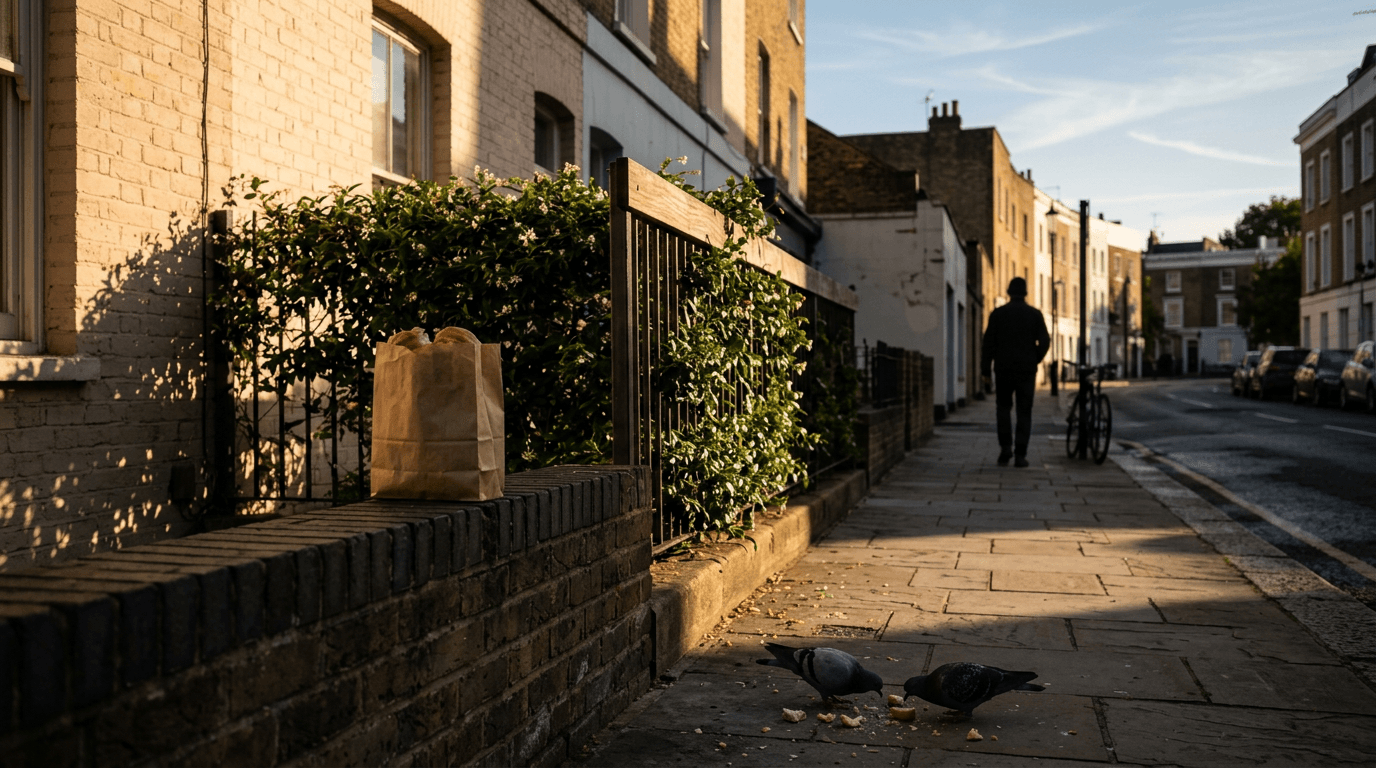
Saturday at 7:15, the corner of Grant and Willow belongs to the bakery. Its ventilation fan pushes warm air and the smell of butter three doors down and across the way. A woman in a canvas sun hat buys one sesame roll and eats half before the crosswalk. A man in a faded denim jacket carries a paper bag toward the river. Two pigeons argue over a crust that has been there since yesterday. Above it all, a pale, reasonable blue. The weekend walker who steps out at this hour inherits every bit of it for free. There is no app for that part.
By 8:00, the street has changed hands. The bakery crowd thins and the tai chi group in the small triangle park begins its slow opening form. A delivery scooter cuts between two parked cars. A boy on a bicycle rides the wrong way down the sidewalk, ringing his bell at no one. By 9:30, the mats are folded and a queue is forming outside the noodle shop that never advertises. The walker passes the same bench three times and sees three lives on it: a man reading a newspaper, a woman tying her shoe, a teenager asleep on a jacket. Walk the same block four times and you have visited four places. None of it asks to be managed. None of it asks for anything at all.
What the senses catch
The nose gets the bakery first — warm butter and a faint, yeasty undertone. A block later, the noodle shop releases steam that smells of star anise and wet concrete. Then, without warning, diesel from a bus, and just as quickly, jasmine from a courtyard fence, small white flowers doing more work than any garden center. The ears keep their own ledger: the bakery fan's low hum, a scooter's two-stroke rattle, the click of tai chi shoes on stone, the tin clang of a knife on a wok, a distant tram bell, a pigeon's throaty argument. Under everything, the ambient drone of the city itself, that half-heard wash of air conditioners and tires. The walker's own footsteps change on each surface: soft on the packed dirt path, loud on the metal grate bridge, muffled again on the rubberized crossing at Pine. Touch arrives last but it arrives: the cool of a shaded wall, the warmth of a sunlit bench, the slick of condensation on a water bottle.
The invitation
No need to call this a route or a workout. No need to log it, pace it, or count anything at all. Leave the phone in a pocket and let it sleep. Choose one corner you already know — the one with the bakery, or the bench, or the jasmine — and walk it slowly, twice, at an hour slightly earlier than you would normally choose. Notice what changes and what does not. The point is not to arrive somewhere. The point is to be the kind of person who was there when the street changed hands. If walking becomes a source of worry rather than a source of noticing — if balance, breath, or stamina start to feel like questions rather than facts — consult a physician before building any new routine. The street will still be there tomorrow morning, at 7:15, with the fan already running.
FAQ
Do I really need to walk the same block twice?
Yes. The first pass is habit; the second is attention. The bakery fan sounds identical both times, but the woman in the canvas hat doesn't, and the bench never holds the same person. Repetition is what turns a walk into noticing.
What if I live somewhere with no bakery, bench, or jasmine?
Every block has a ledger — a loading dock, a bus shelter, a tree that drops something at the same hour daily. The corner doesn't matter. The earlier hour does, because it catches the street mid-change rather than mid-errand.
Is this just walking meditation with extra steps?
No. Meditation asks you to turn inward; this asks you to turn outward and stay there. The street is not a backdrop for your calm. It's the whole show, and you're briefly included.
What if the walk makes me anxious instead of curious?
Then treat it as information, not failure. If breath, balance, or stamina start to feel like questions rather than facts, consult a physician before building any routine. The block will wait.