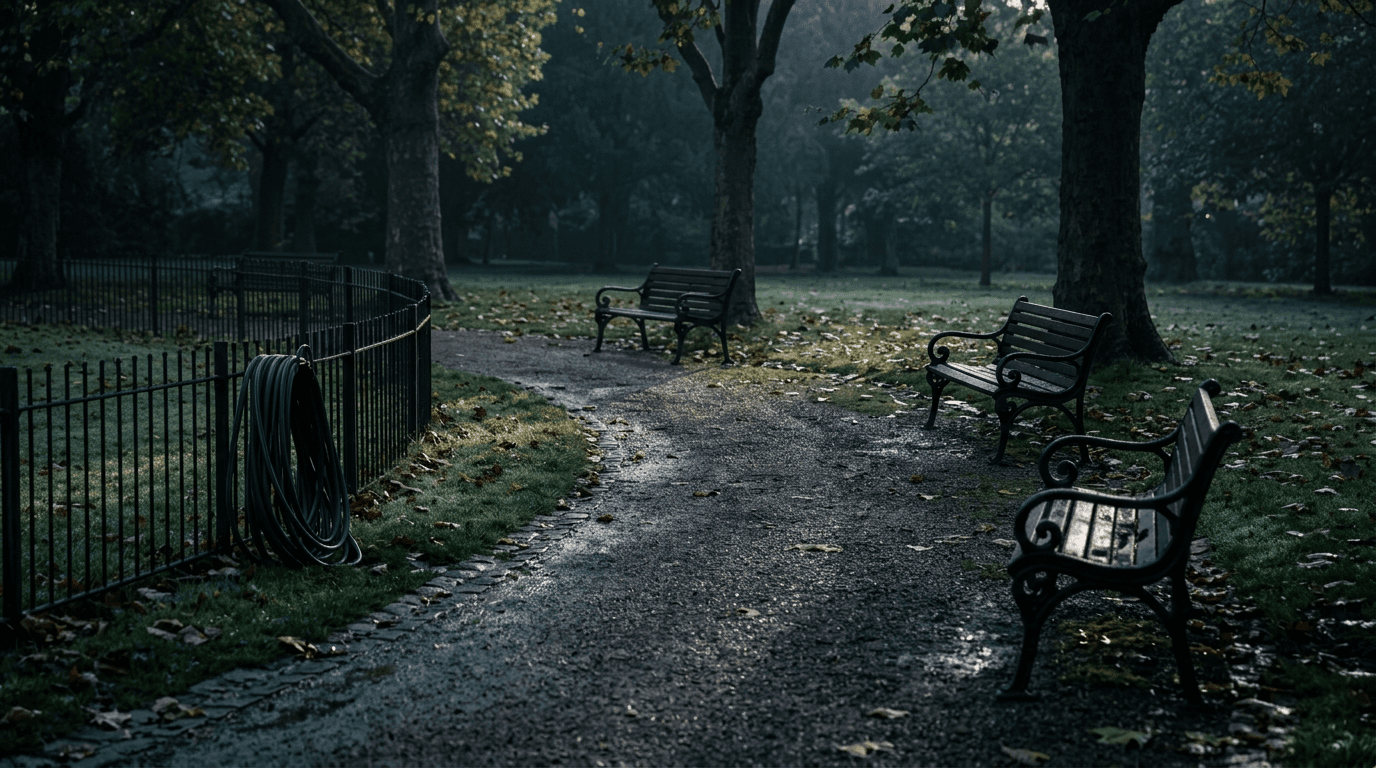


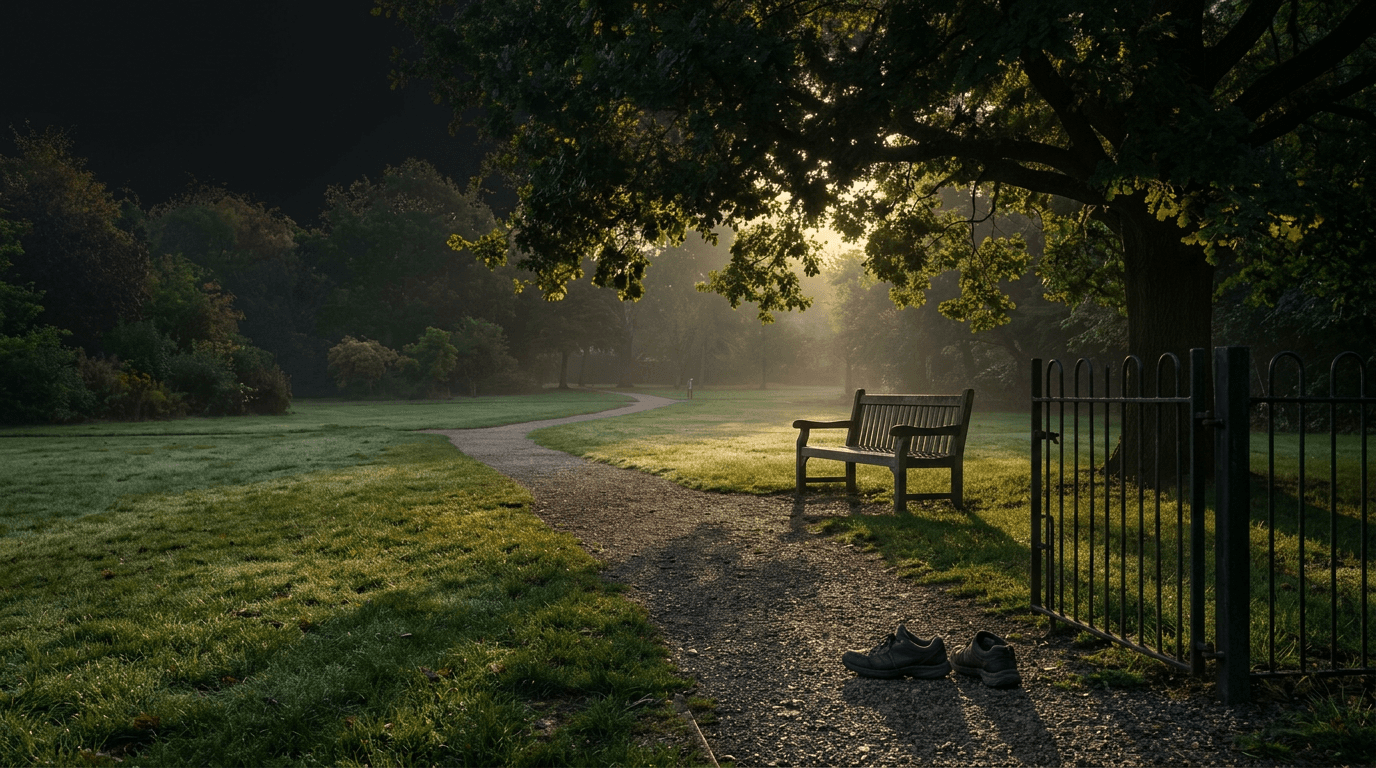
There is a particular quiet at the edge of a neighborhood park on a weekday morning. The grass is still wet, a jogger passes once and is gone, and the benches sit empty in the soft light. Nobody is watching, nobody is counting, and the day has not yet asked anything of us. We walk through the gate and the path is already there, waiting like it waited all night. That is the whole invitation. Not a program, not a plan. Just a place that costs nothing and asks only that we show up.
A Small Gate, A Short Path
We have written before about the ten-minute walk after meals, and we stand by it. But the park adds something the sidewalk cannot: a destination that feels like a reward rather than a route. A loop around the pond, a bench under the old oak, a gravel path that curves past the playground — any of these will do. The American Heart Association makes the point plainly: a leisurely stroll through the neighborhood or a walk in the park both count, and safe walking spaces matter as much as the walking itself. When we have one within a few blocks, we should treat it like the gift it is.
We keep our ambitions tiny here. Ten minutes on the path, then home. That is a small win, and small wins are the ones we can repeat tomorrow. The Mayo Clinic notes that a walk around the park counts, and that ten quiet minutes outside is a fine place to start. We do not need the full hour. We need the gate.
Keep Shoes by the Door
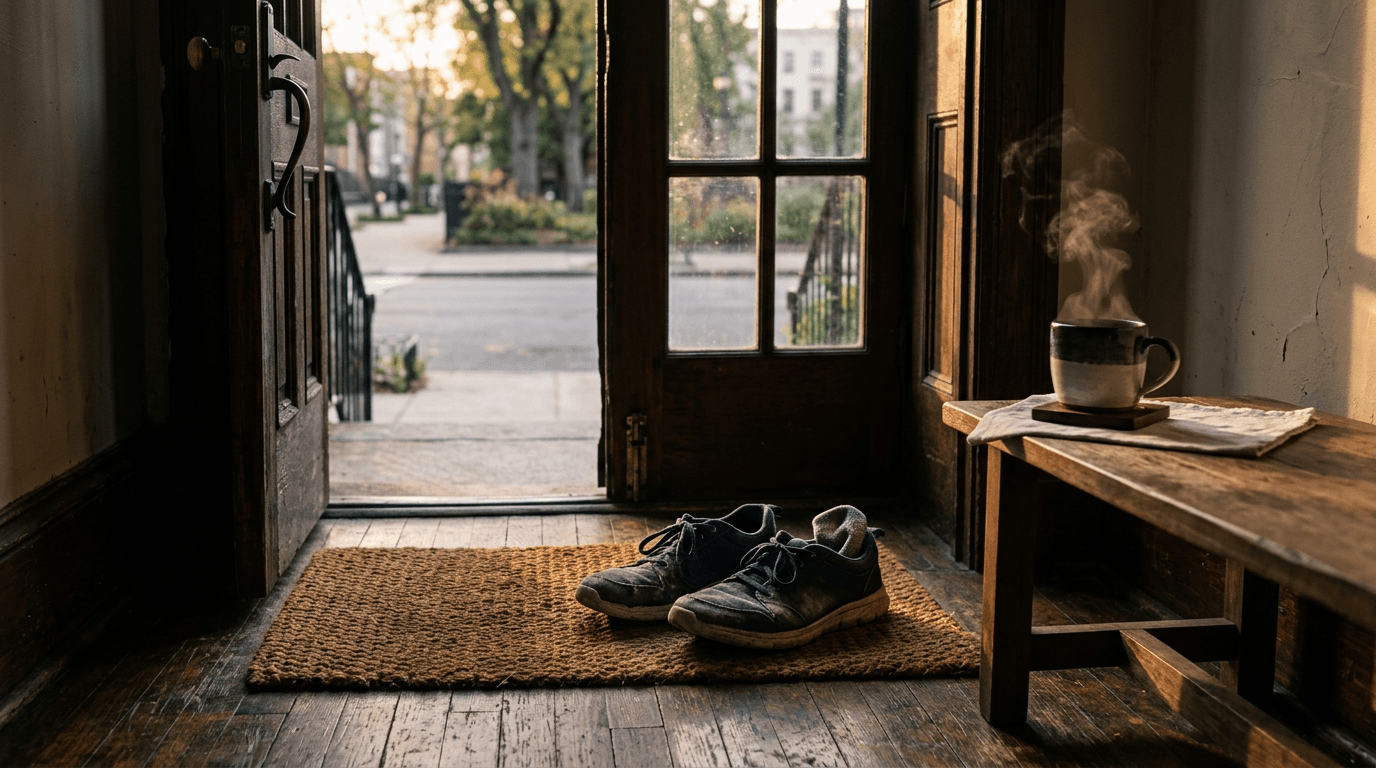
Here is the tip that has carried us further than any training plan: make the decision happen before our brain finds an excuse. Shoes by the door. Keys in the same bowl. A light jacket on the hook. When the walk is already half-decided by the arrangement of the hallway, we do not have to negotiate with ourselves at six in the evening.
We stack the habit onto something that already happens. After the morning coffee, before the mail. After the school drop-off, before the desk. The park becomes the reward attached to a chore we were doing anyway. The Mayo Clinic Press points to research suggesting that short sessions outdoors, roughly twenty to ninety minutes, seem to do the most for mood, and that even brief visits help. We like that range because it is forgiving. On a busy day, ten minutes still counts. On a good day, we linger.
And we notice what the path gives back. The Harvard Health piece on walking calls it one of the simplest and least expensive things we can do for our health, good for bones, the heart, and a cluttered mind. A park just makes it more pleasant.
Try Today
So here is the one thing we are asking of ourselves this week. Find the nearest park gate and walk through it once, for ten minutes, before noon. No podcast required. No pace to hit. Count the steps if it helps — a short loop is often a few hundred, and a few hundred is plenty — or count the dogs and the benches instead. Sit on one bench for a minute at the end, even if the bench is cold. Then go home and get on with the day.
We are not chasing a number. We are collecting a small win, and the park is the easiest place we know to find one. String together three of these in a week and we have built something sturdier than motivation: a habit with a gate and a path and a bench that remembers us.
For any personal medical concerns, please consult a physician before changing your activity routine.
FAQ
What if there is no park within walking distance?
Then the sidewalk is your park. The American Heart Association counts a stroll through the neighborhood the same way, and the point was never the pond — it was a destination that feels like a reward. Pick a corner, a bench, a bakery three blocks out, and walk to it and back. Ten minutes is ten minutes.
Does ten minutes actually do anything, or am I just fooling myself?
Ten minutes counts. The Mayo Clinic Press research on time outdoors points to brief visits helping mood, and the Harvard Health piece on walking calls it one of the simplest, least expensive things we can do for our health. The win here is repetition, not intensity — three short walks beat one heroic one you never repeat.
I keep skipping it. What actually fixes that?
The hallway, not willpower. Shoes by the door, keys in the same bowl, jacket on the hook, and the walk stacked onto something you already do — after the coffee, before the mail. When the walk is half-decided before you reach the door, you stop negotiating with yourself at six in the evening.