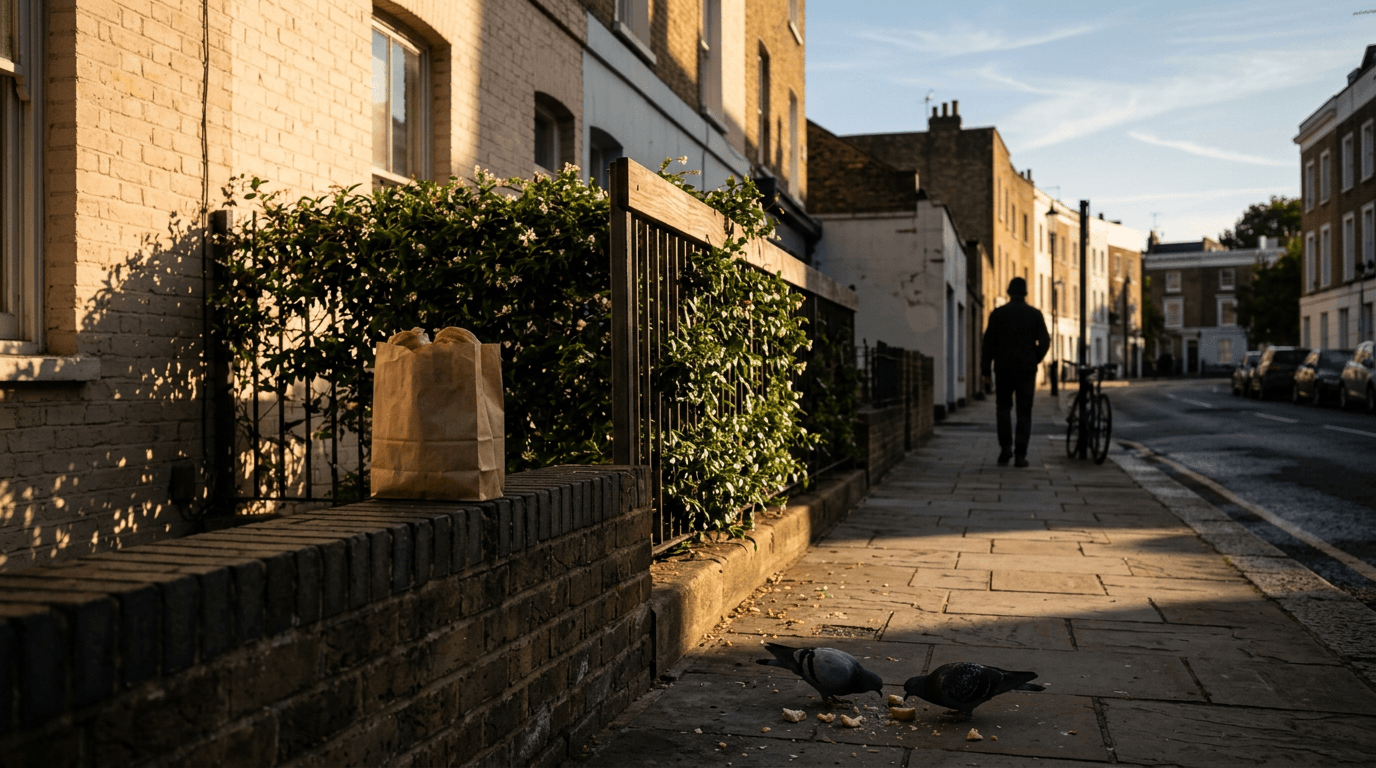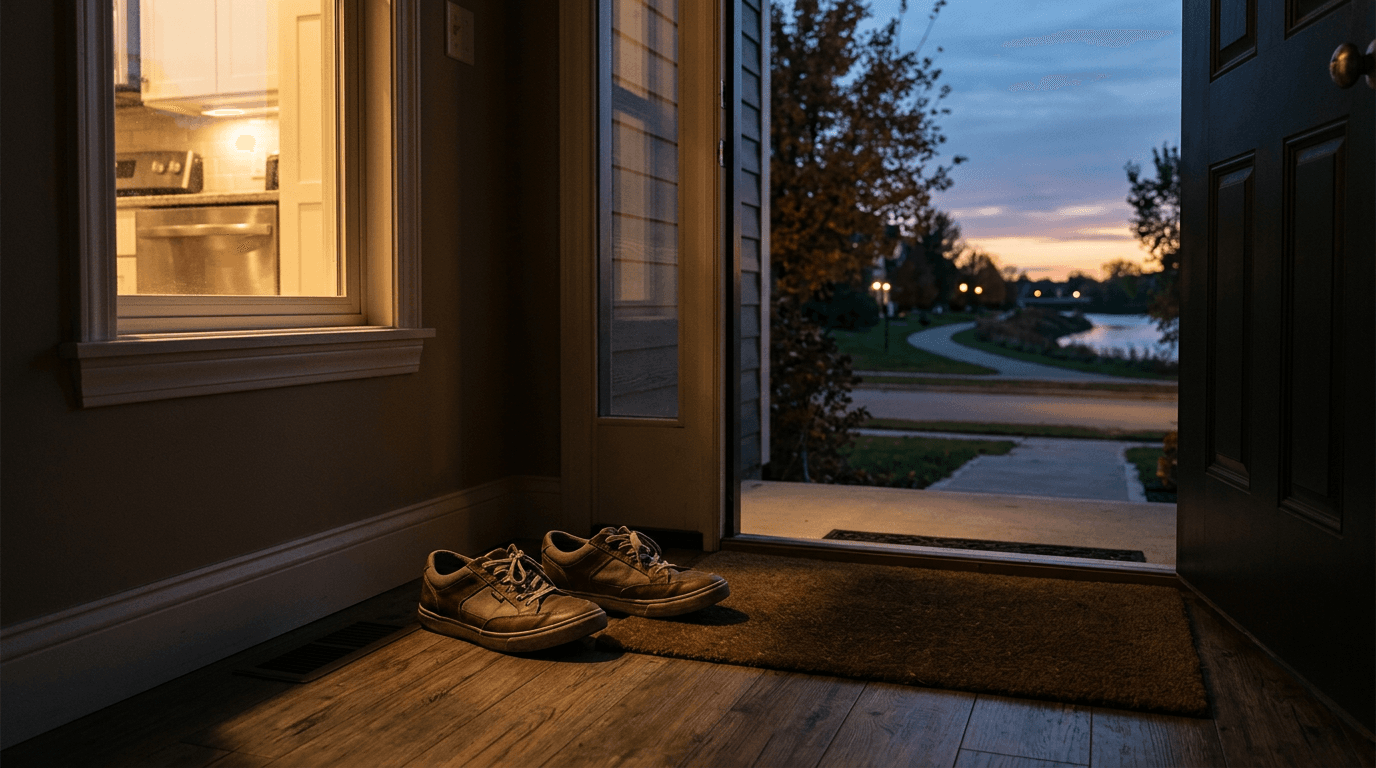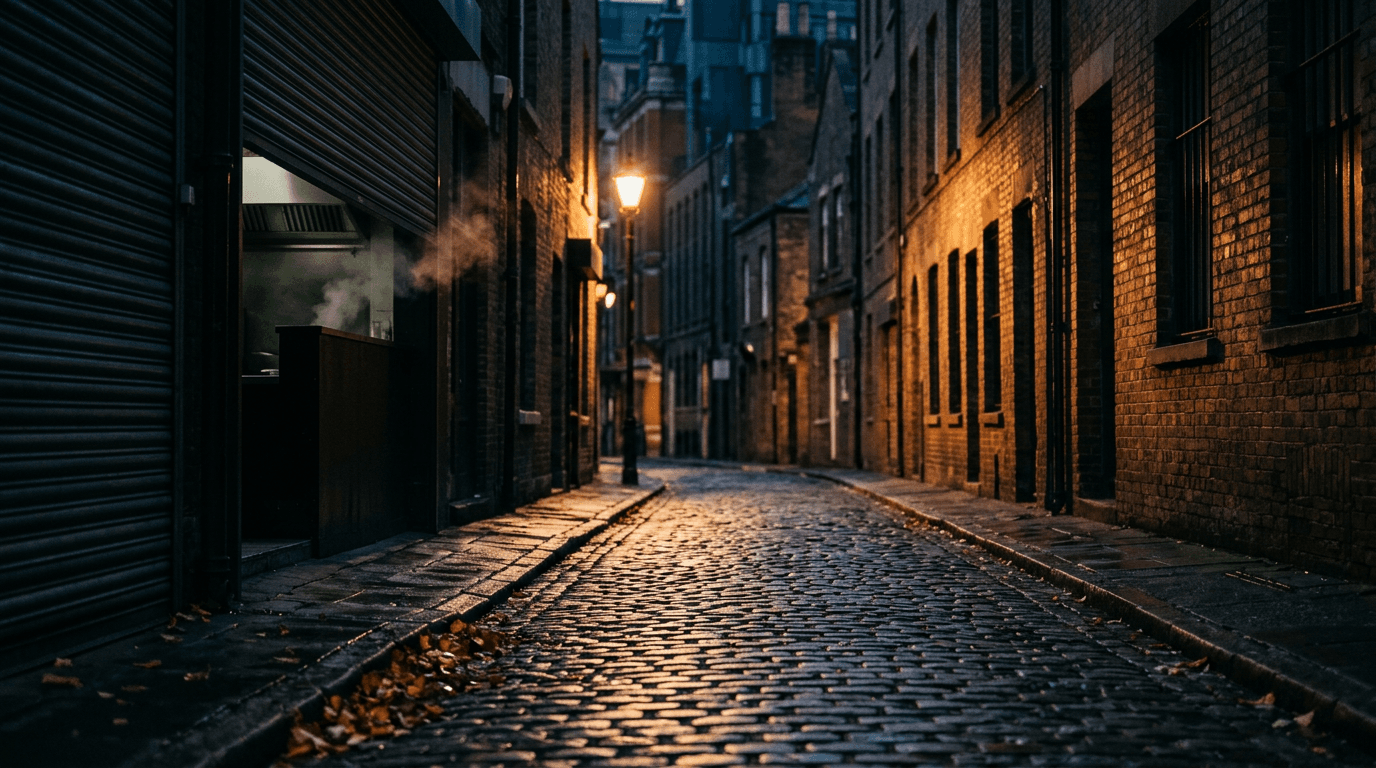


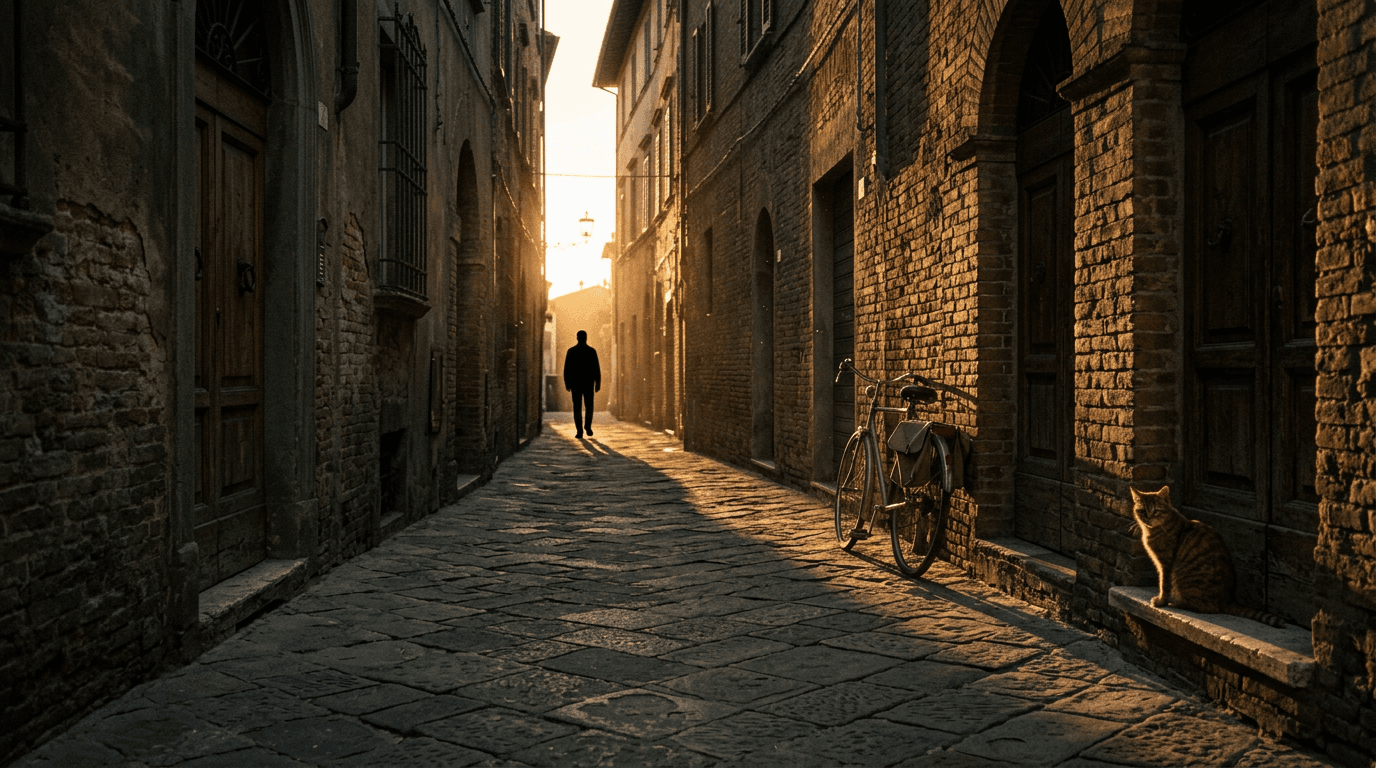
At six in the evening, the lane behind the old textile mill catches the low sun sideways, and every brick turns the color of warm honey. The bakery on the corner has sold its last loaf, but the smell of rye and yeast still hangs in the air, mixing with the damp of a garden hose left running. A woman in slippers sweeps her doorstep with slow, deliberate strokes. Two men sit on a low wall, sharing a bag of lychees, their voices low and unhurried. The golden hour walk is not about speed or distance; it is about inheriting this hour for free.
The Street Changes Its Clothes
Walk the same block at noon and you will find delivery scooters and queues. At six in the evening, the lane belongs to the residents again. The shutters come down on the noodle shop; the barber pulls a chair out to the pavement and reads a newspaper. The light is longer now, softer, and it draws out colors you missed in the midday glare—the rust on a balcony railing, the faded green of a doorframe, the last orange marigold in a tin pot. Some streets only reveal themselves slowly, and the golden hour is when they speak.
What the Walker Sees
There is a rhythm to this hour. A man walks his dog, stopping every few steps to let it sniff a lamppost. A child on a scooter weaves between the legs of a chair. An elderly couple walks arm in arm, their pace unhurried, their shadows stretching long and thin behind them. The walker who steps out now sees the small negotiations of evening—who waters the plants, who takes out the trash, who sits on the steps with a cup of tea. These are the details no map records, and no app can deliver.
The Body Remembers
Walking is the most natural of movements—a gentle engagement of the muscles in the hips, knees, and feet, a quiet call to circulation and balance. But at golden hour, the body does not think of muscle groups. It simply moves, and the movement feels like a conversation with the street. The Harvard nutrition folks remind us that walking is accessible to almost anyone, whether on a school track, a sidewalk, or a mall corridor. But the golden hour walk is not about choosing the safest surface; it is about choosing the most beautiful one.
The Invitation
So here is the invitation—not a directive, just a nudge. Tomorrow, when the sun begins to drop, step outside your door. Walk to the end of your block, then turn around. Notice how the light changes the familiar. Notice the sounds—a kettle whistling, a television murmuring, a bicycle bell. Walk slowly, without purpose, and let the street give you its evening face. There is no app for that part.
FAQ
What if I live on a busy street with no charm?
Every street has an evening face, even the ugly ones. The golden hour walk is about noticing the small shifts—the way a parking lot empties, the flicker of a neon sign, the neighbor who finally sits on their stoop. If your block feels barren, walk to the nearest patch of green or a quiet corner. The point is to slow down and look.
How long should a golden hour walk be?
Fifteen minutes is plenty, thirty is luxurious. The walk isn't measured in distance or steps; it's measured in attention. You're not training for anything. You're showing up to watch the day hand off to the night. When you feel the street settle, you're done.
Should I bring my phone to track the walk?
Leave it in your pocket. The whole point is to be unplugged from metrics and maps. If you must bring it, use it to take one photo—then put it away. The walk is about the street, not your stats.
References
- Walking — Wikipedia
- Walking for Exercise — The Nutrition Source, Harvard T.H. Chan School of Public Health
- 5 Surprising Benefits of Walking — Dartmouth Health
Before you begin any new walking routine, consult your physician to ensure it is right for your individual health needs.