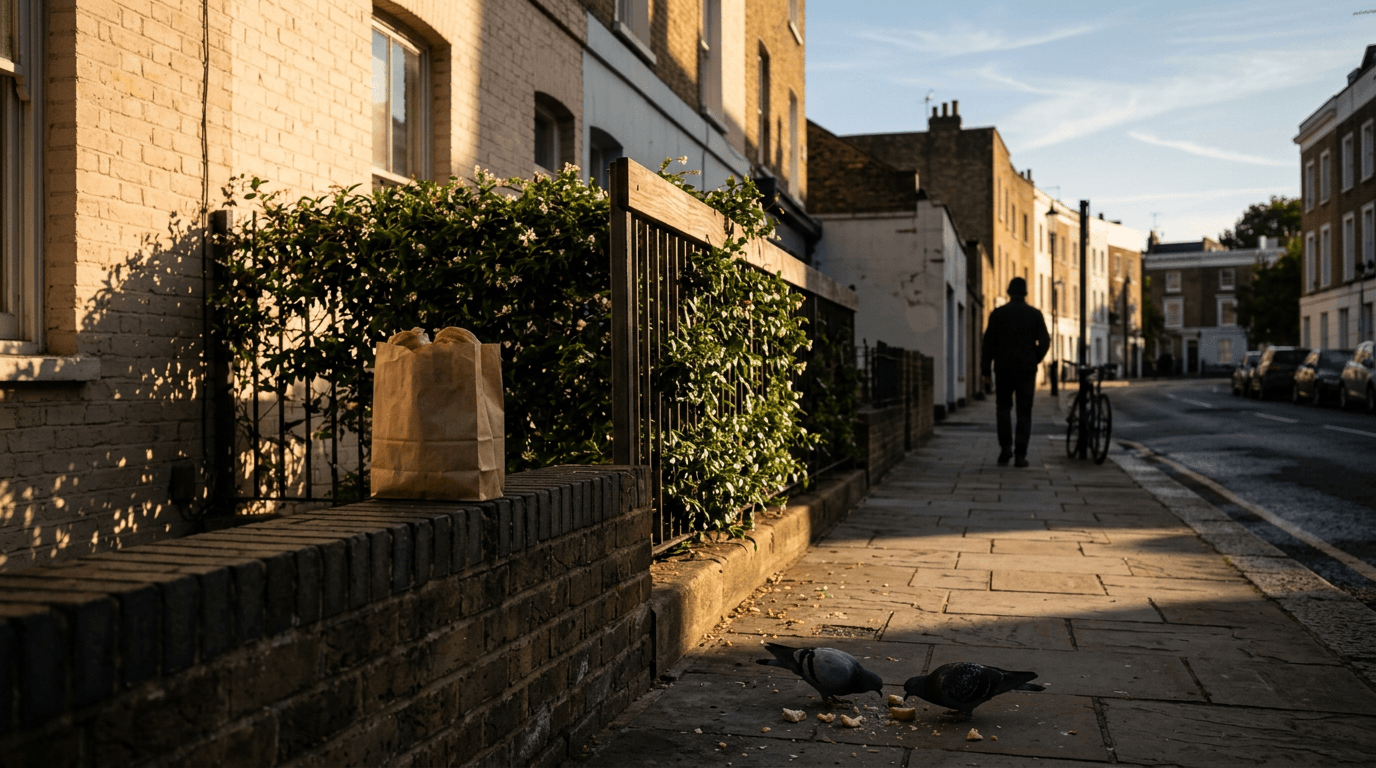


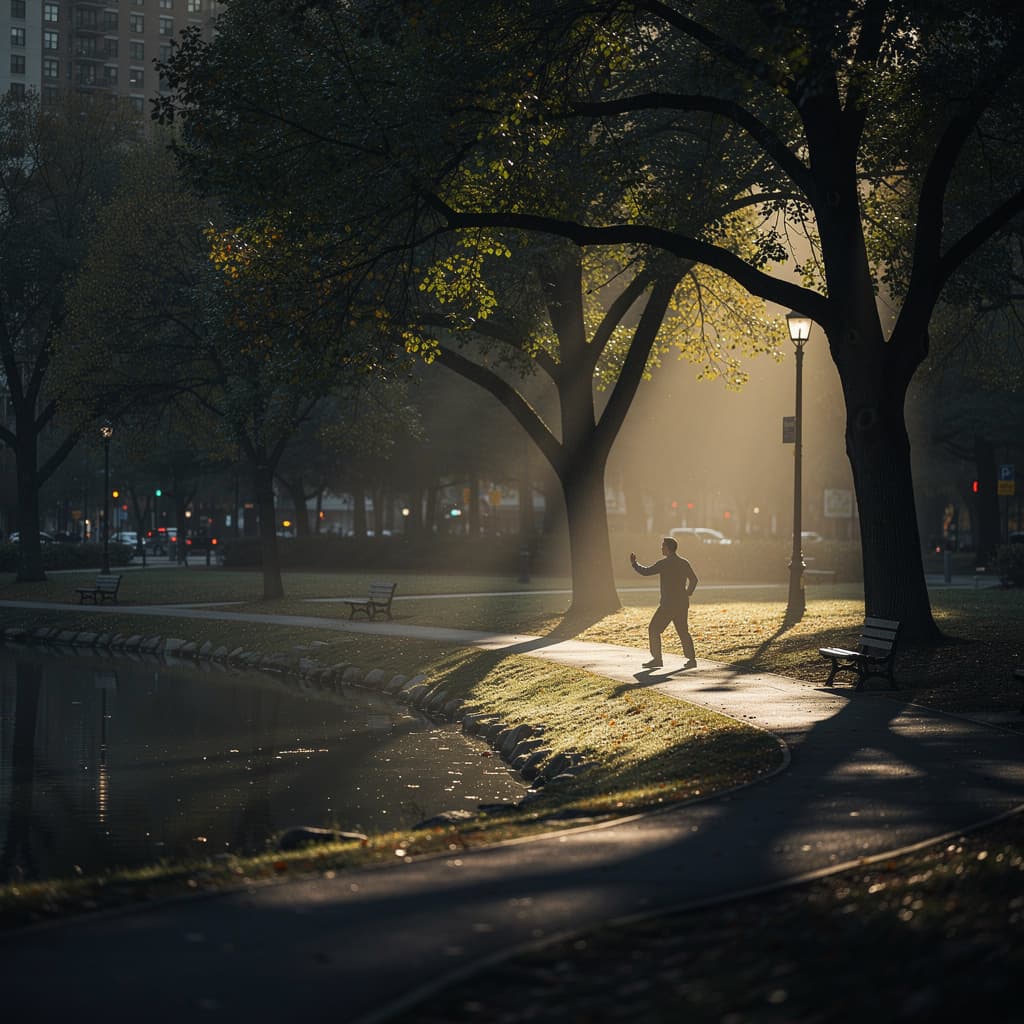
The park at seven forty-five belongs to no one. Gates open, crowds absent. A lone jogger circles the perimeter, her footfalls a soft rhythm on packed gravel. Near the pond, an elderly man practices tai chi, his movements so slow they slip into another time signature. The air carries damp earth and the faint metallic tang of the drinking fountain by the rose garden. This is the hour a park reveals its truest self—not a destination, but a living, breathing space that changes with the light. Walk the same loop at noon and you'll find a different place, crammed with lunchtime escapees and the shrieks of children on swings. But at seven forty-five, the park is a quiet invitation to simply be present.
What Unfolds
Watch long enough and the park tells its own story. The tai chi practitioner finishes, sits on a bench, pulls a thermos from his bag. Two women with walking poles stride past, deep in conversation, poles clicking on pavement. A maintenance worker unlocks the restroom, keys jangling across the lawn. By eight-fifteen, the first dog walkers appear, dogs straining at leashes, noses to the ground. The park is a stage for these unscripted dramas. In cities, green spaces are the connective tissue of daily life. The World Health Organization notes that urban green space interventions can increase physical activity and park usage, though effects vary by design. A skate park renovation draws a different crowd than a garden makeover, and perception of safety can shift with new lighting. What matters is that people come, and in coming, they weave the park into their routines.
Sensory Detail
Close your eyes and the park becomes a symphony: rustling leaves, distant traffic, the splash of a duck landing on the pond. Open them and layers emerge—dappled light through the canopy, geometric shadows of a pergola, bright splashes of a flower bed. The smell of cut grass mixes with earthy mulch. In the afternoon, it might smell of sunscreen and hot pretzels. But early morning is cleaner, simpler—just green and water and stone. These details are the substance of experience. Research on age-friendly environments highlights how benches, lighting, and maintenance transform parks into places of recreation. A bench under a tree becomes a destination. The sound of a fountain masks city noise, creating a pocket of calm. In these details, a park becomes a refuge from the urban grid and a clock-driven life.
A Small Invitation
You don't need a special occasion or a workout plan. Just walk. Leave your phone in your pocket and let your feet choose the path. Notice the light on a bench, the cracks in the pavement. If you live in a city, there's likely a green space within walking distance you've never truly seen—a pocket park between buildings, a riverfront trail you only cross on your way somewhere else. The WHO's promotion of cycling and walking reminds us that urban spaces can support active mobility, but you don't need a policy shift to step outside. The park is already there, waiting. Walk the same block four times in one morning and you've visited four different places. The park at seven forty-five is not the park at noon, or at dusk. Each visit is a small discovery, a reminder that the city is alive and changing, and you are part of it. There is no app for that part.
For any personal health concerns, consult a physician or healthcare professional.
FAQ
Why should I visit a park early in the morning?
Early morning offers a quiet, unscripted version of the park—free of crowds and full of small, real moments. The light and sounds are different, and you'll notice details that get lost later in the day. It's a chance to be present without the usual urban noise.
Do I need to exercise or follow a routine to benefit?
Not at all. The point is to walk without an agenda, letting your senses guide you. Even a slow, aimless stroll can shift your perspective and connect you to the space. The park works on you whether you're counting steps or not.
What if I don't have a big park nearby?
Small pocket parks, riverfront paths, or even a tree-lined block can offer the same quiet discovery. The key is to visit at an off-hour and pay attention to the changing light, sounds, and small dramas. Any green space can become a refuge if you let it.